
Precautions Before and After Surgery
Check the discharge guidance and the precautions before surgery, on the day of surgery, after surgery and after skin procedures. For emergencies after surgery, you can call 1661-8897 24 hours a day.
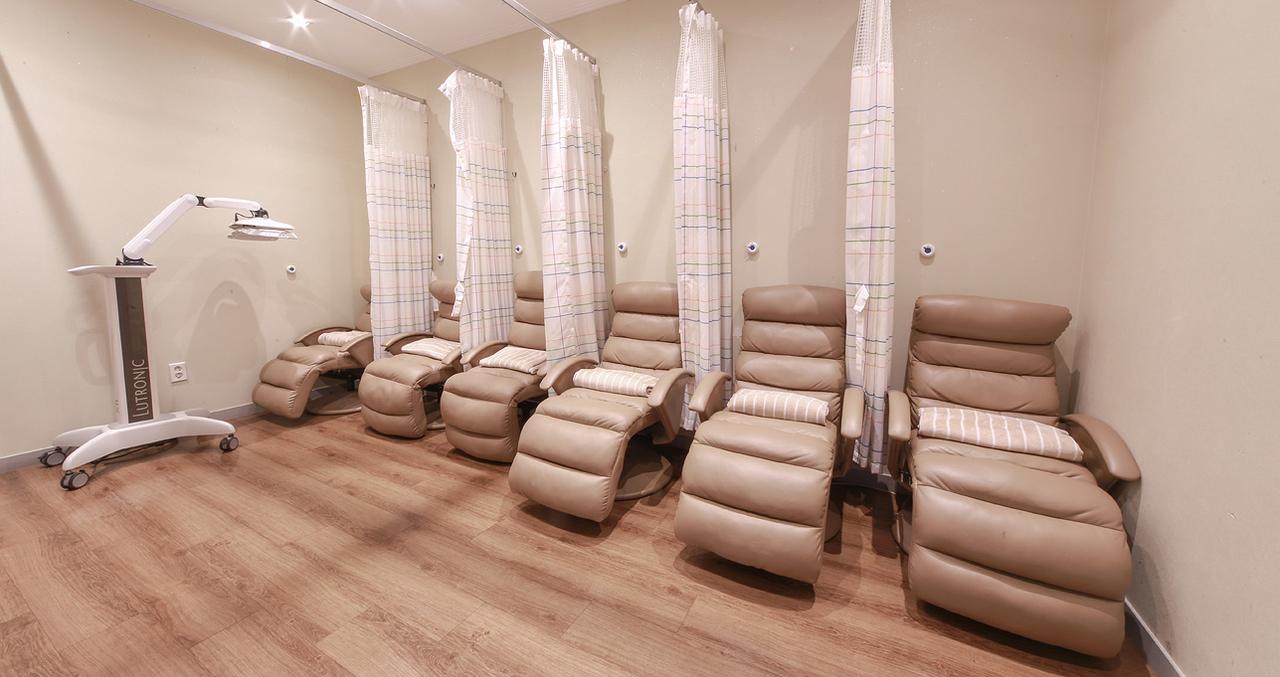
Discharge Guide and Pre-Surgery Precautions
Check how to prepare before surgery and what to do after discharge.
Discharge Guide
1. Meals
Eating
You may drink water and have liquid foods after the time the clinic has told you.
Liquid foods
Recommended foods: thin rice porridge, porridge, soy milk, smoothies, mild clear broth
Foods to avoid: hot, spicy or salty foods, hard or tough foods Please avoid them because they can cause swelling and inflammation.
Please refrain from smoking and drinking alcohol for one month.
2. Compress guide (easing swelling and bruising)
※ Cold compress
Please apply cold compresses (ice packs) for 2-3 days after surgery. ※ Do not use compresses after a fat graft or lifting surgery.
Please apply them mainly around the forehead and eyes.
Please wrap the ice pack in a towel so it does not touch the skin directly.
Do not apply cold compresses directly to the nose area.
※ Warm compress
Lukewarm compresses are possible from day 4 after surgery, but please refrain until the clinic gives separate guidance.
3. Wound care
Using ointment
Put a small amount of the prescribed eye ointment on a cotton swab twice a day (morning and evening) and apply it gently to the wound area.
Splint and tape
Keep them on for about 1 week after surgery, and do not remove them on your own.
4. Washing and exercise
Washing your face and showering
You may wash your face gently once 24 hours have passed after stitch removal.
Shower with lukewarm water, and be careful not to let water touch the wound area.
Please avoid saunas, hot springs and swimming pools for one month.
Exercise
Light walking is fine, but please refrain for one month from keeping your head bowed for long periods or from strenuous exercise.
5. What to do in an emergency
Please contact the clinic immediately if you have any of the following symptoms.
- If severe bleeding continues - If you have a high fever of 38°C or higher or severe dizziness - If the surgical area swells severely or there is an abnormal change in skin color
Contact
24-hour emergency contact: 1661-8897
Precautions Before Plastic Surgery
Precautions related to your health condition
1. If you have an internal medical condition such as high blood pressure, diabetes or thyroid disease, or epilepsy or a psychiatric condition, please be sure to tell us in advance. Depending on need, whether surgery is possible may be confirmed through a consultation with an anesthesiology specialist and related tests.
2. If you have ever had an allergy or an adverse reaction to a particular drug, please tell us the causative ingredient and symptoms (itching, hives, difficulty breathing, etc.) in advance. Anesthesia can be performed while avoiding drugs that contain that ingredient.
3. Please tell us in advance if you have had surgery related to the heart, lungs, liver, kidneys or brain, or have a history of anticancer treatment.
4. If you usually have anemia, symptoms after surgery may become more severe, so anemia tests and treatment may be needed depending on your condition before surgery.
5. If you had symptoms such as a high fever, phlegm, cough or a cold within 1 week before surgery, please be sure to tell the clinic.
6. If you are taking any medication, such as for high blood pressure, diabetes, thyroid, epilepsy, hormones or psychiatric conditions, please tell your coordinator in advance. How to take it may differ depending on your condition and the medication, so please be sure to take it only after confirming with the clinic. Regardless of whether you take it on the day of surgery, please bring all the medication you are currently taking. Also, please stop taking aspirin and aspirin-type drugs, hormones, herbal medicine and vitamins from 1 week before surgery.
7. If your scheduled surgery date overlaps with your menstrual period, please tell us in advance. It does not directly affect the surgical result, but bruising or swelling may be more pronounced.
Precautions on drinking and smoking
1. Smoking can slow recovery of the surgical area, increase the risk of infection and also affect anesthesia. We recommend quitting smoking from the time surgery is decided.
2. Drinking alcohol can affect liver function and the metabolism of anesthetic drugs, so please abstain from alcohol from 1 week before surgery.
Precautions the day before and on the day of surgery
1. Please be sure to fast from 10 hours before surgery. You should not consume food or drinks, or even solid items such as candy and gum.
2. The day before surgery, please get enough sleep to stay in good condition.
3. The surgery time will be announced after 6 p.m., once the anesthesiologist in charge has been assigned.
If you have not been contacted by the clinic by the day before surgery, please be sure to call to confirm.
4. Please come to the clinic with nail polish, pedicure and nail parts all removed before surgery.
5. On the day of surgery, please shower and wash your face thoroughly before coming.
If you are scheduled for face contour surgery, please also brush your teeth carefully that day.
6. If you are having breast surgery through an armpit incision, please shave your armpit hair in advance before coming, to prevent infection.
7. On the day of surgery, we recommend a loose shirt with front buttons and loose pants or a long skirt so it is easy to put on and take off. Please wear short socks and avoid pantyhose.
8. As needed, please prepare items that can cover your face, such as a hat, scarf, sunglasses or mask.
9. On the day of surgery, please come without makeup and be sure to remove contact lenses.
10. If you have a medical device inserted in your body, such as a defibrillator or cochlear implant, please tell the coordinator and medical team again on the day of surgery.
11. If you are having same-day surgery, you cannot drive yourself. For a safe trip home, please arrange public transportation or accompaniment by a guardian.
12. If you are scheduled to be hospitalized, you will be discharged after treatment the next morning.
Post-Surgery Precautions
Select your surgery to see its precautions.
Eye
1. Posture
For about 3-4 days after surgery, raising your upper body slightly so that your head is higher than your heart may help reduce swelling.
This posture is not mandatory, so if it is uncomfortable, it is fine to sleep in a comfortable, upright position.
2. Swelling and compresses
1. Right after surgery, the swelling may differ between your two eyes and look asymmetrical. Even a small difference can feel big because of swelling, so there is no need to worry too much.
2. Major swelling usually subsides considerably within 1 week after surgery, but residual swelling may last 1-3 months or more depending on the person.
3. Please apply cold compresses until day 3 after surgery. After that, no separate compress is needed.
Warm compresses carry a risk of low-temperature burns, so please use them only when necessary and as guided by the clinic.
Precautions for warm compresses
Please heat the compress pack by soaking it in warm water. Avoid using a microwave.
After surgery, sensation around the eyes may be temporarily dulled.
Before applying a warm compress, check the temperature first on skin with normal sensation, such as the inner arm.
3. Wound care
1. Avoid rubbing the surgical area or squeezing your eyes shut hard.
2. Right after surgery, a small amount of blood may seep from the wound.
3. Stitches are removed within 3-10 days after surgery depending on the condition of the wound and the surgical method.
4. Put a small amount of the prescribed eye ointment on a cotton swab twice a day (morning and evening) and apply it to the stitched area. If your eyes are dry, you may also use it inside the eye before bedtime.
5. Do not forcibly pick off scabs firmly attached to the wound; wait until they fall off naturally.
4. Washing · Showering · Makeup
1. From 3-4 days after surgery, light contact of clean water with the wound is mostly fine, but until the stitches are removed, please try to keep water from touching the surgical area.
2. Washing your face and light makeup such as base and skin makeup are possible from the day after stitch removal.
Wash gently without rubbing around the eyes.
After Eye Bag Reposition, light face washing is possible from day 3 after surgery, but this may vary depending on the surgical method.
Heavy eye makeup is recommended from 3 weeks after surgery, and when removing it, use a dedicated cleanser and remove it gently without irritation.
3. False eyelashes are recommended from 1 month later, and semi-permanent tattoos from 3 months later.
4. Please use contact lenses only from 3 weeks after surgery if possible.
5. Please avoid jjimjilbang, saunas and swimming for one month after surgery.
5. Exercise
Light exercise is possible from 1 week after surgery, and we recommend starting high-intensity exercise such as gym workouts, hiking and swimming from 1 month after surgery.
6. Taking medication
1. Please take the medication prescribed at discharge at the times and in the way you were instructed. If abnormal symptoms such as diarrhea or hives appear after taking it, stop taking it and contact the clinic.
2. If pain is still severe after taking the prescribed painkiller, you may additionally take Tylenol.
3. For 1 month after surgery, please avoid multivitamins, especially supplements containing vitamin E, as they can affect bleeding. We also recommend avoiding aspirin for 1 week after surgery unless it is truly necessary.
4. Medication aimed at easing swelling can increase the risk of bleeding, so do not take it on your own.
7. Drinking and smoking
Please refrain from drinking alcohol and smoking for 1 month after surgery.
1. Drinking can trigger or worsen inflammation at the surgical area.
2. Smoking can slow wound recovery and increase the risk of infection.
8. Recovery process
1. Bruising, eye redness and conjunctival swelling can last about 2-3 weeks. Symptoms can be relatively pronounced especially when lateral or lower canthoplasty is done together, but they mostly improve naturally over time.
2. The final shape of the surgery settles over about 3-6 months. Asymmetry caused by early swelling also mostly improves gradually during recovery.
3. After surgery, you may temporarily have a foreign-body sensation, glare, blurred vision or a feeling that your eyes do not focus well. This mostly improves over time, and if uncomfortable, please use artificial tears.
4. If Eye Bag Reposition was done through the conjunctiva, pooled blood may drain like bloody tears for up to about 1 week after surgery. This is generally not bleeding, so there is no need to worry too much, but if the symptom continues or worsens, please visit the clinic.
5. If you have had incisional surgery (incisional double eyelid, brow lift, upper blepharoplasty, lower blepharoplasty), please refrain for 1 month from actions that can raise blood pressure, such as straining your face or blowing your nose hard.
9. Emergency guide
If any of the following symptoms appear, please contact the clinic or your coordinator in charge immediately and visit.
If you have severe eye pain or a sudden change in vision
If severe bleeding continues
If you have a high fever of 38°C or higher or severe dizziness
If the surgical area swells severely or there is an abnormal change in skin color
How to reach us after business hours
24-hour emergency contact: 1661-8897
Mid-Life Eye
1. Posture
For about 3-4 days after surgery, raising your upper body slightly so that your head is higher than your heart helps reduce swelling. This posture is not mandatory, so if it is uncomfortable, it is fine to sleep in a comfortable, upright position.
2. Swelling and compresses
1. Right after surgery, swelling may make the shape or height of your two eyes look different. Even a small difference can feel big at first, but it gradually becomes more natural during recovery.
2. Major swelling usually subsides considerably within 1 week, but residual swelling may last 1-3 months or more depending on the person.
3. Please apply cold compresses until day 3 after surgery. After that, no separate compress is needed, but if bruising is severe, warm compresses after day 3 may help.
Precautions for warm compresses
Please heat the compress pack moderately by soaking it in warm water. Avoid using a microwave.
Right after surgery, sensation in the surgical area and the surrounding skin may be temporarily dulled. To prevent burns, check the temperature first on other skin, such as the inner arm, before use.
3. Wound care
1. Avoid actions that irritate the surgical area, such as rubbing your eyes or squeezing them shut hard.
2. Right after surgery, a small amount of blood may seep from the wound.
3. The timing of stitch removal depends on the condition of the wound and is generally within 3-10 days after surgery.
4. Put a small amount of the prescribed eye ointment on a cotton swab twice a day (morning and evening) and apply it to the stitched area. If your eyes are dry, you may also use it inside the eye before bedtime.
5. Do not forcibly pick off scabs on the surgical area; wait until they fall off naturally.
4. Washing · Showering · Makeup
1. From 3-4 days after surgery, light contact of clean water with the wound is mostly fine, but until the stitches are removed, please try as much as possible to keep water from touching the surgical area.
2. Washing your face and light makeup such as base and skin makeup are possible from the day after stitch removal.
Wash carefully without rubbing around the eyes.
After Eye Bag Reposition, light face washing is possible from day 3 after surgery, but this may vary depending on the surgical method.
Heavy eye makeup is recommended from 3 weeks after surgery, and please remove it gently without irritation using a dedicated cleanser.
3. False eyelashes are recommended from 1 month later, and semi-permanent tattoos from 3 months later.
4. Please use contact lenses only from 3 weeks after surgery if possible.
5. Please avoid jjimjilbang, saunas and swimming for one month after surgery.
5. Exercise
Light exercise is possible from 1 week after surgery, and we recommend starting high-intensity exercise such as gym workouts, hiking and swimming from 1 month after surgery.
6. Taking medication
1. Please take the medication prescribed at discharge regularly, at the times and in the way you were instructed. If abnormal symptoms such as diarrhea or hives appear after taking it, stop taking it and contact the clinic.
2. If pain is still severe even after taking the prescribed painkiller, you may additionally take Tylenol.
3. For 1 month after surgery, please avoid multivitamins, especially supplements containing vitamin E, as they can affect bleeding. We also recommend avoiding aspirin for about 1 week unless it is truly necessary.
4. Medication for easing swelling can increase the risk of bleeding, so it is best not to take it on your own.
7. Drinking and smoking
Please refrain from drinking alcohol and smoking for 1 month after surgery. They can increase the risk of bleeding, slow wound recovery and raise the chance of infection.
8. Recovery process
1. Bruising, eye redness and conjunctival swelling can last about 2-3 weeks. Symptoms can be more pronounced especially when lateral or lower canthoplasty is done together, but they mostly disappear naturally during recovery.
2. The final shape of the surgery settles over about 3-6 months. Asymmetry caused by early swelling also mostly improves gradually over time.
3. After surgery, you may temporarily have a foreign-body sensation, glare, blurred vision or a feeling that your eyes do not focus well. This mostly improves over time, and if uncomfortable, please use artificial tears frequently.
4. If Eye Bag Reposition was done through the conjunctiva, pooled blood may drain like bloody tears for up to about 1 week after surgery. This is generally not bleeding, but if the symptom continues, please visit the clinic.
5. After lower blepharoplasty, actions that strain the face or put pressure on it can increase the risk of bleeding, so please be careful.
* If you have had incisional surgery (incisional double eyelid, brow lift, upper blepharoplasty, lower blepharoplasty), please refrain for 1 month from actions that can raise blood pressure, such as straining your face or blowing your nose hard.
9. Emergency guide
If severe eye pain, a sudden change in vision or severe swelling appears within 24 hours after surgery, please contact your coordinator in charge's work number immediately.
If you cannot reach the person in charge after business hours, please call the emergency number below and then visit the clinic.
24-hour emergency contact: 1661-8897
Nose
1. Posture
1. For about 3-4 days after surgery, raising your upper body slightly so that your head is higher than your heart helps reduce swelling. This posture is not mandatory, so if it is uncomfortable, it is fine to sleep in a comfortable, upright position.
2. For 1 month after surgery, avoid sleeping on your side or on your stomach, and we recommend sleeping on your back with your face toward the ceiling.
3. If autologous rib cartilage was harvested, an abdominal binder may be worn depending on your condition. Please wear it for about 1 week, taking care not to tighten it too much.
2. Meals
1. After surgery, first try drinking a little water, and if there is no particular discomfort, you can start with porridge and move on to soft foods.
2. Please avoid spicy or irritating foods, foods that require opening your mouth wide, and tough foods that need long chewing for 1 month.
3. Bleeding and swelling
1. Nosebleeds may occur for about 2-3 days after surgery. Do not blow your nose at those times; just gently wipe away the blood that comes out.
2. Swelling and bruising may gradually worsen until day 2-3 after surgery, then slowly subside over 2-4 weeks. Recovery speed varies from person to person.
3. Please apply cold compresses until day 3 after surgery. After that, no separate compress is needed. Warm compresses carry a risk of low-temperature burns, so use them only as guided by the clinic when necessary.
Precautions for warm compresses
Please bring the compress pack to a suitable temperature by soaking it in warm water before use. Avoid using a microwave.
After surgery, sensation in the surrounding skin may be temporarily dulled, so check the temperature thoroughly before a warm compress to avoid burns.
4. Wound care
1. Do not remove the tape and splint on your nose on your own.
2. If there is white cotton-like packing inside the nose, it is generally removed on day 2-3 after surgery, and if there is a clear silicone membrane, it is removed after about 1 week.
3. The timing of stitch removal depends on the area.
Columella area: 1 week after surgery
Alar cinching area: 1 week after surgery
Inside the nose: 2 weeks after surgery
4. From day 2-3 after surgery until the stitches inside the nose are removed, apply a small amount of the prescribed ointment to the incision area twice a day (morning and evening). After your first treatment, use it as guided by the clinic.
5. Do not forcibly pick off scabs or wounds inside the nose, and be careful not to pick or irritate the inside of your nose with your fingers or a cotton swab.
6. If autologous rib cartilage was harvested, waterproof tape is attached, so a light shower is possible. If the waterproof tape comes off or water gets inside, dry the wound area thoroughly with cool air and apply a new waterproof band.
7. Please use scar ointment only after at least 1 month has passed since surgery.
5. Exercise
1. Light walks from day 2-3 after surgery can help reduce swelling.
2. We recommend starting high-intensity exercise that puts force or pressure on the face, such as gym workouts, swimming and hiking, from 1 month after surgery.
3. During recovery, please take special care not to press or bump your nose or apply any physical force.
6. Washing · Showering · Makeup
1. Until the splint and tape are removed, carefully wipe with a wet towel or similar while avoiding the surgical area.
2. Washing and makeup around the nose are possible from the day after stitches at the columella are removed. When washing, do not rub or press the nose hard; wash gently.
3. Do not use products that can irritate the nose, such as nose packs, exfoliants, scrubs and cleansers with particles, for 1 month.
4. Please avoid jjimjilbang and saunas for 1 month after surgery.
7. Taking medication
1. Please take the medication prescribed at discharge regularly, at the times and in the way you were instructed. If abnormal symptoms such as diarrhea or hives appear after taking it, stop taking it and contact the clinic.
2. If pain is still severe after taking the prescribed painkiller, you may additionally take Tylenol.
3. For 1 month after surgery, please avoid multivitamins, especially supplements containing vitamin E, as they can affect bleeding. We also recommend avoiding aspirin for 1 week after surgery unless it is truly necessary.
4. Medication for easing swelling can increase the risk of bleeding, so it is best not to take it on your own.
8. Drinking and smoking
Please refrain from drinking alcohol and smoking for 1 month after surgery.
Drinking can trigger or worsen inflammation at the surgical area.
Smoking can slow wound recovery and increase the risk of infection.
9. Recovery process
1. Blowing your nose or wearing glasses is possible from 4 weeks after surgery.
2. Swelling and recovery speed vary from person to person, and the degree of swelling may differ between the two sides. Because of this, the nose may feel lifted or asymmetrical in the early period.
3. If an osteotomy was performed, take care not to put pressure on your face for 1 month after surgery. Depending on your condition, massage of the osteotomy area may be needed between 1 week and 1 month after surgery; please be sure to consult your medical team and perform it only after being given the exact method.
4. The nasal bridge between the eyebrows and the nasal tip lose swelling more slowly than other areas, and the final nose shape settles stably over about 6 months.
5. After surgery, a runny nose, nasal congestion and a small amount of bleeding may temporarily occur, and these mostly improve gradually as you recover.
6. A pulling or stiff feeling in the philtrum and nasal tip when moving your lips or smiling can last about 2-3 months.
10. Emergency guide
If any of the following symptoms appear, please contact the clinic or your coordinator in charge immediately and visit.
If severe bleeding continues
If you have a high fever of 38°C or higher or severe dizziness
If the surgical area swells severely or there is an abnormal change in skin color
If your nose receives a strong impact or is injured
How to reach us after business hours
24-hour emergency contact: 1661-8897
Face Contour
1. Posture
1. For 1 week after surgery, be careful not to bend your neck while sleeping. Raising your upper body slightly so that your head is higher than your heart helps reduce swelling.
2. For 1 month after surgery, avoid lying on your side or stomach, and we recommend sleeping on your back with your face toward the ceiling.
2. Meals
1. After surgery, first drink a little water, and if there is no particular discomfort, start with thin rice porridge or porridge. After that, you can slowly move to foods that are easy to chew, such as soft bread, tofu, fish cake, steamed egg and finely chopped side dishes. Regular meals are possible from 1 week after surgery.
2. Please avoid high-fiber foods that can cause constipation if possible.
3. For 2 weeks after surgery, avoid spicy or irritating foods. Foods or drinks containing grains, sesame, seeds and the like can get caught in the intraoral incision area, so it is best not to consume them.
4. For 2 months after surgery, avoid hard, tough or sticky foods such as rice cakes, candy, gum, squid, radish kimchi (kkakdugi), dried filefish and nuts. In particular, if you had zygoma reduction, take care not to apply strong force or irritation to the surgical area for up to 3 months after surgery.
5. To reduce swelling, keep your mouth clean and clear phlegm, drink at least 1 L of lukewarm water a day.
6. Do not use straws for 1 month after surgery.
3. Swelling and compresses
1. Swelling and bruising may gradually worsen until day 2-3 after surgery, then slowly subside over about 2-4 weeks. Recovery speed varies from person to person.
2. Please apply cold compresses until day 3 after surgery. After that, no separate compress is needed. Warm compresses carry a risk of low-temperature burns, so use them only as guided by the clinic when necessary.
Precautions for warm compresses
Please bring the compress pack to a suitable temperature by soaking it in warm water before use. Avoid using a microwave.
After surgery, sensation in the surgical area and surroundings may be temporarily dulled. Check the temperature first on other skin, such as the inner arm, and use it carefully to avoid burns.
4. Wound and oral care
1. For up to 1 month after surgery, regardless of whether you have eaten, gargle every 2-3 hours to keep your mouth clean. Be sure to gargle especially right after waking up, after meals and before bed.
At first, use physiological saline, and after it is used up, gargle only with clean water such as tap water or purified water. Do not use ordinary mouthwash such as Garglin or Listerine, or antiseptic mouthwash, for 1 month.
It is important to take careful care so that no food remains between your teeth and the intraoral incision inside the cheek.
2. Tooth brushing is possible from day 3 after surgery. At first, brush carefully, focusing on the teeth so as not to irritate the incision area, and avoid the gum area. Toothpaste can be used, and even after you start brushing, keep gargling consistently for one month.
5. Exercise
Light walks from day 2-3 after surgery can help reduce swelling. Please start high-intensity exercise that can put force or pressure on the face, such as gym workouts, swimming and hiking, from 1 month after surgery.
6. Washing · Showering · Makeup
1. You can wash your face and hair as long as water does not touch the wound area and tape. If water does touch them, dry thoroughly with cool air, and be careful not to rub the wound area that is recovering.
2. Please avoid jjimjilbang and saunas for 1 month after surgery.
7. Taking medication
1. Please take the medication prescribed at discharge regularly, at the times and in the way you were instructed. If abnormal symptoms such as diarrhea or hives appear after taking it, stop taking it and contact the clinic.
2. If pain is still severe after taking the prescribed painkiller, you may additionally take Tylenol.
3. For 1 month after surgery, please avoid multivitamins, especially supplements containing vitamin E, as they can affect bleeding. We also recommend avoiding aspirin for 1 week after surgery unless it is truly necessary.
4. Medication for easing swelling can increase the risk of bleeding, so it is best not to take it on your own.
8. Wearing the band
1. Please wear the face band for 1 month after surgery. For the first 2 weeks, wear it continuously, and from 2 weeks onward, wear it for 1 hour and then take it off to rest for about 20-30 minutes. You do not need to wear it while sleeping or eating.
2. If the band is too tight, it can interfere with blood circulation and cause headaches or hair loss, so wear it at a moderate tightness so that you do not feel excessive pressure.
9. Drinking and smoking
Please refrain from drinking alcohol and smoking for 1 month after surgery.
Drinking can trigger or worsen inflammation at the surgical area.
Smoking can slow wound recovery and increase the risk of infection.
10. Recovery process
1. If blood collects or flows from your mouth or nose after surgery, do not blow your nose; gently wipe it away or spit softly through your mouth. Do not blow your nose for 1 month after surgery.
2. Sensation in the surgical area may be dulled or may feel as if it is not your own flesh, and a tingling feeling may occur intermittently. These are symptoms that can appear in normal recovery and gradually recover over several months.
3. After zygoma reduction, your mouth may temporarily not open well, or a sound may come from around the jaw joint when you open your mouth. This mostly improves over time, and depending on your condition, practice opening your mouth may be needed.
11. Emergency guide
If any of the following symptoms appear, please contact the clinic or your coordinator in charge immediately and visit.
If you have difficulty breathing
If severe bleeding continues
If you have a high fever of 38°C or higher or severe dizziness
If the surgical area suddenly swells severely or there is an abnormal change in skin color
How to reach us after business hours
24-hour emergency contact: 1661-8897
Breast Augmentation
1. Posture
1. For about 1 week after surgery, we recommend sleeping with your upper body slightly raised.
2. Until 3 months after surgery, it is best to sleep on your back, facing the ceiling, and please avoid sleeping on your stomach until 6 months after surgery.
2. Swelling
1. Swelling and bruising may gradually worsen until day 2-3 after surgery, then slowly subside over about 2-4 weeks. Recovery speed varies from person to person.
3. Wound care and wearing the band
1. The tape on the surgical area is all removed at the first follow-up check on day 7 after surgery.
2. The compression bra and upper band are worn for about 1-2 months, and the exact period may vary depending on your recovery.
3. Depending on your recovery, underwear is changed in the order of compression bra → sports bra → underwire bra. The timing varies from person to person, so please change after your progress is checked and as guided.
4. Going without a bra is recommended from 6 months after surgery.
5. Please use scar ointment only after at least 1 month has passed since surgery.
4. Showering
1. Showering is possible from 1 week after surgery.
2. Please avoid jjimjilbang and saunas for 1 month after surgery.
5. Exercise
1. If surgery was done through an armpit incision, for 3 days after surgery minimize arm use other than movements needed for daily life such as eating and washing your face, and rest well.
2. From 1 month after surgery, you can start light exercise within a range that does not strain your body.
3. Exercise that moves the shoulder joint widely or keeps the breasts bouncing, such as golf, gym workouts, swimming and marathons, should be started slowly from 2 months after surgery while checking how your body feels.
6. Taking medication
1. Please take the medication prescribed at discharge regularly, at the times and in the way you were instructed. If abnormal symptoms such as diarrhea or hives appear after taking it, stop taking it and contact the clinic.
2. If pain is still severe after taking the prescribed painkiller, you may additionally take Tylenol.
3. For 1 month after surgery, please avoid multivitamins, especially supplements containing vitamin E, as they can affect bleeding. We also recommend avoiding aspirin for 1 week after surgery unless it is truly necessary.
4. Medication for easing swelling can increase the risk of bleeding, so it is best not to take it on your own.
7. Drinking and smoking
1. Please refrain from drinking alcohol and smoking for 1 month after surgery. Drinking and smoking can increase the risk of bleeding, slow wound recovery or affect infection.
8. Recovery process
1. Tightness in the chest, reduced sensation, a tingling feeling and pain when moving after surgery are symptoms that can appear during recovery and gradually improve over several months.
2. The feel of the breasts, which may seem firm right after surgery, gradually becomes softer over several months.
3. After surgery, some people may notice the breasts feeling lumpy or firm. This can occur as a physiological reaction depending on each person's constitution, so regular follow-up checks are important, and please follow the care methods the clinic gives you.
9. Emergency guide
If one or both breasts suddenly become firm after surgery with severe pain or bleeding, please contact your coordinator in charge's work number immediately.
If you cannot reach the person in charge after business hours, please call the emergency number below and then visit the clinic.
24-hour emergency contact: 1661-8897
Velody
1. Posture
1. When resting or lying down, keep the surgical area positioned higher than your heart.
2. Meals and lifestyle
1. After surgery, for more stable recovery and management, we recommend combining appropriate exercise with diet control. Avoid high-calorie foods if possible, and exercise appropriately according to your recovery.
3. Swelling and bruising
1. The wider the area of liposuction, the greater the swelling may be, and bruising may last about 1-3 weeks depending on the surgical area. Swelling usually decreases by about 70-80% after 3-4 weeks.
2. About 1 month after surgery, major swelling mostly subsides, and the remaining swelling goes away gradually over 2-3 months. To compare before and after surgery, it is best to allow a recovery period of about 3 months.
4. Wound care
1. For 1-2 days after surgery, a small amount of pale bloody fluid may drain from the treated area. This can appear in normal recovery, so there is no need to worry too much.
5. Wearing the compression band
1. Please wear a facial band to ease swelling.
2. Wear the face band for 1 week after surgery, continuously for the first 2 days. From day 3, wear it for 1 hour and then take it off to rest for about 20-30 minutes. You do not need to wear it while sleeping or eating.
3. If the band is too tight, it can interfere with blood circulation and cause headaches or hair loss, so wear it at a moderate tightness so that you do not feel excessive pressure.
6. Washing · Showering · Makeup
1. Be careful not to let water touch the surgical area directly. Showering is possible while waterproof tape is attached.
2. Keep the taping at the jaw line for 7 days after surgery.
7. Exercise
1. Light exercise can start from 2 weeks after surgery, and we recommend starting intense or strenuous exercise from 1 month after surgery.
8. Taking medication
1. Please take the medication prescribed at discharge regularly, at the times and in the way you were instructed. If abnormal symptoms such as diarrhea or hives appear after taking it, stop taking it and contact the clinic.
2. If pain is still severe after taking the prescribed painkiller, you may additionally take Tylenol.
3. For 1 month after surgery, please avoid multivitamins, especially supplements containing vitamin E, as they can affect bleeding. We also recommend avoiding aspirin for 1 week after surgery unless it is truly necessary.
4. Medication for easing swelling can increase the risk of bleeding, so it is best not to take it on your own.
9. Drinking and smoking
1. Please refrain from drinking alcohol and smoking for 1 month after surgery. Drinking and smoking can increase the risk of bleeding, slow wound recovery or affect infection.
10. Recovery process
1. After surgery, you may feel the skin pulling or tightening firmly. This can appear as the tissue inside the liposuction area recovers, and it may be most pronounced about 1 month after surgery.
After that, it gradually softens over 3-6 months, and depending on your recovery, massage or the care program the clinic guides you through may help.
11. Emergency guide
If you have difficulty breathing or severe dizziness within 1-2 days after surgery, please contact your coordinator in charge's work number immediately.
If you cannot reach the person in charge after business hours, please call the emergency number below and then visit the clinic.
24-hour emergency contact: 1661-8897
Fat Graft
1. Posture
1. For 1 week after surgery, be careful not to bend your neck while sleeping. It is best to raise your upper body slightly so that your head is higher than your heart.
2. Avoid lying on your side or stomach, and sleep on your back with your face toward the ceiling.
2. Meals
1. Regular meals are possible, but during recovery, please avoid spicy or irritating foods if possible.
3. Swelling and bruising
1. Swelling and bruising may gradually worsen until 48 hours after surgery, then slowly subside over about 2-4 weeks. Swelling and recovery speed vary from person to person.
4. Wound care
1. If you have stitches, the removal time differs by area.
Face area: about 2-3 days after surgery
Thigh area: about 7-10 days after surgery
5. Washing · Showering · Makeup
1. Washing, showering and makeup are possible from 3 days after surgery. Rubbing hard or applying pressure to the surgical area when washing can affect the shape of the grafted fat, so please handle it as gently and carefully as possible.
2. When showering, be careful not to let the waterproof tape come off. If the waterproof tape comes off or water gets inside, dry the wound area thoroughly so it is not moist, and then apply a regular bandage.
Pharmacy waterproof bands can make the wound area moist if left on for a long time, so it is best to use them only while showering. If 3-4 days have passed since surgery, shower carefully avoiding the wound area, dry thoroughly and apply a regular bandage.
6. Exercise
1. Daily life is possible from 1 week after surgery, and light exercise can start from 2-3 weeks later.
2. We recommend starting intense or strenuous exercise from 1 month after surgery.
7. Taking medication
1. Please take the medication prescribed at discharge regularly, at the times and in the way you were instructed. If abnormal symptoms such as diarrhea or hives appear after taking it, stop taking it and contact the clinic.
2. If pain is still severe after taking the prescribed painkiller, you may additionally take Tylenol.
3. For 1 month after surgery, please avoid multivitamins, especially supplements containing vitamin E, as they can affect bleeding. We also recommend avoiding aspirin for 1 week after surgery unless it is truly necessary.
4. Medication for easing swelling can increase the risk of bleeding, so it is best not to take it on your own.
8. Drinking and smoking
1. Please refrain from drinking alcohol and smoking for 1 month after surgery. Drinking and smoking can increase the risk of bleeding, slow wound recovery or affect infection.
9. Recovery process
1. So that the grafted fat can settle stably, for 1 month after surgery avoid massaging the surgical area or moving or pressing it excessively.
2. For fat graft survival, get enough nutrition for 3 months after surgery and avoid excessive dieting. Rapid weight loss can affect fat graft survival.
3. The area where fat was grafted should be disturbed as little as possible. Be careful not to bump or press it, and pay attention to your posture so that the surgical area is not compressed while sleeping.
4. If you had forehead fat graft, avoid wearing hats that can press on the forehead for 1 month after surgery.
10. Emergency guide
If sudden severe swelling or pain occurs after surgery, there is a change in skin color, or bleeding continues, please contact your coordinator in charge's work number immediately.
If you cannot reach the person in charge after business hours, please call the emergency number below and then visit the clinic.
24-hour emergency contact: 1661-8897
Face Lift
1. Posture
1. For 48 hours after surgery, we recommend reducing activity as much as possible and resting well lying down.
2. For 7 days after surgery, avoid moving your face excessively or stretching your neck. When sleeping, it is best to place a rolled towel behind your neck and sleep in a proper position so that your body is not twisted.
2. Meals
1. For 7 days after surgery, avoid spicy, salty or strongly sour foods, foods that require opening your mouth wide, and foods that need long chewing.
2. For 2-3 days after surgery, we recommend eating soft, light foods such as porridge.
3. Swelling and wearing the band
1. Swelling and bruising may temporarily worsen for 2-3 days after surgery.
2. From the day after surgery, wear the tightening band. For 1-2 weeks, wear it almost all the time, at least 20 hours a day, except during meals, gargling and disinfection. It is good to take it off briefly from time to time to give your skin a rest. When wearing it, a moderately snug fit is best; please be careful because if it is too tight, it can interfere with blood circulation and make swelling last longer instead.
4. Wound care
1. Right after surgery, a small amount of blood may seep from the wound.
2. Stitches are removed within 3-10 days after surgery depending on the condition of the wound.
3. After the drain is removed, put a small amount of the prescribed ointment on a cotton swab twice a day (morning and evening) and apply it to the wound area.
4. Do not forcibly pick off scabs firmly attached to the surgical area; wait until they fall off naturally.
5. Washing · Showering · Makeup
1. Even if the drain is still in place, light showering and shampooing are possible from day 3 after surgery.
2. When washing your face or showering, be careful not to rub or irritate the wound area directly with your fingers.
6. Exercise
1. Light exercise is possible from 2 weeks after surgery, and we recommend starting high-intensity exercise such as gym workouts, hiking and swimming from 1 month after surgery.
7. Taking medication
1. Please take the medication prescribed at discharge regularly, at the times and in the way you were instructed. If abnormal symptoms such as diarrhea or hives appear after taking it, stop taking it and contact the clinic.
2. If pain is still severe after taking the prescribed painkiller, you may additionally take Tylenol.
3. For 1 month after surgery, please avoid multivitamins, especially supplements containing vitamin E, as they can affect bleeding. We also recommend avoiding aspirin for 7 days after surgery unless it is truly necessary.
4. Medication for easing swelling can increase the risk of bleeding, so it is best not to take it on your own.
8. Drinking and smoking
1. Please refrain from drinking alcohol and smoking for 1 month after surgery. Drinking and smoking can increase the risk of bleeding, slow wound recovery or affect infection.
9. Recovery process
1. We recommend avoiding driving for 3-4 days after surgery.
2. After surgery, avoid actions that can raise abdominal and blood pressure, such as severe coughing or sneezing, or straining excessively because of constipation. Higher blood pressure can increase the risk of bleeding.
10. Emergency guide
If your face suddenly swells severely or pain keeps getting worse within 1-2 days after surgery, or if you have a tight or uncomfortable feeling in your breathing, please contact your coordinator in charge's work number immediately.
If you cannot reach the person in charge after business hours, please call the emergency number below and then visit the clinic.
24-hour emergency contact: 1661-8897
Gynecomastia
1. Posture
1. For about 1 week after surgery, keep the surgical area positioned higher than your heart when lying down.
2. Until 3 months after surgery, it is best to sleep on your back, facing the ceiling, and please avoid sleeping on your stomach until 6 months after surgery.
2. Meals and lifestyle
1. After surgery, for stable recovery, we recommend combining appropriate exercise with diet control. Please avoid high-calorie foods if possible.
3. Swelling and bruising
1. The wider the area of liposuction, the greater the swelling may be, and bruising may last about 1-3 weeks. Swelling usually decreases by about 70-80% after 3-4 weeks.
2. About 1 month after surgery, major swelling mostly subsides, and the remaining swelling goes away gradually over 2-3 months. To compare before and after surgery, it is best to allow a recovery period of about 3 months.
4. Wound care
1. For 1-2 days after surgery, a small amount of pale bloody fluid may drain from the surgical area. This can appear in normal recovery, so there is no need to worry too much.
5. Wearing the compression garment
1. To ease swelling, please wear the compression garment from the time the clinic instructs.
2. The compression garment must be worn for at least 4 weeks, and depending on your condition, wearing it for 2-3 months or more may be recommended. The exact period may vary depending on your recovery.
6. Showering
1. Showering is possible from 1 week after surgery.
2. Please avoid jjimjilbang and saunas for 1 month after surgery.
7. Exercise
1. For 1 month after surgery, refrain from upper-body exercise that works the chest muscles intensively.
2. From 2 weeks after surgery, you can start light walks within a range that does not strain your body.
8. Driving and returning to work
1. Sudden movements can cause bleeding, so we recommend avoiding driving for 1 week after surgery if possible.
2. General work such as office work is possible from day 3-4 after surgery. However, if your job involves a lot of physical exertion, it is best to allow about 2 weeks for sufficient recovery.
3. A lot of activity or continued strenuous movement can lead to a hematoma or seroma, so check your recovery and adjust your activity level as guided by the medical team.
9. Taking medication
1. Please take the medication prescribed at discharge regularly, at the times and in the way you were instructed. If abnormal symptoms such as diarrhea or hives appear after taking it, stop taking it and contact the clinic.
2. If pain is still severe after taking the prescribed painkiller, you may additionally take Tylenol.
3. For 1 month after surgery, please avoid multivitamins, especially supplements containing vitamin E, as they can affect bleeding. We also recommend avoiding aspirin for 1 week after surgery unless it is truly necessary.
4. Medication for easing swelling can increase the risk of bleeding, so it is best not to take it on your own.
10. Drinking and smoking
1. Please refrain from drinking alcohol and smoking for 1 month after surgery. Drinking and smoking can increase the risk of bleeding, slow wound recovery or affect infection.
11. Recovery process
1. The degree of pain felt after surgery varies from person to person. Generally mild pain may appear, but if the liposuction area is wide, the pain may feel somewhat greater.
2. Itching may appear in the surgical area during recovery. Do not scratch or directly irritate the area; if needed, use an ice pack or similar.
3. After surgery, you may have a tight feeling in the chest, a dulled sensation, a tingling sensation or pain when moving. Most of this is a temporary part of recovery that gradually improves over about 3-6 months, and depending on the person, it can take about 1 year to recover.
12. Emergency guide
If you have difficulty breathing or severe dizziness within 1-2 days after surgery, please contact your coordinator in charge's work number immediately.
If you cannot reach the person in charge after business hours, please call the emergency contact and then visit the clinic.
24-hour emergency contact: 1661-8897
Philtrum Reduction
1. Posture
1. For about 3-4 days after surgery, raising your upper body slightly so that your head is higher than your heart helps ease swelling. This posture is not mandatory, so if it is uncomfortable, it is fine to sleep in a comfortable, upright position.
2. For 1 month after surgery, be careful not to put irritation or pressure on the lips and philtrum area. Also avoid sleeping on your stomach.
2. Meals
1. Right after surgery, your mouth may not close completely, so it is good to prepare soft foods that are easy to eat. Avoid hard foods or foods that need long chewing that can strain the surgical area.
2. Please avoid spicy or irritating foods during recovery.
3. Swelling
1. Major swelling usually subsides considerably within 1 week after surgery, but residual swelling may last 1-3 months or more depending on the person.
2. Please apply cold compresses until day 3 after surgery. After that, no separate compress is needed.
4. Wound care
1. Stitches are generally removed within 7-10 days after surgery depending on the condition of the wound.
2. Put a small amount of the prescribed ointment on a cotton swab twice a day (morning and evening) and apply it to the wound area.
3. Do not forcibly pick off scabs firmly attached to the surgical area; wait until they fall off naturally.
5. Care of the surgical area
1. During recovery, avoid opening your mouth wide or smiling broadly if possible.
2. Minimize actions that move or pull the lips and philtrum area, and be careful not to put unnecessary irritation on the surgical area.
6. Washing · Showering · Makeup
1. Light showering is possible from the day of surgery, but until the stitches are removed, be careful to keep water away from the surgical area as much as possible.
2. Washing your face and light makeup such as base and skin makeup are possible from the day after stitch removal. When washing, do not rub the surgical area; do it carefully.
3. When removing makeup too, use a dedicated cleanser and wash gently so that no pressure is put on the surgical area.
4. Please avoid jjimjilbang, saunas and swimming for 1 month after surgery.
7. Exercise
1. Light exercise is possible from 2 weeks after surgery, and we recommend starting intense or strenuous exercise from 1 month after surgery.
8. Taking medication
1. Please take the medication prescribed at discharge regularly, at the times and in the way you were instructed. If abnormal symptoms such as diarrhea or hives appear after taking it, stop taking it and contact the clinic.
2. If pain is still severe after taking the prescribed painkiller, you may additionally take Tylenol.
3. For 1 month after surgery, please avoid multivitamins, especially supplements containing vitamin E, as they can affect bleeding. We also recommend avoiding aspirin for 1 week after surgery unless it is truly necessary.
4. Medication for easing swelling can increase the risk of bleeding, so it is best not to take it on your own.
9. Drinking and smoking
1. Please refrain from drinking alcohol and smoking for 1 month after surgery. Drinking and smoking can increase the risk of bleeding, slow wound recovery or affect infection.
10. Recovery process
1. After surgery, the philtrum area may feel pulled or stiff when you move your lips or smile, and this feeling can last about 2-3 months.
11. Emergency guide
If you have difficulty breathing or severe dizziness within 1-2 days after surgery, please contact your coordinator in charge's work number immediately.
If you cannot reach the person in charge after business hours, please call the emergency contact and then visit the clinic.
24-hour emergency contact: 1661-8897
Forehead Lift (Endotine)
1. Posture
1. For 48 hours after surgery, we recommend minimizing activity and resting well lying down.
2. For about 3-4 days after surgery, raising your upper body slightly so that your head is higher than your heart helps ease swelling. This posture is not mandatory, so if it is uncomfortable, it is fine to sleep in a comfortable, upright position.
2. Meals
1. Regular meals are possible, but during recovery, please avoid spicy or irritating foods if possible.
3. Swelling and compresses
1. Major swelling usually subsides considerably within 1 week after surgery, but residual swelling may last 1-3 months or more depending on the person.
2. Please apply cold compresses until day 3 after surgery. After that, no separate compress is needed. However, if bruising is severe, warm compresses after day 3 may help.
Precautions for warm compresses
Please bring the compress pack to a suitable temperature by soaking it in warm water before use. Avoid using a microwave.
After surgery, sensation in the surgical area and the surrounding skin may be temporarily dulled. To prevent burns, check the temperature first on skin with normal sensation, such as the inner arm, before use.
4. Treatment and wound care
1. Stitches are generally removed between 7 and 14 days after surgery.
2. Do not remove the bandage or band on the surgical area on your own; manage it with the method and timing guided by the clinic.
5. Washing · Showering · Makeup
1. Washing your face is possible from the day of surgery, but be careful not to let water touch the band and the surgical area on the scalp.
2. Washing your hair is possible from day 3-4 after surgery. When shampooing, do not rub the wound area directly with your fingers; wash gently with shampoo lather and water. When drying your hair, dry it without irritation using cool air or a towel, and manage it according to the self-shampooing method the clinic guided you through.
3. Please avoid jjimjilbang and saunas for 1 month after surgery.
6. Exercise
1. Daily life is possible from 1 week after surgery, and light exercise can start from 2-3 weeks later.
2. We recommend starting intense or strenuous exercise from 1 month after surgery.
7. Taking medication
1. Please take the medication prescribed at discharge regularly, at the times and in the way you were instructed. If abnormal symptoms such as diarrhea or hives appear after taking it, stop taking it and contact the clinic.
2. If pain is still severe after taking the prescribed painkiller, you may additionally take Tylenol.
3. For 1 month after surgery, please avoid multivitamins, especially supplements containing vitamin E, as they can affect bleeding. We also recommend avoiding aspirin for 1 week after surgery unless it is truly necessary.
4. Medication for easing swelling can increase the risk of bleeding, so it is best not to take it on your own.
8. Drinking and smoking
1. Please refrain from drinking alcohol and smoking for 1 month after surgery. Drinking and smoking can increase the risk of bleeding, slow wound recovery or affect infection.
9. Recovery process
1. After surgery, you may feel the skin pulling or a dulled sensation. These are symptoms that can appear in normal recovery and gradually improve over several months.
2. If Endotine was used, during recovery you may feel the Endotine inside the scalp or have temporary discomfort. You may also feel a sound at the site where the Endotine was inserted for up to about 1 year after surgery. Endotine is a material that gradually breaks down in the body, and these symptoms can decrease naturally over time.
10. Emergency guide
If you have difficulty breathing or severe dizziness within 1-2 days after surgery, please contact your coordinator in charge's work number immediately.
If you cannot reach the person in charge after business hours, please call the emergency contact and then visit the clinic.
24-hour emergency contact: 1661-8897
After surgery, please follow the care methods the clinic gave you. Aftercare is also an important part of a stable recovery. If you have questions or uncomfortable symptoms during recovery, please contact the clinic at any time.
Thread Lifting
1. Posture
1. For about 1 week after surgery, we recommend sleeping with your upper body slightly raised.
2. Meals
1. Regular meals are possible, but during recovery, please avoid spicy or irritating foods if possible.
3. Swelling and bruising
1. Swelling and bruising may gradually worsen until day 2-3 after surgery, then slowly subside over about 1-2 weeks. Recovery speed varies from person to person.
4. Wound care
1. Small tape is attached to the treated area, and depending on your condition, a band may be worn over the tape.
2. The tape is generally removed on day 2-3 after surgery; do not peel it off on your own, and remove it as guided by the clinic.
5. Washing
1. Light face washing is possible from day 3-4 after surgery. However, if tape remains on your face, wipe only the surrounding area lightly with a wet towel so that water does not touch it directly.
6. Drinking and smoking
1. Please refrain from drinking alcohol and smoking for 1 month after surgery. Drinking and smoking can increase the risk of bleeding, slow wound recovery or affect infection.
7. Recovery process
1. Right after surgery, skin sensation may be temporarily dulled, or the skin surface may look uneven because of swelling. These are symptoms that can appear during recovery and gradually improve naturally over time.
8. Exercise
1. Light exercise is possible from 2 weeks after surgery, and we recommend starting intense or strenuous exercise from 1 month after surgery.
9. Taking medication
1. Please take the medication prescribed at discharge regularly, at the times and in the way you were instructed. If abnormal symptoms such as diarrhea or hives appear after taking it, stop taking it and contact the clinic.
2. If pain is still severe after taking the prescribed painkiller, you may additionally take Tylenol.
3. For 1 month after surgery, please avoid multivitamins, especially supplements containing vitamin E, as they can affect bleeding. We also recommend avoiding aspirin for 1 week after surgery unless it is truly necessary.
4. Medication for easing swelling can increase the risk of bleeding, so it is best not to take it on your own.
10. Wearing the band
1. Please wear the face band for 1 week after surgery. Wear it continuously for the first 2 days, and from day 3, wear it for 1 hour and then take it off to rest for about 20-30 minutes. You do not need to wear it while sleeping or eating.
2. If the band is too tight, it can interfere with blood circulation and cause headaches or hair loss, so wear it at a moderate tightness so that you do not feel excessive pressure.
11. Emergency guide
If you have difficulty breathing or severe dizziness within 1-2 days after surgery, please contact your coordinator in charge's work number immediately.
If you cannot reach the person in charge after business hours, please call the emergency contact and then visit the clinic.
24-hour emergency contact: 1661-8897
Liposuction
1. Posture
1. When resting lying down, use 2-3 pillows to keep the surgical area higher than your heart.
2. For 1-2 days after surgery, dizziness may occur if you stand up suddenly, so it is best to sit first and then stand up slowly.
3. If you had abdominal liposuction, bending deeply forward at the waist can cause fat around the navel to clump, so please be careful. Keep your back straight as often as possible.
2. Meals and lifestyle
1. After surgery, it is good to combine appropriate exercise with a low-calorie diet. Avoiding caffeine and high-calorie foods where possible helps maintain your body shape after surgery.
3. Swelling and bruising
1. The wider the area of liposuction, the greater the swelling may be, and bruising may last about 1-3 weeks depending on the area. About 70-80% of the swelling subsides within 3-4 weeks after surgery.
2. About 1 month after surgery, major swelling mostly decreases, and the remaining swelling goes away gradually over 2-3 months. A recovery period of about 3 months may be needed to fully see the changes before and after surgery.
3. Bruising, a firm feeling, stinging or a dulled sensation may appear in the surgical area. These can appear in normal recovery and gradually improve over time.
4. Wound care
1. For 1-2 days after surgery, a small amount of fluid that looks like pale blood (tumescent solution) may drain from the incision area. This is different from ordinary bleeding, so gently wipe it with clean gauze.
2. Showering is possible from day 2-3 after surgery. Shower with waterproof tape attached, and disinfect the sutured area after showering. Replace the band with a new one every day so that the wound area does not become moist.
5. Wearing the compression garment
1. You will be discharged wearing the compression garment from the day of surgery.
2. The compression garment is worn for at least 4 weeks, and depending on your recovery, it may be worn for up to 2-3 months. The exact period may vary depending on each person's recovery.
3. Dizziness may occur in the early period after surgery, so take off the compression garment slowly while seated.
4. Over the area where fat was suctioned, do not wear overly tight clothing other than the compression garment, such as belts, tight underwear or tight elastic-waist pants. Excessive pressure can affect the contour during recovery.
6. Exercise
1. From the day after surgery for about 2 weeks, we recommend light walking or strolls. Moving within a range that does not strain you helps blood circulation, and if you do not move for a long time, swelling can last longer.
2. It is best to start aerobic exercise or high-intensity exercise from 1 month after surgery.
7. Taking medication
1. Please take the medication prescribed at discharge regularly, at the times and in the way you were instructed. If abnormal symptoms such as diarrhea or hives appear after taking it, stop taking it and contact the clinic.
2. If pain is still severe after taking the prescribed painkiller, you may additionally take Tylenol.
3. For 1 month after surgery, please avoid multivitamins, especially supplements containing vitamin E, as they can affect bleeding. We also recommend avoiding aspirin for 1 week after surgery unless it is truly necessary.
4. Medication for easing swelling can increase the risk of bleeding, so it is best not to take it on your own.
8. Drinking and smoking
1. Please refrain from drinking alcohol and smoking for 1 month after surgery.
Drinking can trigger or worsen inflammation at the surgical area.
Smoking can slow wound recovery and increase the risk of infection.
9. Recovery process
1. Please avoid hot packs, electric blankets, ice packs, jjimjilbang and saunas for 1 month after surgery.
2. Meridian massage can worsen swelling, so please refrain from it for 3 months after surgery.
3. Bruising, a firm feeling, stinging or reduced sensation may appear in the surgical area, and most improve gradually as you recover.
4. To prevent hematoma, it is good to walk slowly as guided by the medical team, and for 2-4 weeks after surgery avoid movements that put unnecessary pressure on the surgical area.
5. If a large amount of fat was removed, a seroma may occur during recovery. If this is found, please receive appropriate treatment as guided by the medical team.
6. A feeling of tightness or pulling in the skin, numbness, or a partly reddish look can appear during recovery.
Swelling and numbness generally improve gradually from 1 month after surgery.
Pulling or reddish symptoms can recover slowly over 3-6 months.
7. From 2 weeks after surgery, light stretching of the surgical area or the aftercare program the clinic guides you through can help recovery.
10. Emergency guide
If any of the following symptoms appear, please contact the clinic or your coordinator in charge immediately and visit.
If you have difficulty breathing
If severe bleeding continues
If you have a high fever of 38°C or higher or severe dizziness
If the surgical area suddenly swells severely or there is an abnormal change in skin color
If you cannot reach the person in charge after business hours, please call the emergency contact and then visit the clinic.
24-hour emergency contact: 1661-8897
Precautions After Skin Treatments
Select your treatment to see its precautions.
Onda Lifting
Precautions
1. For about 1 week after the procedure, avoid activities that apply high heat to the skin, such as saunas, jjimjilbang and hot baths.
2. Right after the procedure, avoid washing your face with cold water, and be careful not to apply strong irritation such as rubbing or pressing the treated area hard.
3. For smooth recovery, please refrain from drinking alcohol and smoking for 2-3 days after the procedure.
4. After the procedure, drink plenty of water and use a moisturizer to keep your skin from drying out.
5. When going out, apply sunscreen carefully to protect your skin from UV rays.
6. Redness or a feeling of heat may temporarily appear right after the procedure, and most of it subsides naturally over time.
7. If you have uncomfortable symptoms after the procedure or questions during recovery, please contact the clinic or visit to consult with the medical team.
Unusual symptoms and inquiries
If discomfort continues after the procedure or unusual symptoms appear, please contact the clinic and visit.
Main number: 1661-8897
Blood-Cell Scalp and Hair Loss
Precautions
1. For the effect of the procedure and smooth recovery, please refrain from drinking alcohol and smoking for at least 2 weeks.
2. Please avoid taking anti-inflammatory drugs, which can affect the cell recovery process, for at least 2 weeks after the procedure. If you need to take them, please consult the medical team first.
3. Swelling or bruising may appear in the treated area, and it generally subsides naturally over 1-2 weeks.
4. After the procedure, pain or discomfort in the scalp may last about 2-3 days.
5. Shampooing is possible from 24 hours after the procedure.
6. When shampooing, do not rub or scratch the treated area hard; wash it lightly and gently.
7. If a scab forms on the treated area, do not forcibly pick it off by hand; leave it until it falls off naturally.
8. If pain in the treated area is severe, you may take a Tylenol-type painkiller.
9. If you are taking or plan to take herbal medicine, do not take it on your own; take it after consulting your director.
Unusual symptoms and inquiries
If pain or discomfort continues after the procedure or unusual symptoms appear, please contact the clinic and visit.
Main number: 1661-8897
Blood-Cell Skin Regeneration
Precautions
1. For smooth blood circulation and recovery, please keep yourself warm so that your body does not get cold.
2. For the effect of the procedure and smooth recovery, please refrain from drinking alcohol and smoking for at least 2 weeks.
3. Please avoid anti-inflammatory drugs and pain-relief patches, which can affect the cell recovery process, for at least 2 weeks. If needed, please consult the medical team first.
4. Swelling or bruising may appear in the treated area, and it generally subsides naturally over 1-2 weeks.
5. When washing your face, do not rub or press the treated area hard; wash gently.
6. If a scab forms on the treated area, do not forcibly pick it off by hand; leave it until it falls off naturally.
7. If pain in the treated area is severe, you may take a Tylenol-type painkiller.
8. If you are taking or plan to take herbal medicine, please take it after consulting your director.
Unusual symptoms and inquiries
If discomfort continues after the procedure or unusual symptoms appear, please contact the clinic and visit.
Main number: 1661-8897
PDO Thread Lifting
Precautions
1. The thread used in PDO thread lifting is a medical thread that is gradually absorbed in the body. As the tissue recovers after the procedure, collagen production is induced and the lifting effect can appear gradually.
2. Right after the procedure, throbbing, stiffness or mild pain may temporarily appear, and most of it improves naturally over time.
3. Because of facial muscle movement and other factors, part of a thread may sometimes be pushed out through the skin. If this is found, do not touch or remove it yourself; please visit the clinic.
4. Keep the regeneration tape attached to the treated area for 3 days, and be careful not to let water get under it.
5. Do not rub or press the treated area hard, and avoid meridian or strong massage.
6. Bruising and swelling that may appear after the procedure usually subside slowly over 1-2 weeks.
7. Face washing, makeup and shaving are possible from the day after the procedure. Please do them gently so that no strong irritation is put on the treated area.
8. For 1 week after the procedure, avoid saunas, jjimjilbang and strenuous exercise.
9. For smooth recovery, please refrain from drinking alcohol and smoking for 1 week after the procedure.
10. If you have uncomfortable symptoms or questions during recovery, please contact the clinic or visit to consult with the medical team.
Unusual symptoms and inquiries
If discomfort continues after the procedure or unusual symptoms appear, please contact the clinic and visit.
Main number: 1661-8897
Juvelook
Precautions
1. Bruising or swelling may temporarily appear after the procedure, and most of it subsides naturally over time.
2. Keep the tape applied on the day of the procedure for 3 days, then remove it.
3. Washing your face and makeup are possible even on the day of the procedure, but do it carefully, avoiding the area where tape is attached.
4. From the evening of the day of the procedure for 3 days, massage the treated area for about 5 minutes with very light, rolling pressure. Be careful not to press or rub hard.
5. For 1 week after the procedure, avoid strenuous exercise, saunas and jjimjilbang, and refrain from drinking alcohol and smoking.
6. If redness in the treated area continues or a lump can be felt, do not massage or press it on your own; please visit the clinic and consult with the medical team.
Unusual symptoms and inquiries
If discomfort continues after the procedure or unusual symptoms appear, please contact the clinic and visit.
Main number: 1661-8897
Skin Booster
Precautions
1. On the day of the procedure, please avoid washing your face, makeup and shaving if possible. If you must wash your face, do so in the evening by lightly splashing water so that no irritation is put on the treated area.
2. Needle marks or embossing that appear after the procedure may be most pronounced right after it, and generally subside slowly over 3-7 days.
3. Flaking or breakouts may temporarily appear, but most improve naturally over time. Be careful not to pick or touch them.
4. After the procedure, drink plenty of water and use moisturizer carefully. Sufficient hydration and moisturizing care help skin recovery.
5. For 2 weeks after the procedure, avoid care that strongly irritates the skin, such as saunas, jjimjilbang, exfoliation and meridian or massage treatments.
6. For 1 week after the procedure, avoid strenuous exercise and refrain from drinking alcohol and smoking.
7. If you have uncomfortable symptoms or questions during recovery, please contact the clinic or visit to consult with the medical team.
Unusual symptoms and inquiries
If discomfort continues after the procedure or unusual symptoms appear, please contact the clinic and visit.
Main number: 1661-8897
Potenza
Precautions
1. Redness and grid-shaped swelling that may appear after the procedure can be most pronounced right after it, and generally ease slowly over 3-7 days.
2. On the day of the procedure, please avoid washing your face if possible. If you must wash your face, do so in the evening by lightly splashing water so that no irritation is put on the treated area.
3. Flaking or breakouts may temporarily appear after the procedure, but most improve naturally over time. Be careful not to pick or touch them.
4. After the procedure, drink plenty of water and use moisturizer carefully. Sufficient hydration and moisturizing care help skin recovery.
5. When going out, apply sunscreen carefully to protect skin that has become sensitive after the procedure.
6. For 2 weeks after the procedure, avoid care that can strongly irritate the skin, such as saunas, jjimjilbang, exfoliation and meridian or massage treatments.
7. For 1 week after the procedure, avoid strenuous exercise and refrain from drinking alcohol and smoking.
8. If you have uncomfortable symptoms or questions during recovery, please contact the clinic or visit to consult with the medical team.
Unusual symptoms and inquiries
If discomfort continues after the procedure or unusual symptoms appear, please contact the clinic and visit.
Main number: 1661-8897
Laser Toning
Precautions
1. Redness may appear right after the procedure, and it generally subsides slowly over 3-7 days.
2. After the procedure, pigment may temporarily look darker than before, but it mostly fades gradually over 2-3 weeks.
3. Melasma can reappear even after treatment and often occurs together with freckles. After a laser procedure, even if freckles or some pigment fade, melasma may temporarily darken or reappear.
4. After the procedure, the skin can become more sensitive to UV rays, so use sunscreen carefully. Please avoid outdoor activities with long exposure to strong sunlight, and tanning, if possible.
5. Face washing and shaving are possible from the day of the procedure, but please do them gently so as not to rub or irritate the treated area hard.
6. After the procedure, drink plenty of water and use moisturizer carefully. Sufficient hydration and moisturizing care help skin recovery.
7. For 2 weeks after the procedure, avoid care that can strongly irritate the skin, such as saunas, jjimjilbang, exfoliation and meridian or massage treatments.
8. For 1 week after the procedure, avoid strenuous exercise and refrain from drinking alcohol and smoking.
9. If you have uncomfortable symptoms or questions during recovery, please contact the clinic or visit to consult with the medical team.
Unusual symptoms and inquiries
If discomfort continues after the procedure or unusual symptoms appear, please contact the clinic and visit.
Main number: 1661-8897
Lifting Laser
Precautions
1. Depending on the person, temporary redness or swelling may appear after the procedure, and most of it subsides naturally over time.
2. A tingling or throbbing feeling may appear in the treated area; it varies from person to person, but mostly eases gradually within 1 month.
3. For 1 week after the procedure, avoid care that cools the treated area, such as ice packs or cryo care.
4. Face washing, makeup and shaving are possible from the day of the procedure. However, please do them gently so that no strong irritation is put on the treated area.
5. After the procedure, drink plenty of water and use moisturizer carefully. Sufficient hydration and moisturizing care help skin recovery.
6. For 1 week after the procedure, avoid care that can irritate the skin, such as saunas, jjimjilbang, exfoliation and meridian or massage treatments.
7. For 1 week after the procedure, avoid strenuous exercise and refrain from drinking alcohol and smoking.
8. If you have uncomfortable symptoms or questions during recovery, please contact the clinic or visit to consult with the medical team.
Unusual symptoms and inquiries
If discomfort continues after the procedure or unusual symptoms appear, please contact the clinic and visit.
Main number: 1661-8897
Botox
Precautions After Wrinkle / Skin Botox (Dermatoxin) Procedures
1. Bruising or swelling may temporarily appear after the procedure, and bruising may last about 2 weeks depending on the person.
2. After wrinkle Botox on the forehead, glabella and similar areas, the eyebrows may rarely look raised or the area around the eyes may feel heavy and swollen, and in some cases the eyelid may droop. To reduce these symptoms, do not rub or press the treated area, and avoid lying down right after the procedure.
3. After a skin Botox procedure, washing your face and makeup are possible after about 1 hour. Do not touch or irritate the injection sites with your hands, and keep them clean.
4. After the procedure, you may temporarily feel awkward or uncomfortable when opening or closing your eyes, but this mostly eases naturally over time.
5. Please avoid activities that generate heat in the face, such as saunas, strenuous exercise and radio frequency care, if possible. Needle marks naturally fade over time.
6. When going out, use sunscreen carefully to prevent pigmentation at the treated area.
7. Symptoms or side effects that may appear after the procedure, and differences in treatment effect from person to person, may not qualify as grounds for a refund.
8. If you have uncomfortable symptoms or questions after the procedure, please contact the clinic or visit to consult with the medical team.
Precautions After Square Jaw / Calf Botox Procedures
1. Bruising or swelling may appear after the procedure, and bruising may last about 2 weeks depending on the person.
2. Right after the procedure or a few days later, the muscle in the treated area may temporarily look bulging, feel weaker, or feel a stiff pain. Most of this eases naturally after about 3-7 days.
3. To keep the effect of the procedure longer, it is best to avoid actions that overuse the muscles of the treated area.
Square jaw Botox: be careful with foods that require long or repeated chewing, such as squid and gum
Calf Botox: be careful with exercise that overuses the calf muscles
4. After square jaw Botox, the movement of the mouth corners may rarely become temporarily awkward, so do not rub the treated area hard or apply strong irritation such as meridian or massage treatments.
5. If there is a lot of fat in the square jaw area or in the calves, the change you can see by eye may be relatively small. Also, for calf procedures, if the soleus muscle is well developed, the volume of other muscles may decrease so that the soleus appears relatively more prominent.
6. Symptoms or side effects that may appear after the procedure, and differences in treatment effect from person to person, may not qualify as grounds for a refund.
7. If you have uncomfortable symptoms or questions after the procedure, please contact the clinic or visit to consult with the medical team.
Unusual symptoms and inquiries
If discomfort continues after the procedure or unusual symptoms appear, please contact the clinic and visit.
Main number: 1661-8897
Fillers
Precautions
1. Please take the medication prescribed after the procedure after meals without missing a dose for 3 days, as instructed.
2. On day 2-3 after the procedure, swelling may be greater than on the day of the procedure, and if bruising has formed, it usually fades slowly over 1-2 weeks.
3. If you had a forehead filler procedure, avoid wearing hats for 2-4 weeks so that no pressure is put on the treated area.
4. If you had a nose filler procedure, avoid wearing glasses for 2-4 weeks because pressure can be put on the nasal bridge.
5. After a lip filler procedure, refrain from using straws for 1 week so that no unnecessary pressure is put on the lips.
6. If the treated area or the surrounding skin turns red or white with severe pain, please contact the clinic immediately and visit to receive appropriate care.
7. For 2 weeks after the procedure, do not rub or press the treated area, and also avoid strong skin irritation such as saunas, jjimjilbang, exfoliation and meridian or massage treatments.
8. Face washing and makeup are possible from 1 hour after the procedure. Please do them gently so that no strong irritation is put on the treated area.
9. For 1 week after the procedure, avoid strenuous exercise and refrain from drinking alcohol and smoking.
10. If you have uncomfortable symptoms or questions during recovery, please contact the clinic or visit to consult with the medical team.
Unusual symptoms and inquiries
If unusual symptoms such as severe pain or a change in skin color appear after the procedure, or discomfort continues, please contact the clinic and visit.
Main number: 1661-8897
CO2 Ointment
Precautions
1. Please apply the prescribed ointment consistently twice a day, in the morning and evening, until the treated area has healed sufficiently.
2. Do not forcibly pick off or irritate scabs that form on the treated area; leave them until they fall off naturally. When washing your face, do not rub that area; wash carefully by lightly splashing water.
3. Makeup is possible on the treated area, but avoid shaving until the wound has completely healed.
4. Even after the wound has healed, the redness of the newly formed skin can last about 1-6 months. When going out, use sunscreen carefully to avoid pigmentation.
5. For 1 week after the procedure, avoid care that can irritate the skin, such as saunas, jjimjilbang, exfoliation and meridian or massage treatments.
6. For smooth recovery, please refrain from drinking alcohol and smoking for 1 week after the procedure.
7. If you have uncomfortable symptoms or questions during recovery, please contact the clinic or visit to consult with the medical team.
Unusual symptoms and inquiries
If discomfort continues after the procedure or unusual symptoms appear, please contact the clinic and visit.
Main number: 1661-8897
CO2 Regeneration Tape
Precautions
1. Keep the regeneration tape attached to the treated area for about 7-14 days, until the wound has healed sufficiently.
2. Check how much the regeneration tape swells white because of discharge, and replace it accordingly. If it has swollen a lot, replace it 1-2 times a day; if it has not swollen much, replace it about once every 1-2 days.
3. The regeneration tape is waterproof, so you can wash your face with it on from the day of the procedure. Do makeup and shaving carefully, avoiding the treated area where the regeneration tape is attached.
4. Even after the wound has healed about 7-14 days after the procedure, the redness of the newly formed skin can last about 1-6 months. When going out, use sunscreen carefully to prevent pigmentation.
5. After the procedure, drink plenty of water and use moisturizer consistently. Sufficient hydration and moisturizing care help skin recovery.
6. For 1 week after the procedure, avoid care that can irritate the skin, such as saunas, jjimjilbang, exfoliation and meridian or massage treatments.
7. For smooth recovery, please refrain from drinking alcohol and smoking for 1 week after the procedure.
8. If you have uncomfortable symptoms or questions during recovery, please contact the clinic or visit to consult with the medical team.
Unusual symptoms and inquiries
If discomfort continues after the procedure or unusual symptoms appear, please contact the clinic and visit.
Main number: 1661-8897
Get started with an easy inquiry or booking
Reach us by phone, messenger or online. Our chatbot is available 24 hours a day.