

Zygoma Reduction
Zygoma reduction creates a soft cheekbone line that makes the face look smaller while bringing out dimension.
Procedure information
From surgery time to recovery, see the zygoma reduction schedule at a glance.

Surgery time
About 1 hour
Anesthesia
Sedation or general anesthesia

Hospitalization
Not required

Stitch removal
After 7 days
Follow-up visits
2-3 visits

Recovery period
After 1-2 weeks
Ruby Zygoma Reduction
We reduce the front, 45-degree and side cheekbones point by point for a soft facial line and a smaller-looking face.


Point-by-point reduction
Each point is reduced appropriately rather than uniformly.

Three views corrected
The front, 45-degree and side views can all be corrected.

Accurate analysis
Surgery is based on accurate analysis of each person's volume.
Zygoma reduction at Ruby Plastic Surgery
Find the ideal cheekbone volume for your face!
POINT 01
Surgery matched to protrusion
We perform customized surgery according to the degree of each person's front, 45-degree and side cheekbone protrusion to find the ideal cheekbone volume.

POINT 02
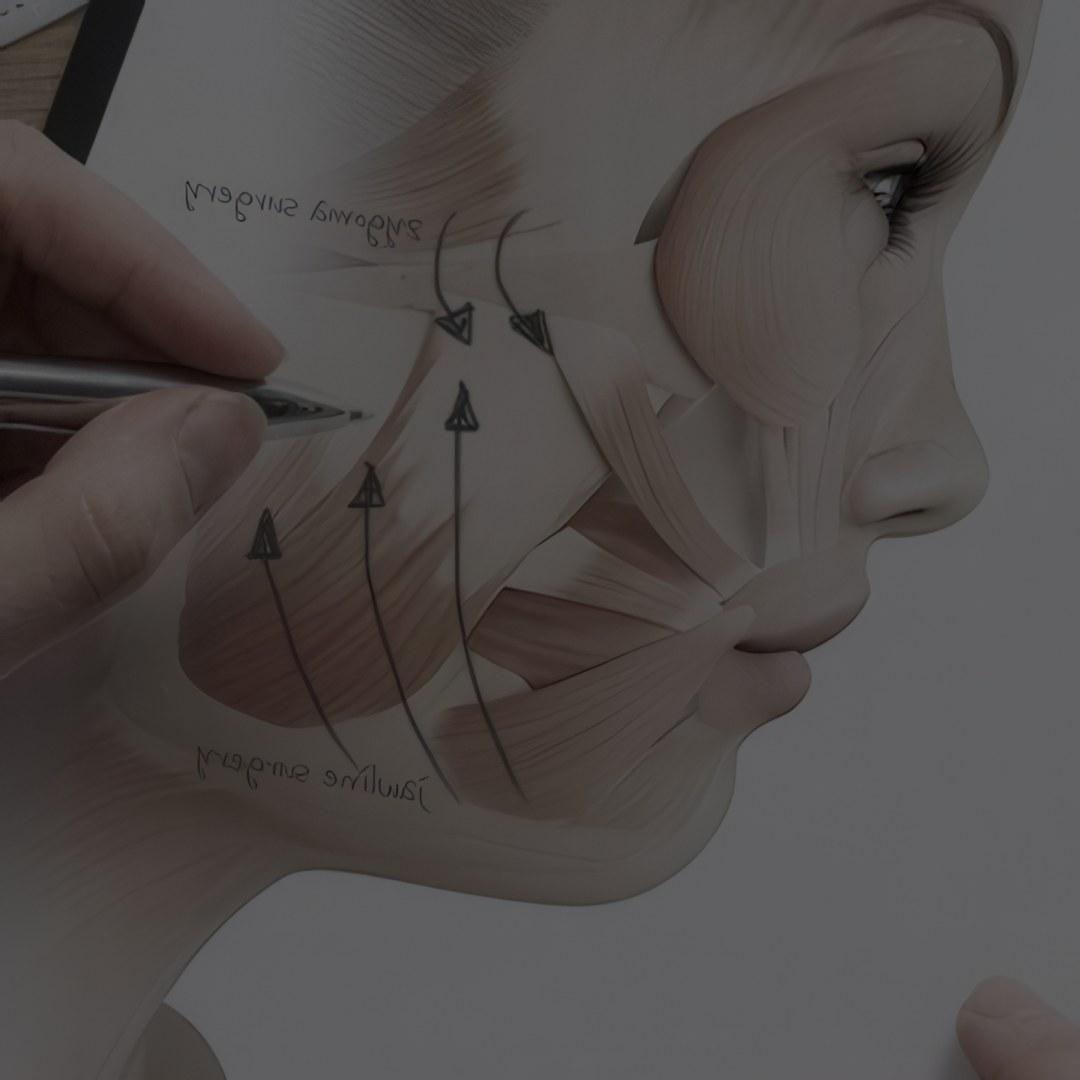
Ruby's own know-how minimizes cheek sagging.
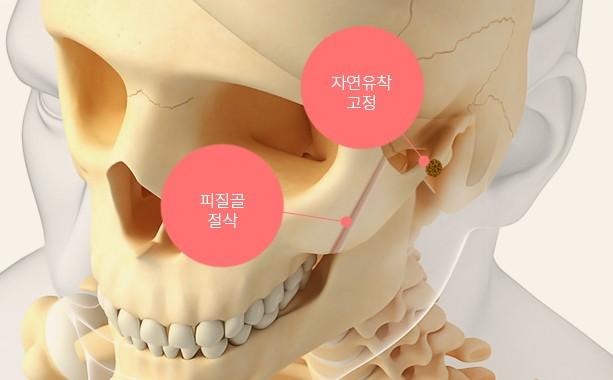
We minimize the dissected area and use complete fixation or adhesion fixation (non-fixation) to minimize cheek sagging.
POINT 03
Less tissue damage, quicker recovery
Delicate surgery that reduces damage to tissue minimizes swelling and scarring, allowing quick recovery and return to daily life.

Before & After
These are before-and-after photos of patients who had surgery at Ruby Plastic Surgery. Results and side effects may vary by individual. We recommend a thorough consultation with our medical team.
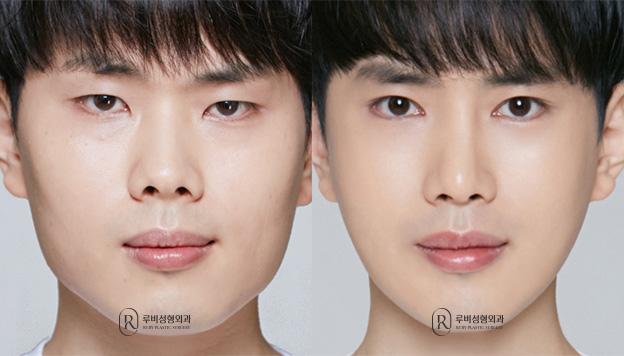
Natural adhesion, ptosis correction, epicanthoplasty, nasal bridge, nasal tip, short nose correction, zygoma reduction, angle reduction
6 months after surgery
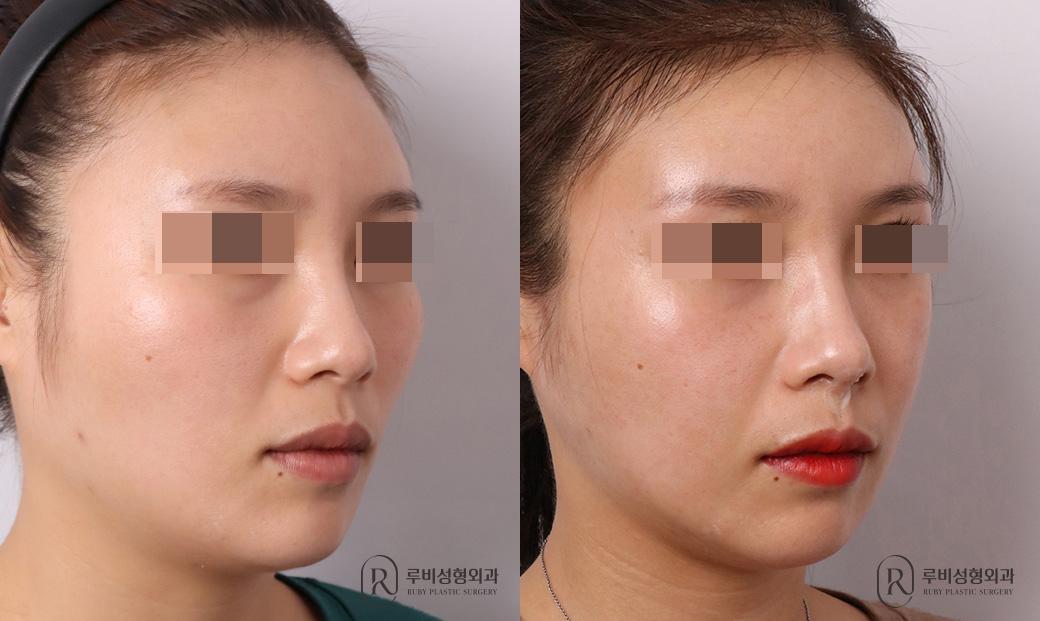
Angle reduction, zygoma reduction
1 month after surgery
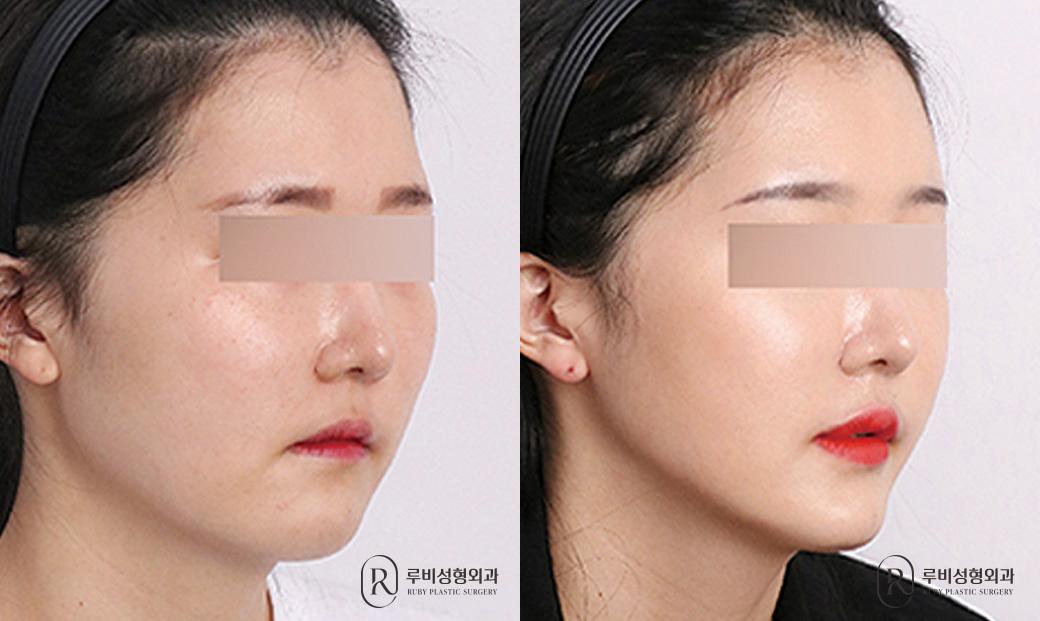
Angle reduction, zygoma reduction, cortical osteotomy
4 months after surgery
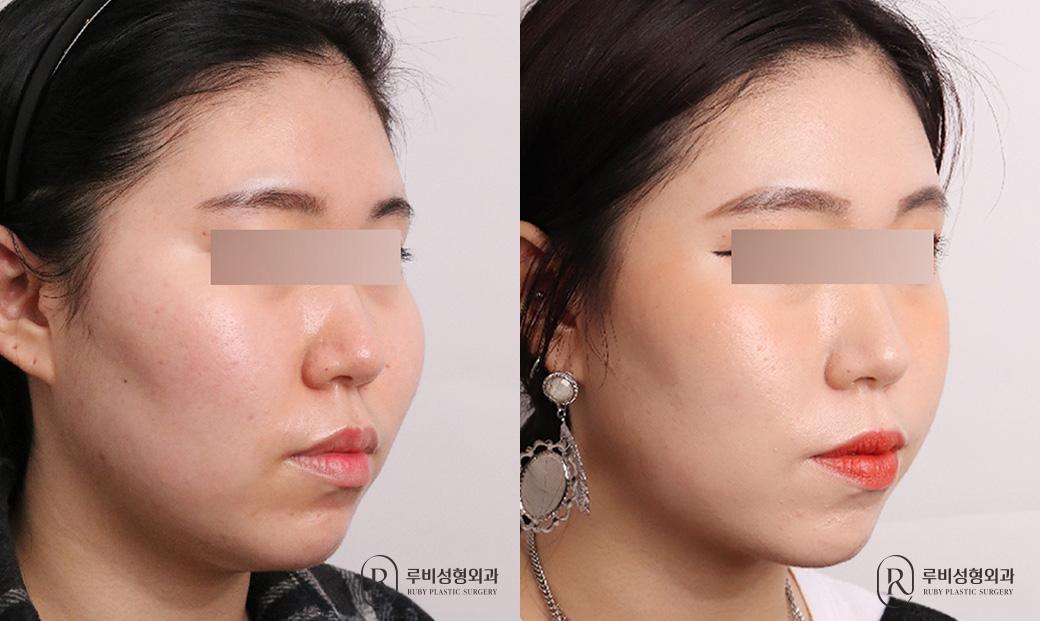
Zygoma reduction
6 months after surgery
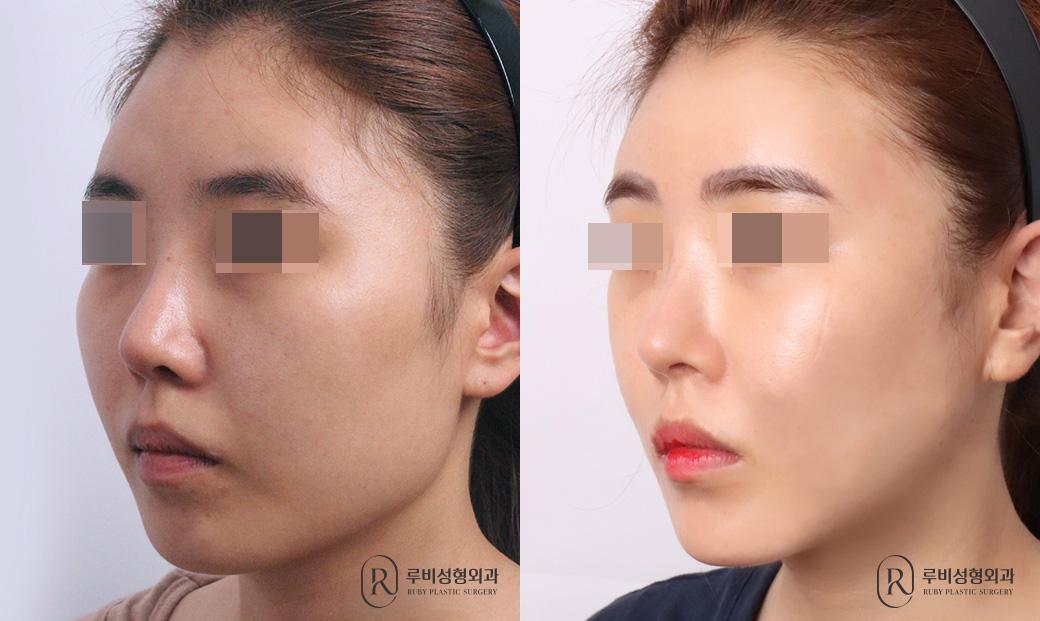
Angle reduction, zygoma reduction, chin tip
6 months after surgery
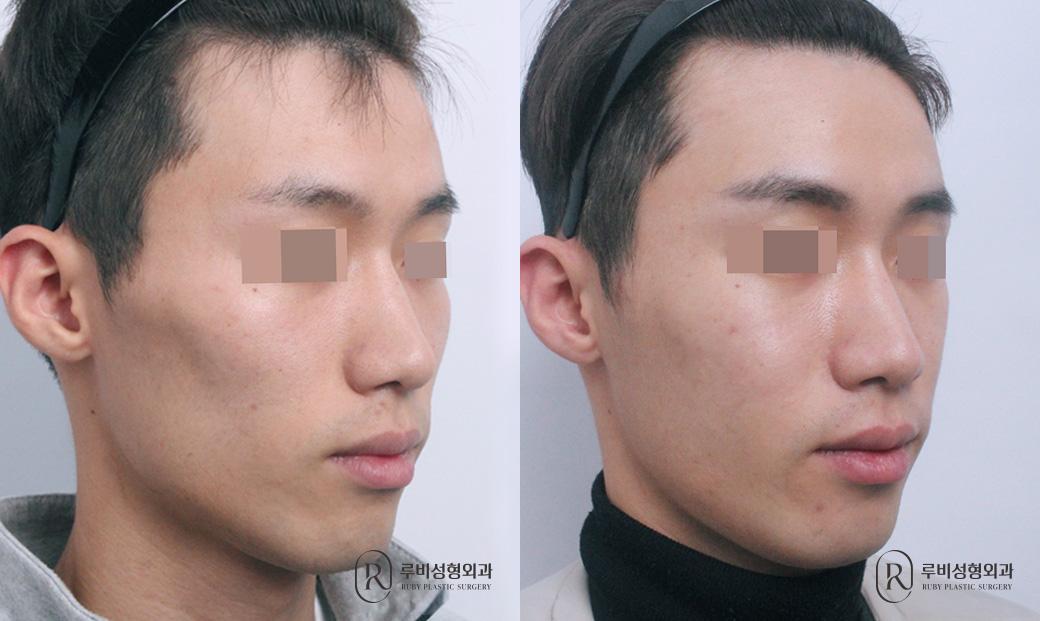
Zygoma reduction
4 months after surgery
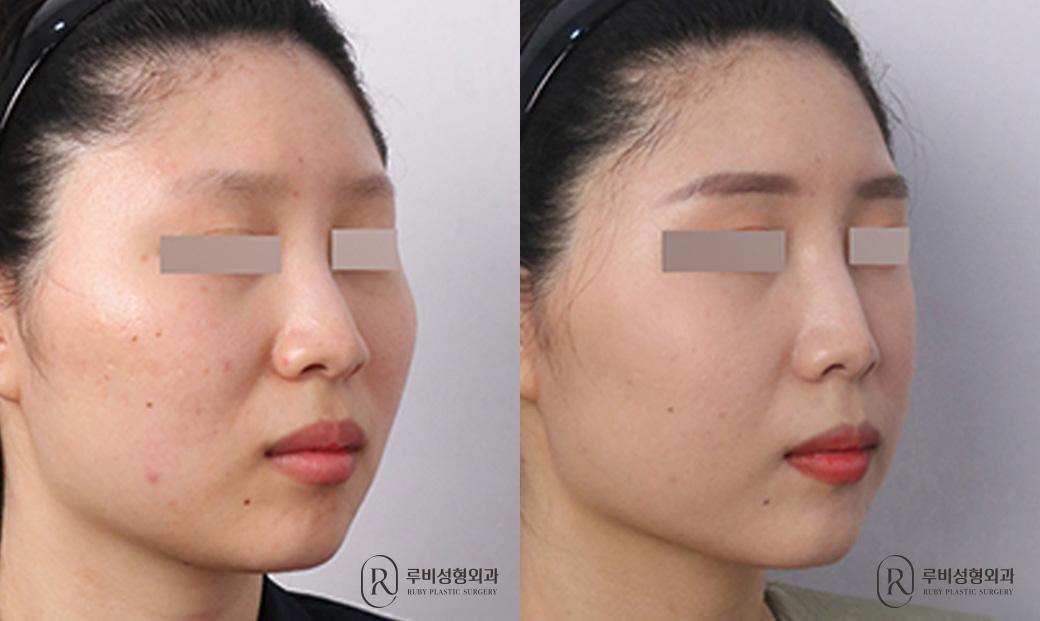
Zygoma reduction
1 month after surgery
What is the problem with my cheekbones?
Your impression changes depending on whether the front, side or 45-degree cheekbone protrudes.

Front cheekbone
Moderate volume looks three-dimensional, but a highly developed one gives a strong, unrefined impression.

Side cheekbone
The face looks wide and larger overall.

45-degree cheekbone
The area below the outer eye corner bulges, so the cheekbone stands out at a 45-degree angle and gives a strong impression.
Ruby's zygoma osteotomy and rotation
We reduce the bone while keeping suitable volume, considering the shape and size of your cheekbones.
Conventional vertical osteotomy of the posterior cheekbone
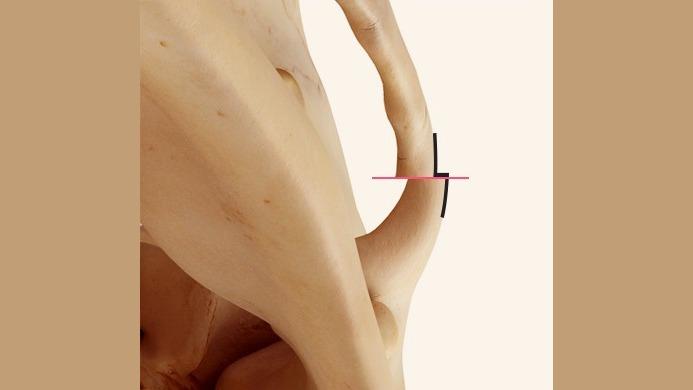
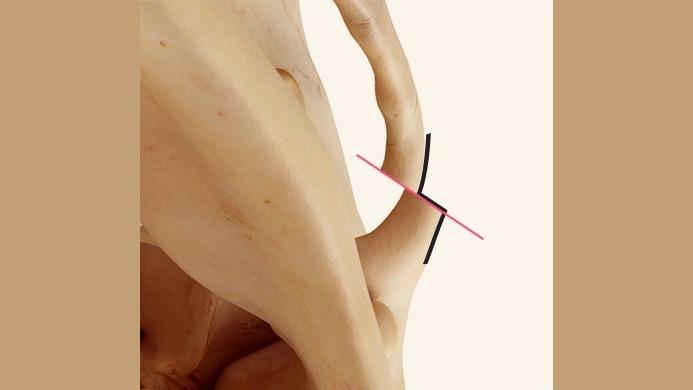
Ruby's oblique osteotomy of the posterior cheekbone
The oblique osteotomy of the posterior cheekbone can move the cheekbone further inward than the conventional vertical osteotomy, producing a more dramatic effect.
Conventional horizontal movement
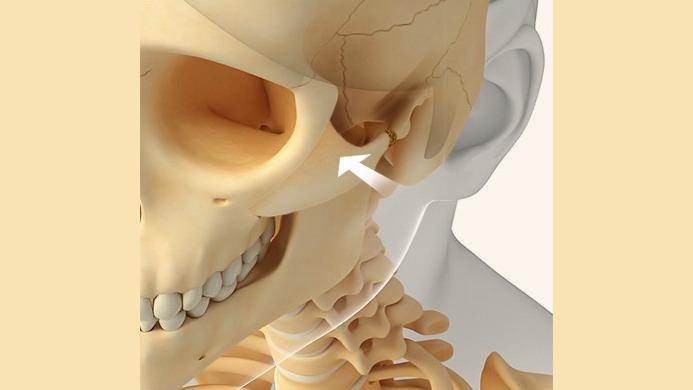
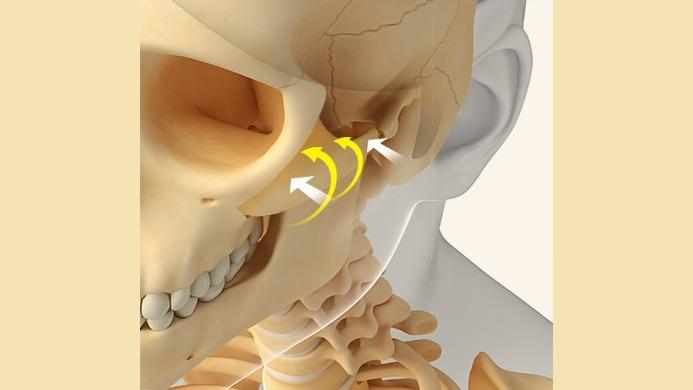
Ruby's 3D rotational movement
Depending on the patient's symptoms, the cut cheekbone is moved forward and inward while adjusting the amount of rotation, finding the ideal cheekbone volume and also helping prevent cheek sagging.
Which suits me: 3D or quick zygoma reduction?
It is best to understand the difference between 3D zygoma reduction and quick zygoma reduction and then choose the method that suits you.
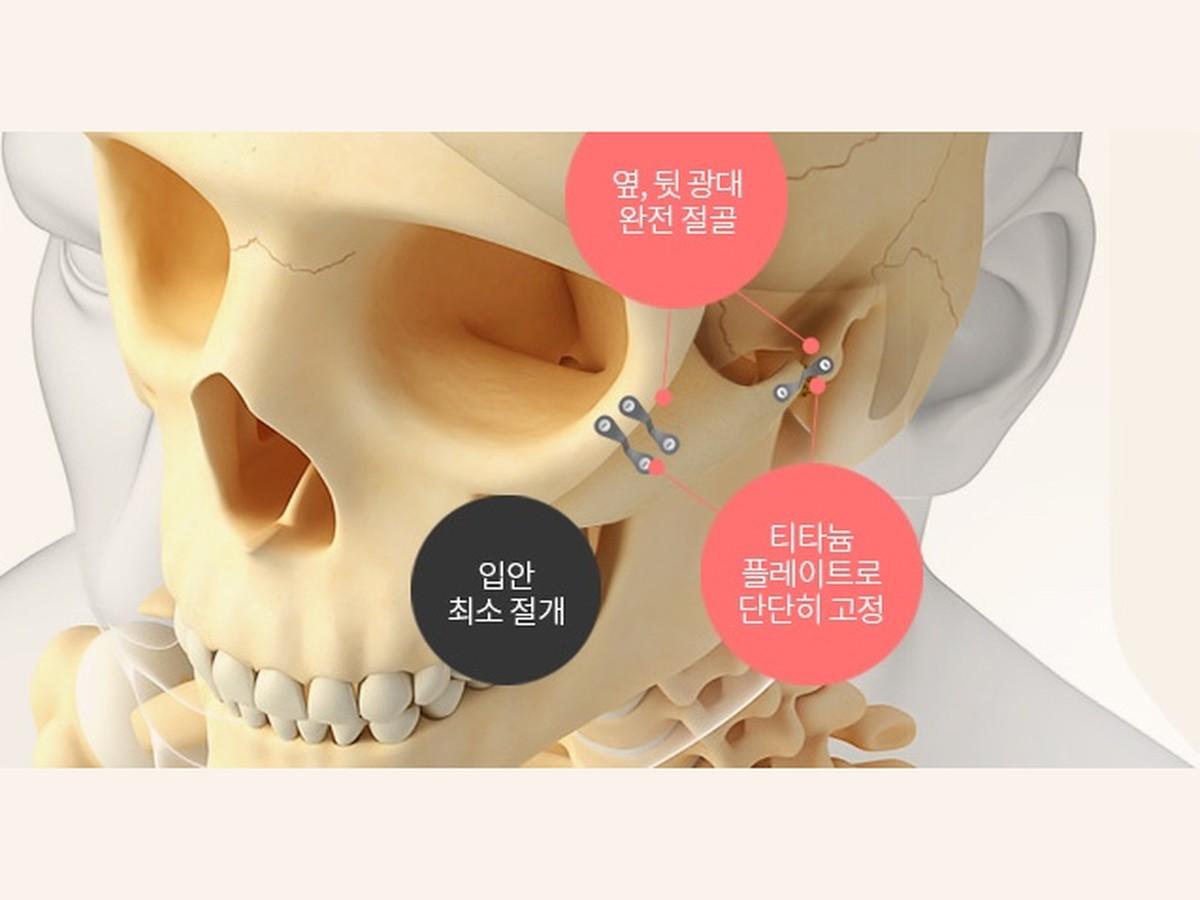
3D zygoma reduction
Method The protruding cheekbone is cut and moved inward, then fixed with a titanium plate and screws
POINT 01 3D rotation zygoma reduction creates ideal volume. The volume is adjusted to each patient's symptoms to improve toward a small, three-dimensional face from any angle.
POINT 02 Surgical accuracy is high and swelling and bleeding are reduced, so the scarring burden tends to be low and return to daily life tends to be quick (varies from person to person).
POINT 03 Micro-incisions and fixation of both the front and side cheekbones reduce cheek sagging.
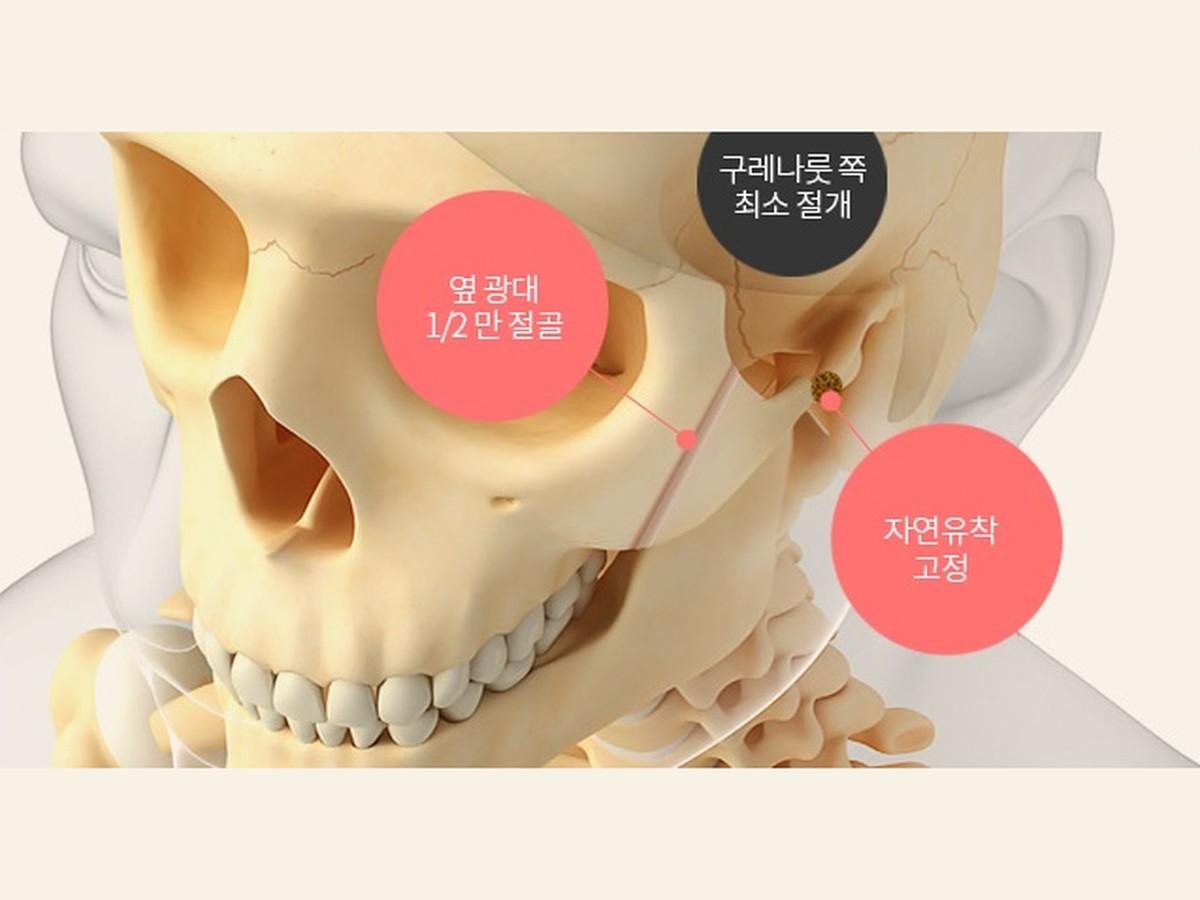
Quick zygoma reduction
Method The protruding cheekbone is cut, moved inward and inserted so that it fixes naturally
POINT 01 Surgery time is short at around 20 minutes, with same-day discharge and daily life possible after surgery (varies from person to person).
POINT 02 Performed through a minimal incision, with a short surgery time of around 20 minutes, same-day discharge and daily life possible after surgery (varies from person to person).
POINT 03 Because it fixes through fascia adhesion and no fixation plate is inserted, there is less foreign-body sensation and a lower risk of cheek sagging and cheek fusion.
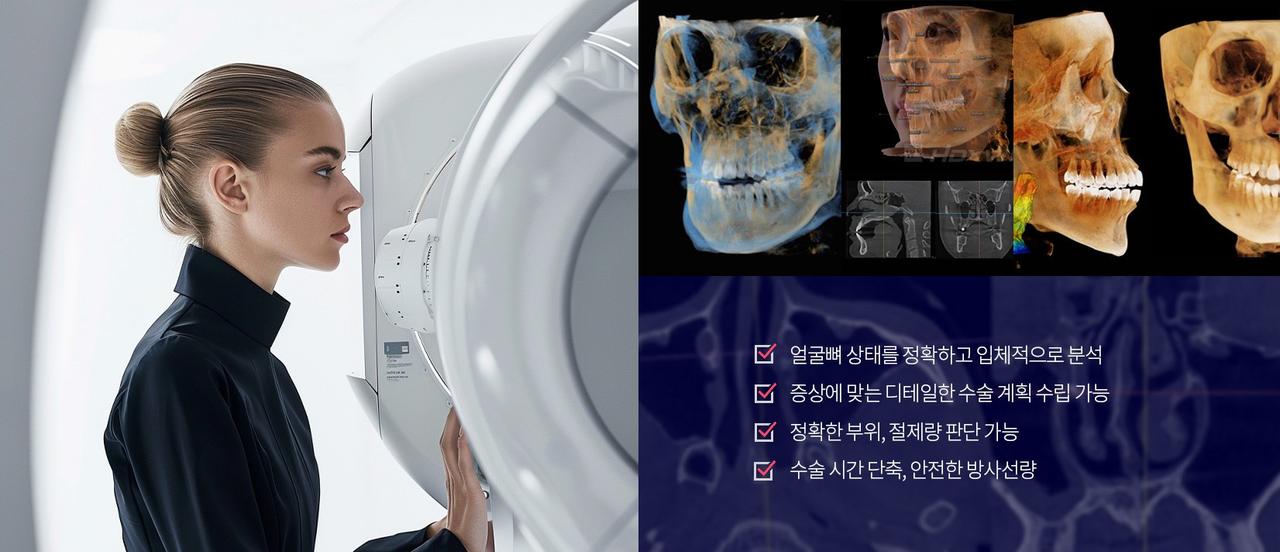
Precise 3D CT analysis
With university-hospital-grade 3D CT, we analyze facial bones, muscles and facial nerve positions to plan the surgical range and method.
3D zygoma reduction process
The incision method can vary depending on the side and front cheekbones. When the side cheekbone mainly needs correction, an incision in front of the ear is made, and for the front cheekbone, an incision inside the mouth is made to reduce the cheekbone.
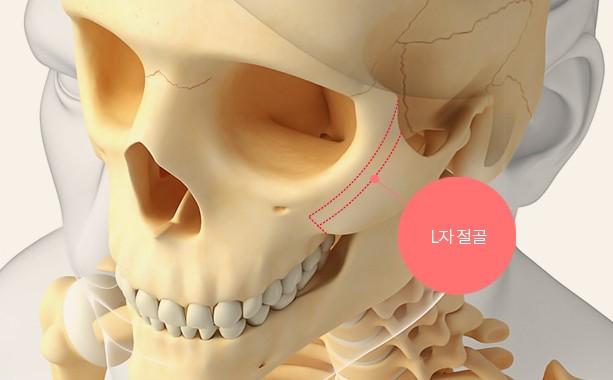
L-shaped cheekbone osteotomy
We perform the osteotomy while adjusting the cutting thickness, predicting in advance the degree of zygoma reduction and the volume.
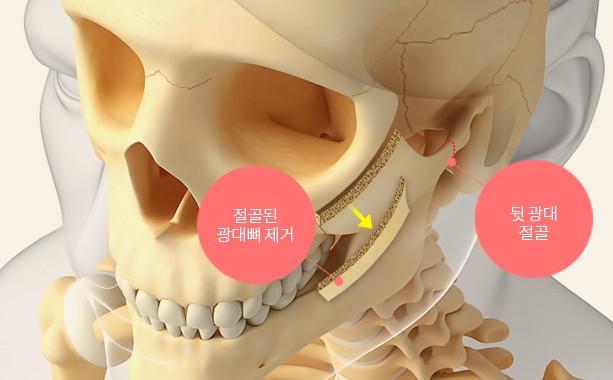
Bone removal and posterior osteotomy
The cheekbone cut by the L-shaped osteotomy is removed, and the posterior cheekbone is delicately cut obliquely.
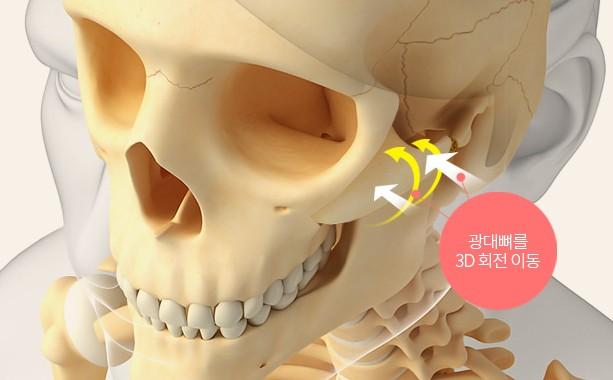
3D rotational movement of the cheekbone inward
After front and back osteotomy, the cheekbone is moved inward, backward and, to help prevent cheek sagging, rotated upward, with the amount of movement varied according to each person's bone structure.
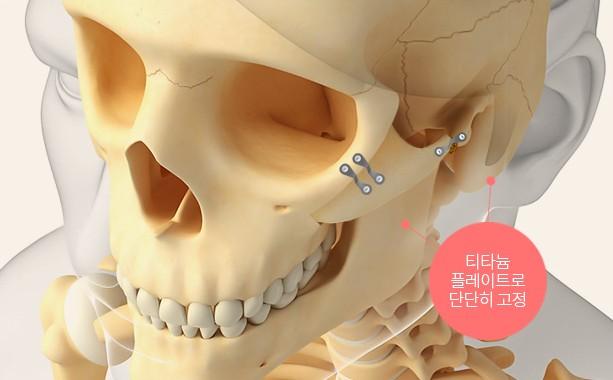
Firm fixation with titanium plates
So that it does not shift due to external impact or the masticatory muscles, the front and back of the rotated cheekbone are firmly fixed with titanium plates and screws.
Quick zygoma reduction process
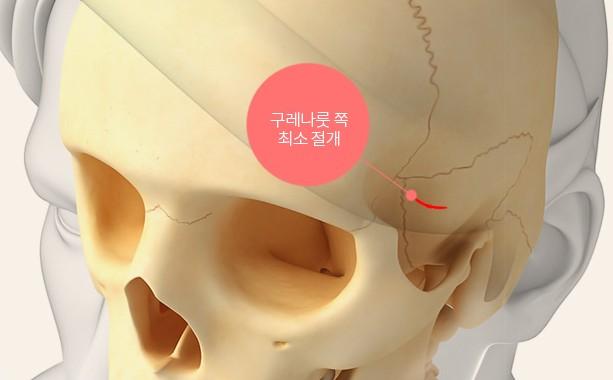
In this method, an incision is made in the scalp at the sideburn area, the bone of the cheekbone is cut, rotated and pushed inward. The cheekbone is naturally fixed to the periosteum in a button style.
Minimal incision at the sideburn
A minimal incision is made at the sideburn area, where the scar is hard to see.
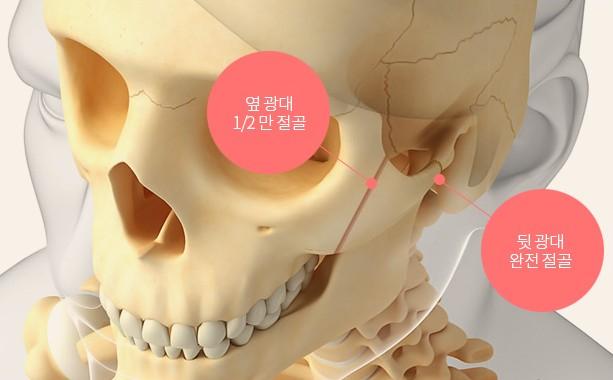
Side and posterior osteotomy
Only half of the side cheekbone is cut, and the posterior cheekbone is cut completely.
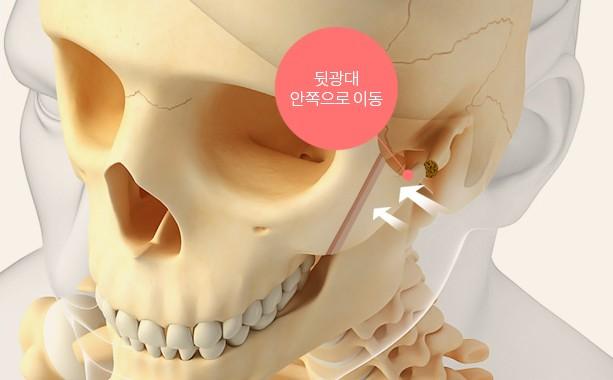
Rotating the posterior cheekbone inward
When the cut posterior cheekbone is folded inward, the cheekbone is reduced.
Adhesion or close fixation and cortical shaving
It is fixed through natural adhesion by the periosteum or close fixation with screws, and the cortical bone of the widened side cheekbone is shaved to make it smooth.
Want an ideal cheekbone volume that balances with your face?
Smaller cheekbones; improved cheekbone asymmetry A more three-dimensional face; a smooth, soft facial line
Who zygoma reduction suits
At consultation we look at cheekbone projection, symmetry, face width and impression.

Prominent cheekbones
When the cheekbones protrude and give a strong impression

Asymmetrical cheekbones
When the cheekbones are asymmetrical left and right

Prominent side cheekbone
When developed side cheekbones make the face look uneven

Wide face
When both front and side cheekbones are developed and the face is wide

Softening a strong look
When you want to improve a strong, dated image caused by protruding cheekbones
Prominent 45-degree cheekbone
When the 45-degree cheekbones stand out when seen at an angle
Four promises we keep
Beyond beauty, we practice medicine that adds value to your life.
Honest consultation, principled surgery
We consult without exaggeration and operate by principle.
Safety from the basics
Accidents can start from small details, so we follow every safety rule carefully.

One dedicated specialist
Your specialist handles consultation, surgery and aftercare. No shadow doctors.
Results that suit you
We find the beauty that fits your features and personality.
Quick zygoma reduction FAQ
Does the bone separate without fixation?
No. Even with fixation surgery methods, the bone does not fuse completely, so separation of the bone can occur. In non-fixation zygoma reduction, the bone is fixed to the periosteum in a button style and fuses naturally over time. With the know-how of Ruby Plastic Surgery's quick zygoma reduction, we aim to break the misconceptions about non-fixation zygoma reduction.
Is bone surgery under sedation dangerous?
No. When surgery is done through an incision inside the mouth, general anesthesia is used because of the risk of bleeding entering the airway. However, quick zygoma reduction is done through a scalp incision at the sideburn, so it can be performed under sedation.
Does cheek sagging come sooner with non-fixation zygoma reduction?
No. The chance of cheek sagging goes up when there has been a lot of dissection. Quick zygoma reduction uses a 5 mm incision to create minimal space and proceeds with narrow dissection, so the risk of cheek sagging can be reduced (varies from person to person).
Post-Surgery Precautions
Side effect information: Complications that can generally occur after surgery, such as bleeding, infection and inflammation, may vary in degree from person to person, so caution is needed.
Related Face Contour Surgery
Explore face contour surgery care by area and method.





Get started with an easy inquiry or booking
Reach us by phone, messenger or online. Our chatbot is available 24 hours a day.