
Bio-Bond After Liposuction: Timeline and Care by Stage
Worried about firm, lumpy areas after liposuction? Learn when bio-bond forms and softens, how to care for it at each stage, and the signs that mean you should check with your clinic.
If the treated area suddenly feels hard and lumpy 2–3 weeks after liposuction, it's easy to panic and wonder whether something went wrong with the surgery. In most cases, it's bio-bond, which appears naturally as part of the healing process. Ruby Plastic Surgery at Sinsa Station in Gangnam explains what bio-bond is, when it forms, when it softens, and how to care for it at each stage for smooth contours, in question-and-answer order.
What Is Bio-Bond?
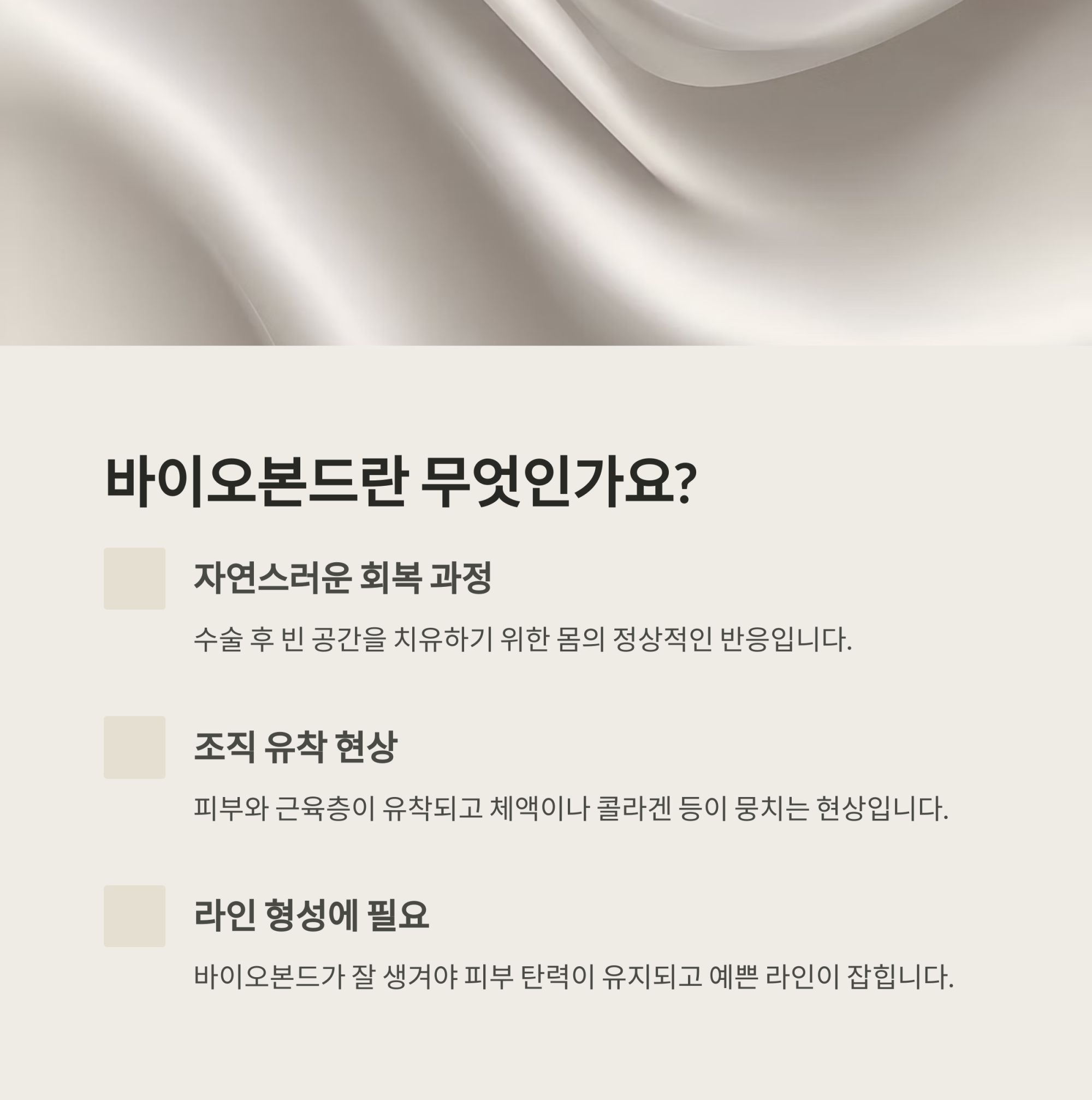
Bio-bond literally means living tissues bonding to one another. After liposuction, empty spaces are left where the fat was removed, and the body triggers an inflammatory response and builds new tissue to fill them. In this process, the skin and muscle layers adhere, and fluid and collagen clump together, making the skin feel firm and bumpy—this is bio-bond.
Because the firmness and unevenness appear as tissues reattach in this way, bio-bond is closer to a normal stage of healing the body goes through as it repairs itself than to a surgical side effect. Some explanations even say that healthy bio-bond formation is what helps maintain skin elasticity and set your contours, so there's no need to worry too much.
When Does It Form, and When Does It Soften?
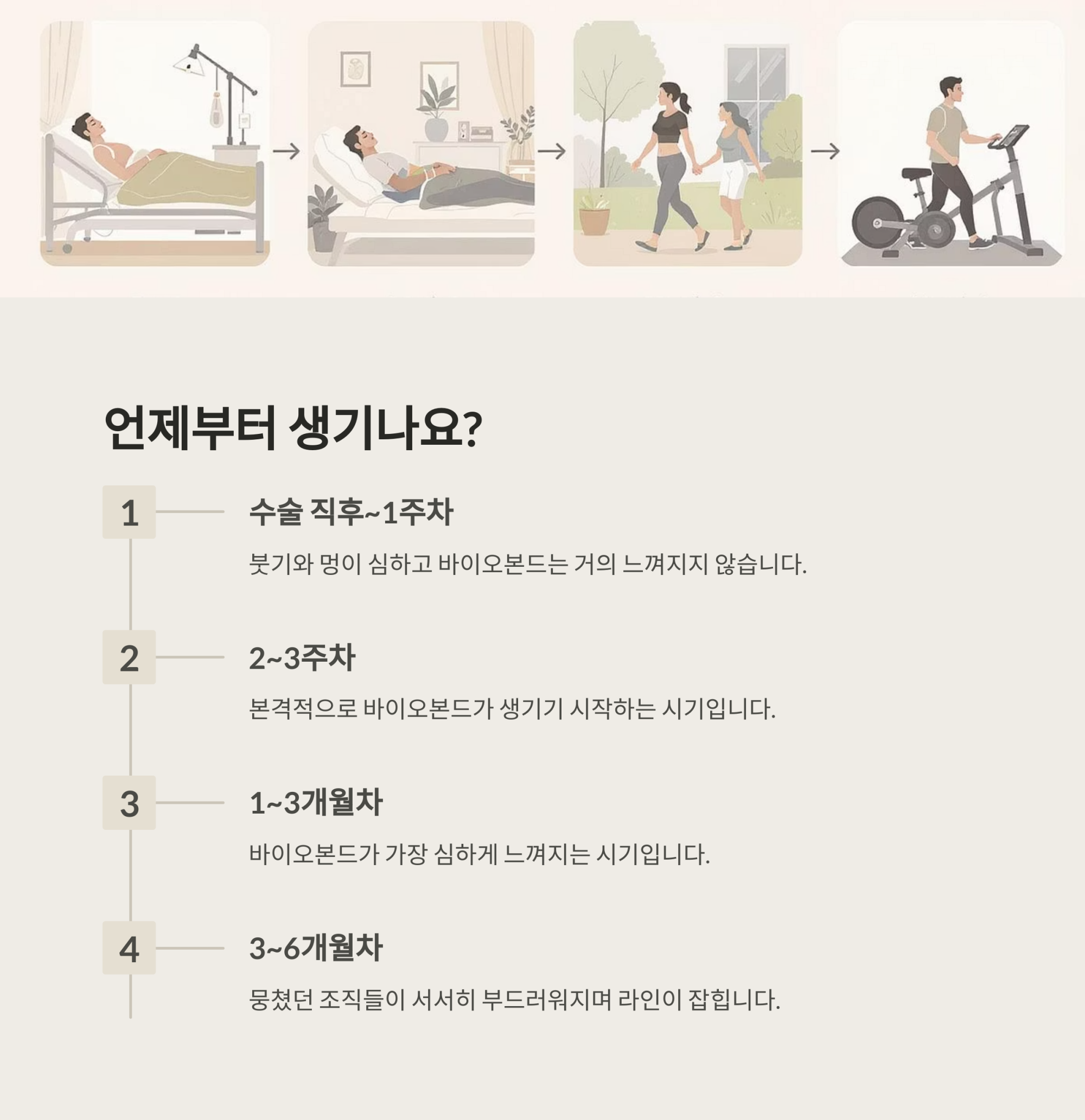
When bio-bond forms varies slightly depending on the individual, the treated area, and the extent of surgery, but it generally follows the pattern below. The most common question is when it first appears—it usually starts to be felt around week 2, as swelling begins to ease.
Care by Stage: What Should You Do?
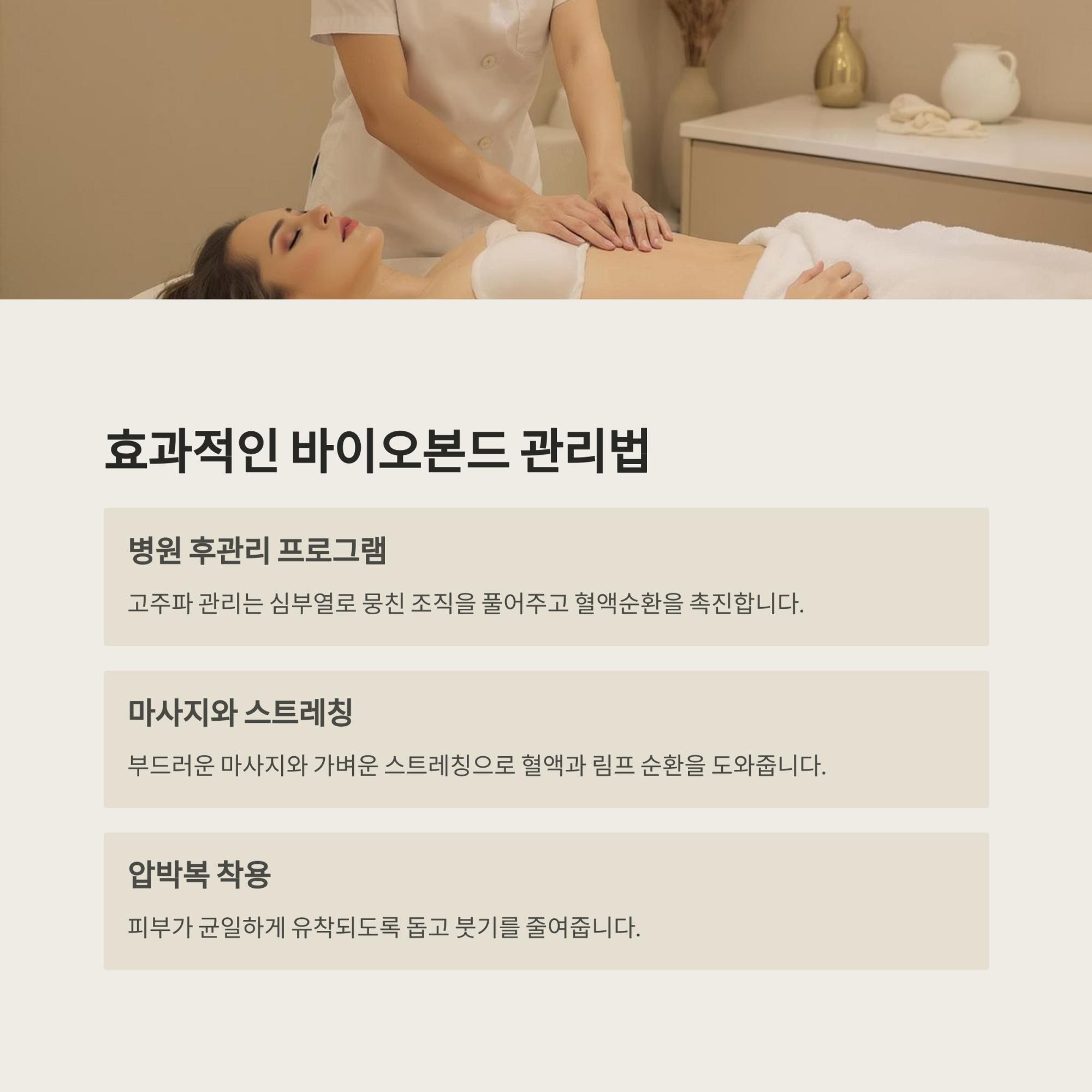
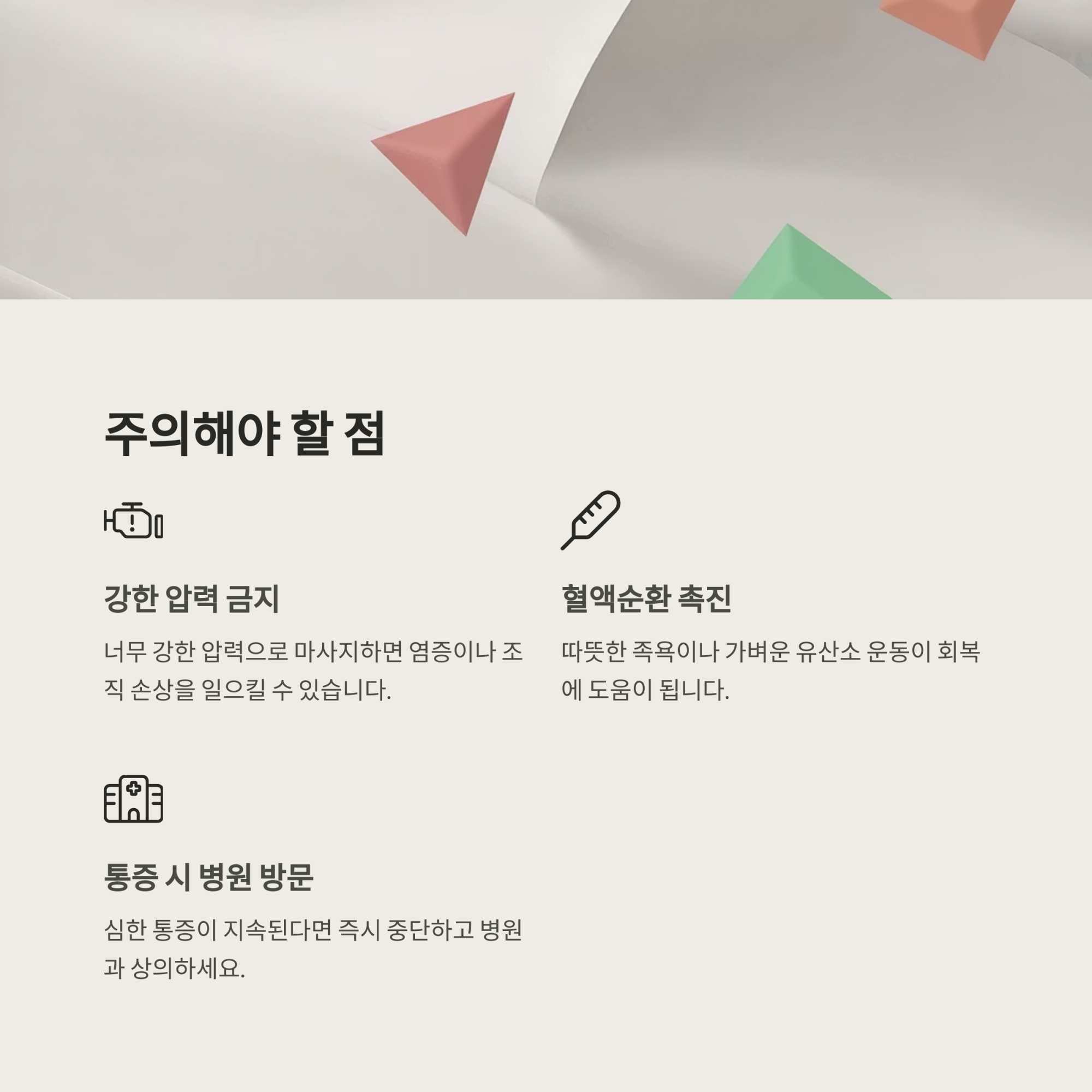
Bio-bond resolves on its own over time, but how you care for it can change your recovery speed and final contours. If you want smooth contours, keep up with these four things.
- Clinic aftercare programs: Many clinics offer aftercare such as radiofrequency (RF) and Endermologie. RF care uses deep heat to loosen hardened tissue and improve circulation, making it effective for managing bio-bond, so regular sessions are recommended.
- Gentle massage and stretching: Gently massaging the firm areas and stretching within a range that doesn't pull on the treated area improves blood and lymph circulation, which helps relieve swelling and lumps.
- Wearing a compression garment: A compression garment helps the skin adhere evenly and reduces swelling. Even if it feels uncomfortable, wearing it consistently for the period your doctor recommends is the shortcut to refined final contours.
- Foot baths and light aerobic exercise: Boosting circulation is the foundation of bio-bond care. Warm foot baths and gentle aerobic exercise such as light walking can aid recovery.
Is It Possible to Have No Bio-Bond at All?
Not really. If you've had liposuction, bio-bond is a recovery process everyone goes through. The degree of lumpiness varies from person to person, but it's very rare for it not to occur at all.
Can It Come With Pain?
You may feel achy or slightly sore when pressing on firm areas or holding certain positions. However, if severe pain continues to the point that daily life is difficult, get an accurate diagnosis at the clinic.
If Lumps Remain After 6 Months
Most lumps soften within 6 months, but if recovery is slow, slight firmness may be felt for up to a year. If severe hard lumps or pain remain after 6 months, it may be a case of excessive adhesion, so consult the clinic where you had surgery to see whether additional care is needed.
Key Takeaways
- Bio-bond is a normal part of healing that begins 2–3 weeks after liposuction, is firmest at 1–3 months, and softens over 3–6 months.
- Supporting circulation with aftercare programs, massage and stretching, compression garments, and foot baths and aerobic exercise helps your contours settle more smoothly.
- If severe pain persists or significant firmness remains after 6 months, have it checked at the clinic where you had surgery.
Last reviewed: 2026-10-07
This article provides general medical information. Individual diagnosis and treatment plans are determined through an in-person consultation.
Ruby News and Columns
We provide the publication dates and original posts confirmed on the official blog.





Get started with an easy inquiry or booking
Reach us by phone, messenger or online. Our chatbot is available 24 hours a day.