
Aftercare After Lifting Surgery: Key Recovery Windows
For those who've just had lifting surgery: key aftercare by stage at 3 days, 1 week, and 1 month, daily habits, and FAQs such as when you can wash your face or wear makeup.
The results of lifting surgery aren't finished on the operating table—they're completed through care during recovery. How you care for yourself makes a big difference not only in how quickly you recover but also in how satisfied you are with the lifting results. Following the aftercare standards of Ruby Plastic Surgery at Sinsa Station in Gangnam, we've summarized the key recovery windows by stage, daily habits, and frequently asked questions for those who have just had lifting surgery.

Isn't It All About the Surgery Going Well?
Not quite. Even with the same surgery, how quickly swelling subsides and how your contours settle depend on how you spend the recovery period. There are three main reasons aftercare matters after lifting surgery.
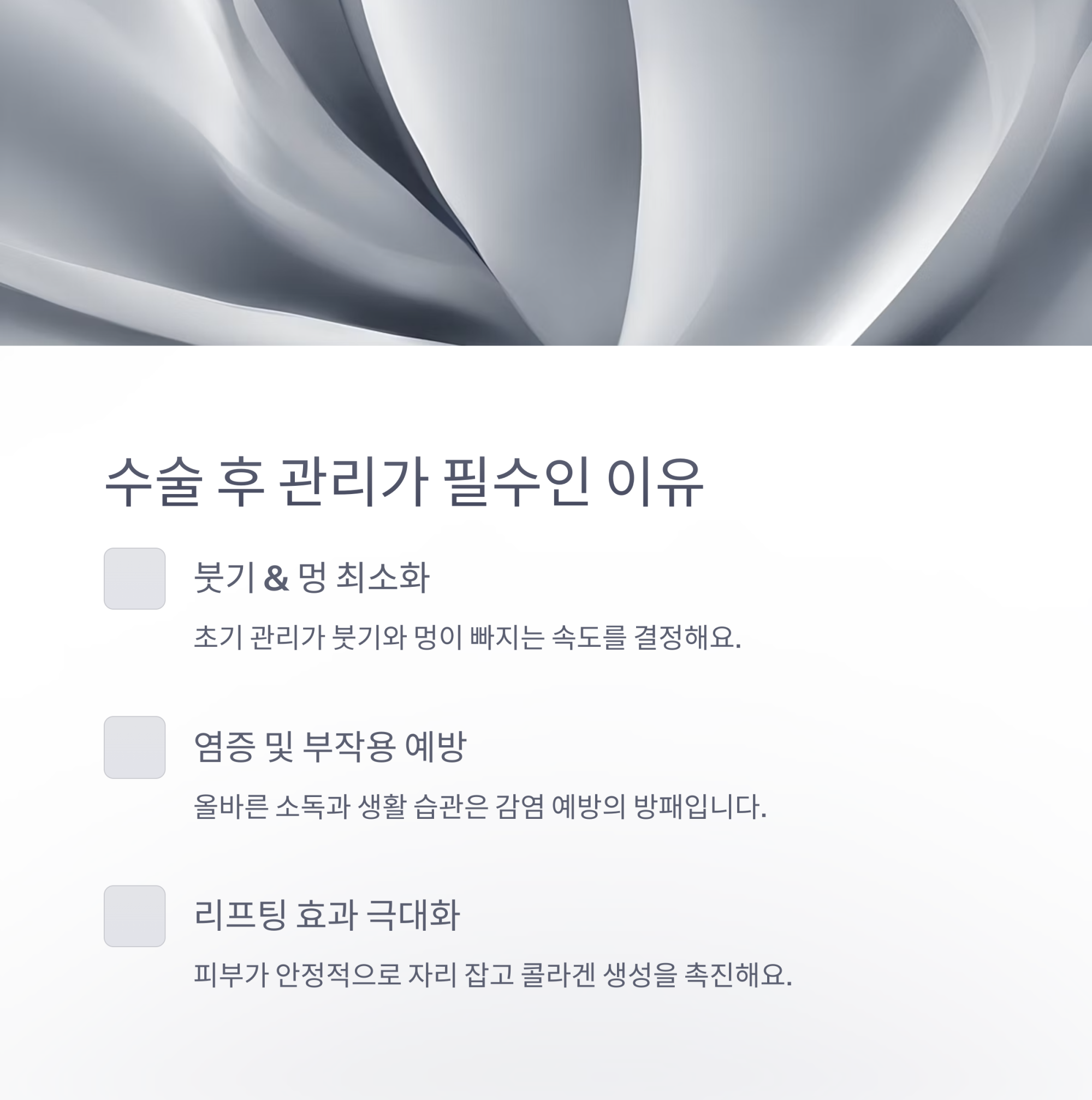
In the end, careful aftercare can be considered the final step that completes lifting surgery.
Aftercare by Stage: Key Recovery Windows
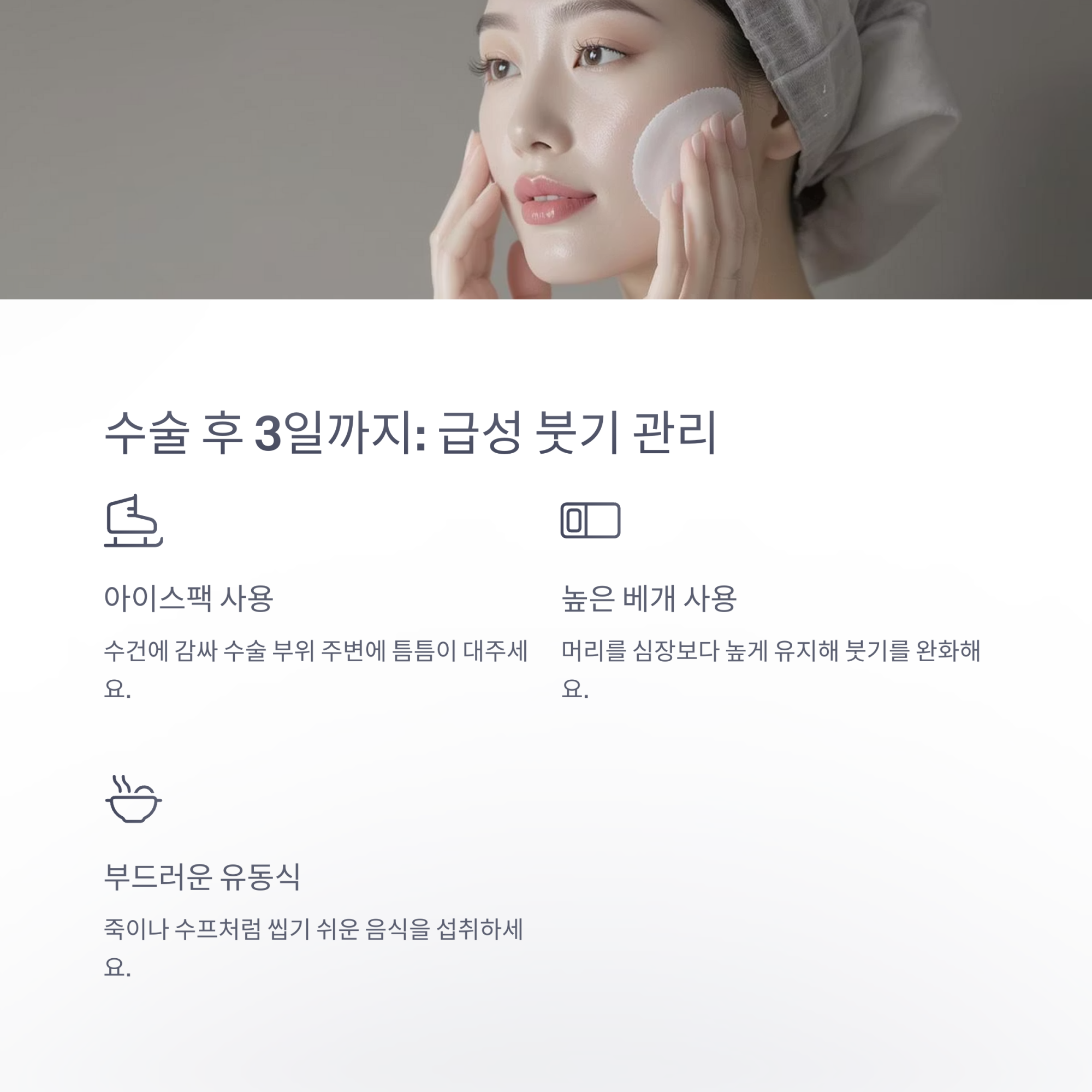
Right After Surgery to Day 3: Managing Acute Swelling
This is the period to focus on controlling swelling. Apply an ice pack wrapped in a towel around the surgical area from time to time. When sleeping, raise your pillow higher than usual so your head is above your heart—this greatly helps reduce swelling. For meals, soft liquid foods such as porridge or soup are best.
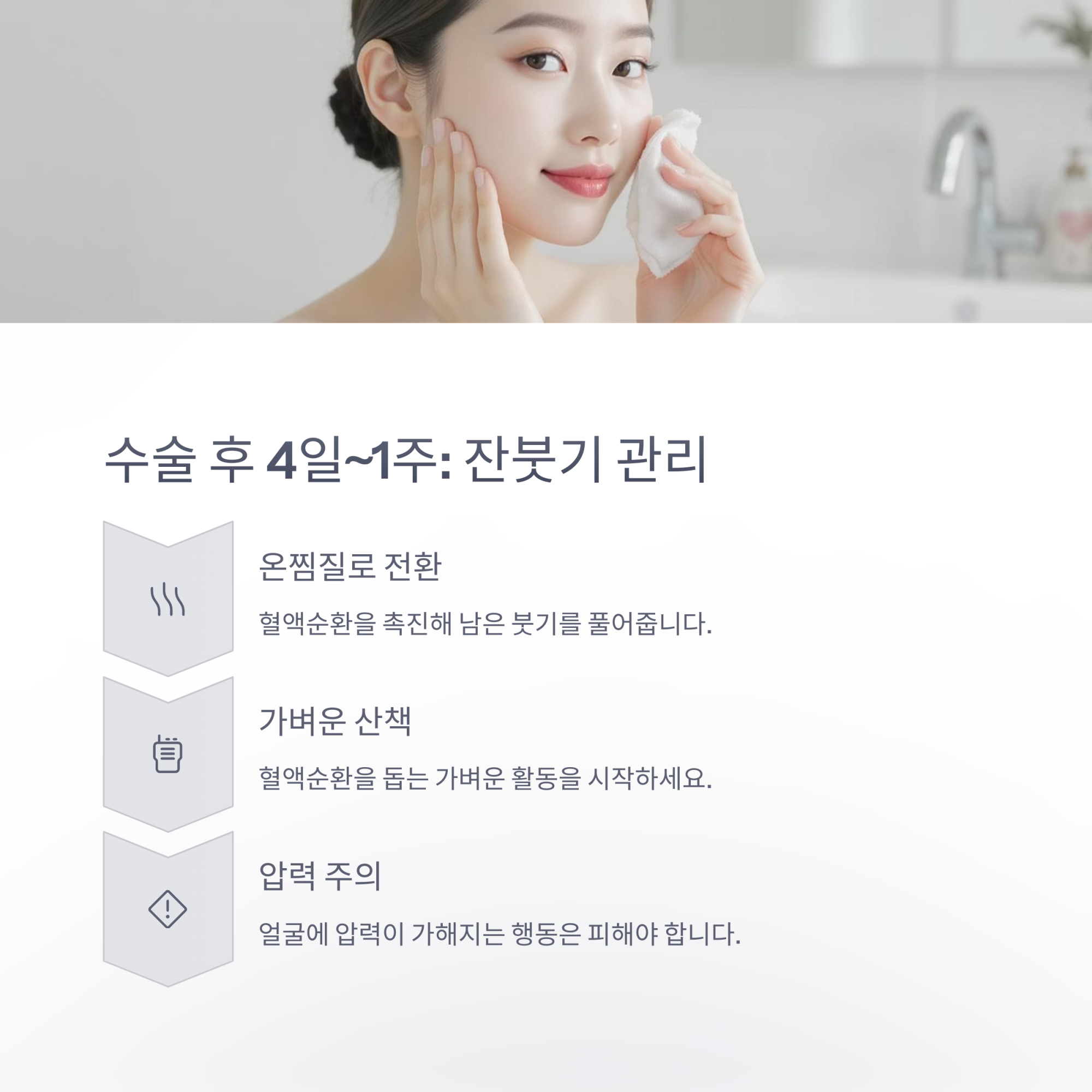
Day 4 to Week 1: Managing Residual Swelling and Recovery
Once the major swelling starts to go down, switch to warm compresses and take light walks to help circulation. The surgical area hasn't fully healed yet, so avoid putting strong pressure on your face or opening your mouth wide.
Week 2 to Month 1: When Your Contours Settle
Most swelling and bruising disappear, and the lifted contours gradually settle into place. If the clinic prescribed a scar ointment, apply it consistently. Alcohol and smoking can slow recovery and lead to inflammation, so be sure to avoid them for at least a month.
Daily Habits That Protect Your Lifting Results
Your habits during recovery also affect long-term results. Here are small but important habits, organized by area.
When Can I Wash My Face and Hair?
You can usually wash your face and shampoo gently starting the day after your stitches are removed, but this may vary depending on the extent and method of surgery. Be careful not to let water hit the surgical area directly or irritate it, and follow your clinic's instructions first.
When Can I Wear Makeup?
Light base makeup is usually possible after your stitches are removed. However, take special care not to rub the surgical area when cleansing, and it's best to avoid harsh cosmetics for 2–4 weeks.
Are Tightness and Numbness Normal?

Yes, these are common, normal symptoms during recovery. They occur as the skin tissue and nerves around the incision heal, and sensation usually returns gradually over a few months. If the discomfort persists or worsens, be sure to have it checked at the clinic.
Summary
- Through day 3, control swelling with cold compresses, a raised pillow, and liquid foods; through week 1, support circulation with warm compresses and walks.
- Through month 1, apply scar ointment and avoid alcohol and smoking; during recovery, make soft meals, proper sleeping posture, and gentle skin care your routine.
- Tightness and numbness recover over a few months, but have them checked at the clinic if they worsen.
Last reviewed: 2026-10-07
This article provides general medical information. Individual diagnosis and treatment plans are determined through an in-person consultation.
Ruby News and Columns
We provide the publication dates and original posts confirmed on the official blog.





Get started with an easy inquiry or booking
Reach us by phone, messenger or online. Our chatbot is available 24 hours a day.