
Cold vs. Warm Compresses After Nose Surgery: When and How
Worried about swelling and bruising after nose surgery? Learn when to switch from cold to warm compresses, the right placement, temperature, and timing, and what to do if you make a mistake.
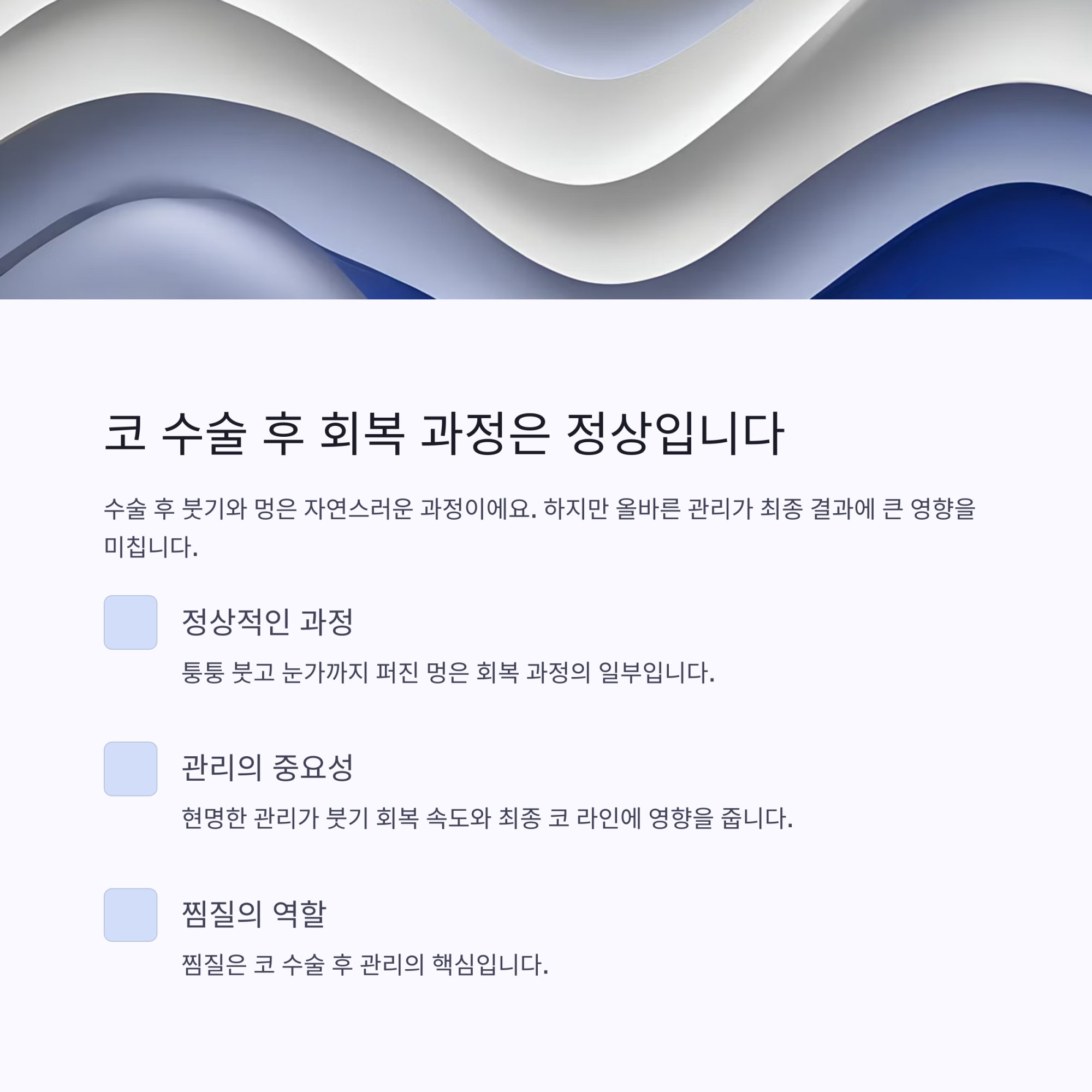
Many patients are startled the first time they look in the mirror after nose surgery and see a puffier face than expected, with bruising that has spread to the eyes. This is a normal part of healing, and how you manage this period can affect both how quickly the swelling goes down and how satisfied you are with your final nose line. At the center of that care are compresses. Based on the aftercare standards of Ruby Plastic Surgery at Sinsa Station in Gangnam, here is when and how to use compresses correctly after nose surgery.

Timing: What Separates Cold and Warm Compresses
The key to compresses after nose surgery is which type you use, and when. Even the same compress can have the opposite effect if the timing is off.
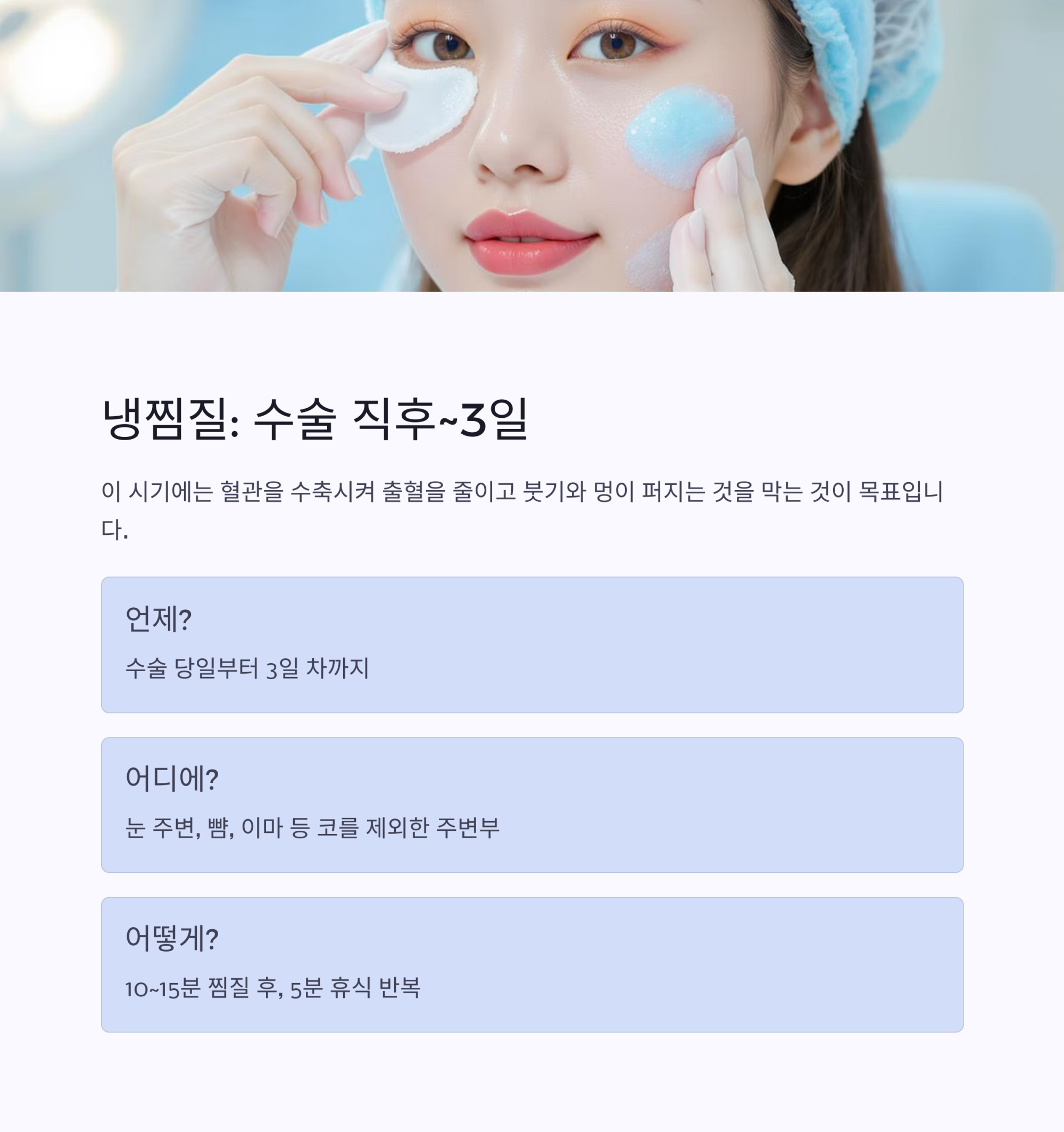
Day of Surgery to Day 3: Cold Compresses
The goal during this period is to constrict the blood vessels affected by surgery, reduce bleeding, and keep swelling and bruising from spreading. The cold sensation also helps ease pain.
- Duration: From the day of surgery through day 3
- Placement: Rest lightly on the surrounding areas, such as around the eyes, cheeks, and forehead, avoiding the nose itself
- Method: Repeat 10–15 minutes of compressing followed by a 5-minute break
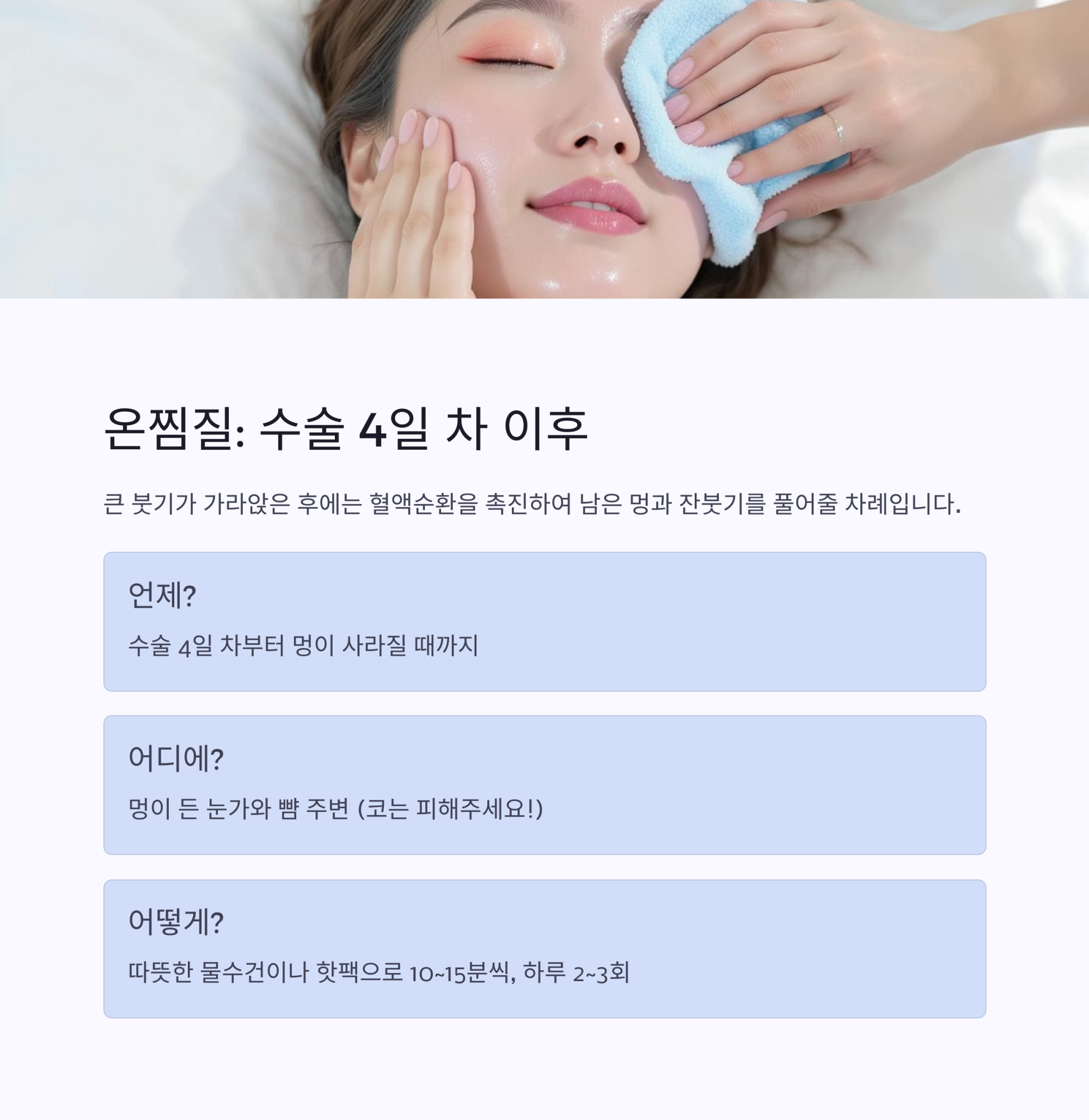
Day 4 Onward: Warm Compresses
Once the major swelling has subsided, it's time to boost circulation and help clear the remaining bruising and residual swelling. Warm compresses are effective at dispersing pooled blood—in other words, bruises.
- Duration: From day 4 until the bruising is gone
- Placement: Around the bruised eye area and cheeks. Continue to avoid the nose
- Method: A warm, damp towel or heat pack for 10–15 minutes at a time, 2–3 times a day
Compress Dos and Don'ts
How Long Should You Use Compresses?
It's best to continue consistently through weeks 1–2, when the major swelling and bruising resolve. If some residual swelling remains after that, light warm compresses may help. The most accurate guide is to check with your surgeon at your follow-up visits.
If You Accidentally Put an Ice Pack on Your Nose
Placing one briefly once or twice rarely causes a serious problem. Don't worry too much—just stop right away and continue compressing the correct way. However, if pain gets worse or your nose feels like its shape has changed, contact the clinic where you had surgery immediately to have it checked.
Other Ways to Reduce Swelling
Keeping your upper body elevated while sleeping, avoiding salty foods and eating foods that help reduce swelling such as pumpkin juice, and taking light walks to support circulation can all help. Combining compresses with healthy daily habits can speed up your recovery.

In Summary
- Use cold compresses from the day of surgery through day 3, then switch to warm compresses from day 4.
- Avoid the nose and splint; wrap the compress in a towel, rest it lightly for 10–15 minutes at a time, and take breaks.
- It may feel tedious, but consistent compresses now shape your recovery and final nose line after nose surgery.
Last reviewed: 2026-10-07
This article provides general medical information. Individual diagnosis and treatment plans are determined through an in-person consultation.
Ruby News and Columns
We provide the publication dates and original posts confirmed on the official blog.





Get started with an easy inquiry or booking
Reach us by phone, messenger or online. Our chatbot is available 24 hours a day.