
Boosting Fat Graft Survival: Pure Fat Extraction and Aftercare
For anyone worried about graft survival before a fat graft: how grafting methods differ, why pure fat extraction matters, and the principles of aftercare, compared side by side.

The first question most people ask once they decide on a fat graft is about the graft survival rate. How much of the transferred fat survives and keeps its volume determines both satisfaction and whether a revision will be needed. Fat graft survival depends on how the fat is purified before it's grafted and how well the area is cared for afterward. Ruby Plastic Surgery in Gangnam compares the different fat graft methods, explains what pure fat extraction means, and outlines the principles of aftercare.
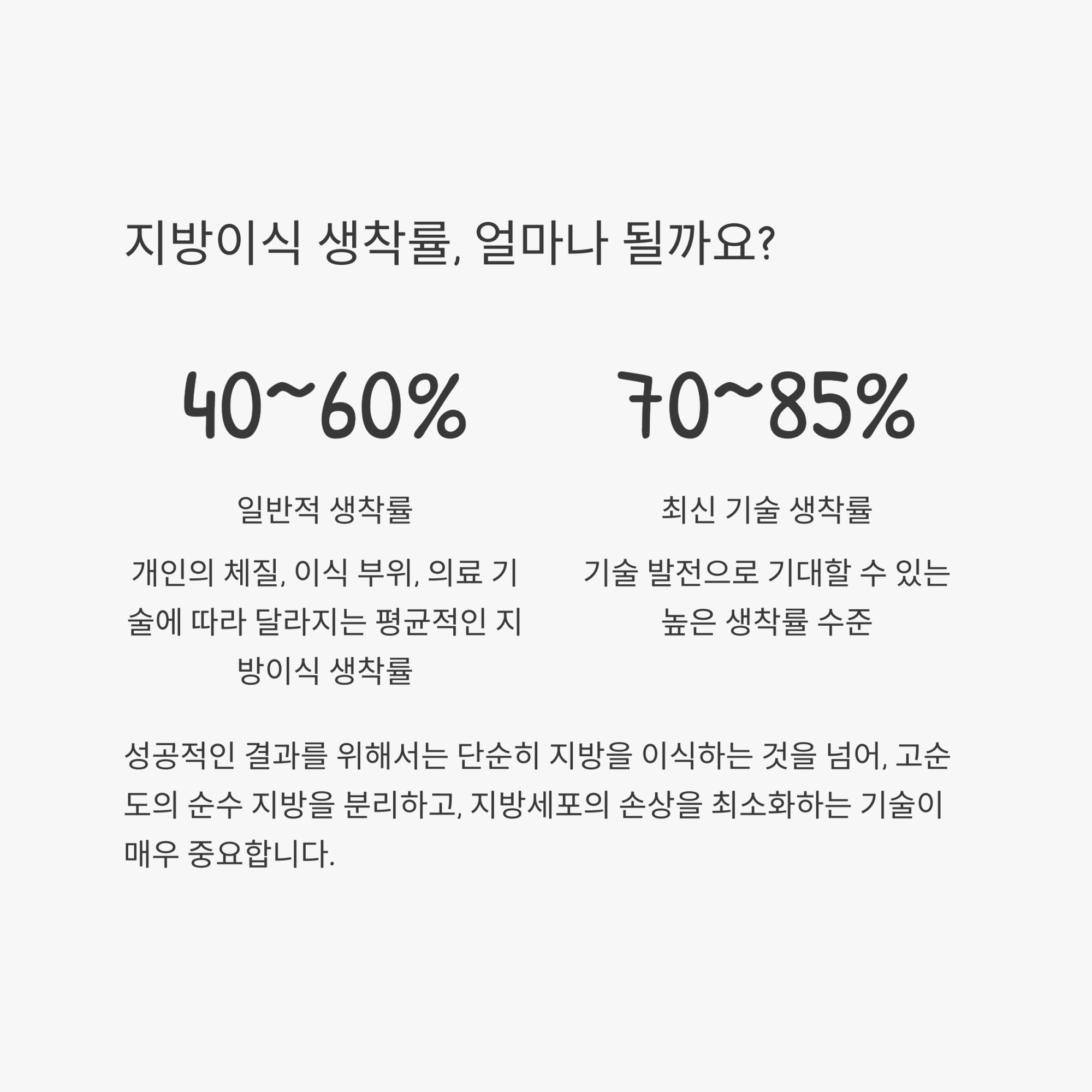
What determines fat graft survival
Fat graft survival varies with each person's constitution, the treatment area, and the medical technique. With recent advances, a range of methods for improving survival have drawn attention. A successful result requires more than simply moving fat from one place to another; techniques that isolate high-purity fat and minimize damage to fat cells are essential.
Why pure fat extraction matters for graft survival
A fat graft involves harvesting fat from the abdomen or thighs, filtering out impurities, and transferring only pure fat cells. Freshly harvested fat contains impurities such as blood, body fluids, and damaged fat cells. If these aren't properly removed, they can cause inflammation after grafting or sharply reduce fat cell survival, lowering the graft survival rate.
That's why the purification method matters. Using a centrifuge to separate out only pure fat, or a system like Lipokit that minimizes air exposure to reduce damage to the fat, are considered effective ways to improve graft survival. The higher the purity of the transferred fat cells, the better the chances of survival.
Aftercare — a step as important as the surgery
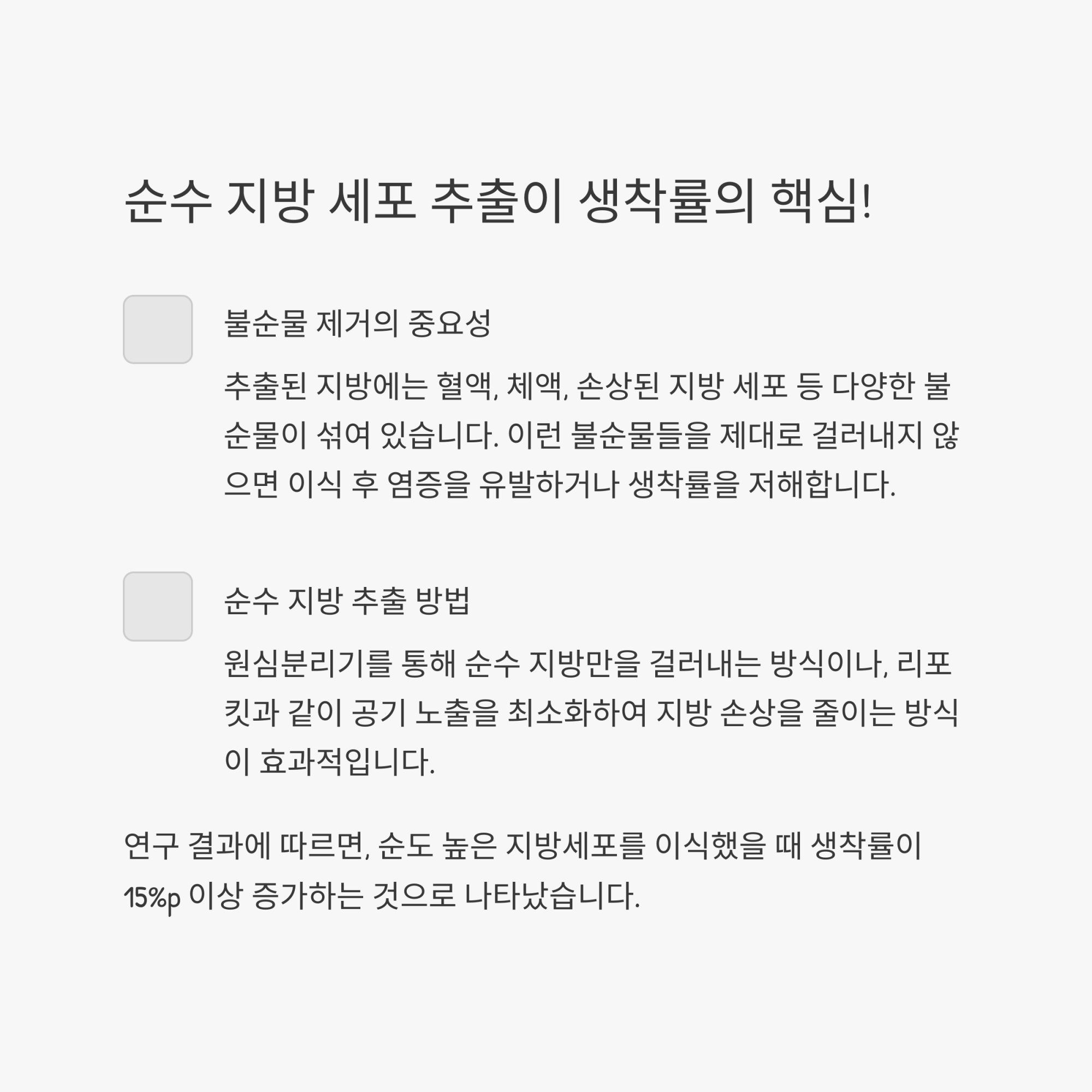
Transferred fat cells need enough time to form new blood vessels and settle in. During that period, follow these principles.
- For at least one week after surgery, avoid strenuous exercise and any massage that stimulates the grafted area.
- Be sure to avoid rapid weight changes, alcohol, and smoking, as they harm fat cell survival.
- Keep a regular routine, get plenty of rest, and closely follow the precautions provided by your clinic.
Following aftercare instructions plays a decisive role in maintaining graft survival and preventing the need for revision.
Summary
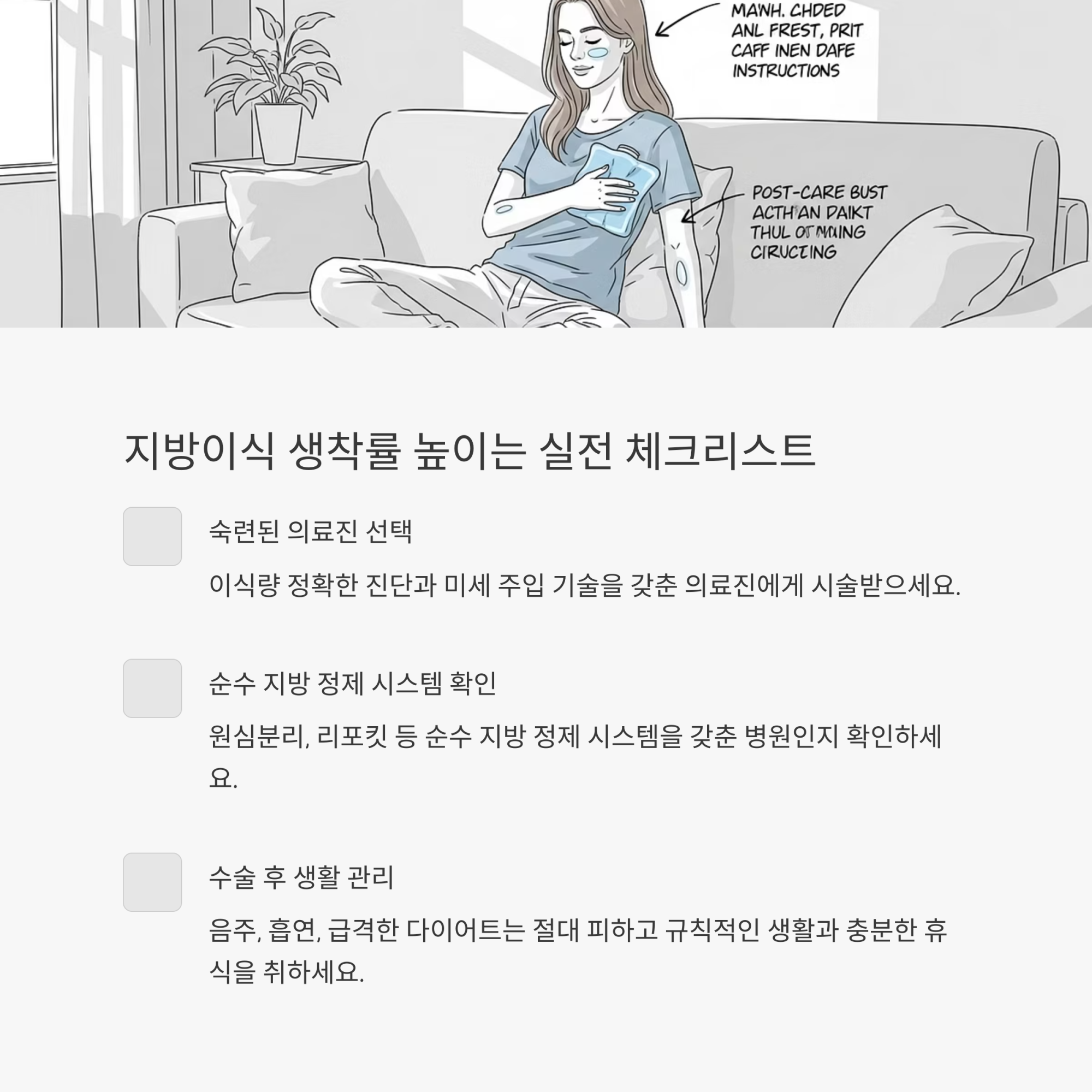
- Fat graft survival depends on constitution, treatment area, and medical technique, and differs by method, such as purified or PRP grafting.
- The key is extracting pure fat, free of blood, fluids, and damaged cells, using methods like centrifugation or Lipokit.
- Aftercare that avoids exercise and massage for one week and steers clear of weight changes, alcohol, and smoking protects graft survival.
A fat graft isn't just about adding volume; it's a procedure that requires careful design with facial balance and harmony in mind. Consulting thoroughly with your medical team to find the right approach for you, and caring for the results consistently, is the surest path to a satisfying outcome.
Last reviewed: 2026-10-07 This article provides general medical information. Individual diagnosis and treatment plans are determined through an in-person consultation.
Ruby News and Columns
We provide the publication dates and original posts confirmed on the official blog.





Get started with an easy inquiry or booking
Reach us by phone, messenger or online. Our chatbot is available 24 hours a day.