
Exercise After Fat Graft: When to Start and Managing Weight
For anyone wondering when they can work out again after a fat graft: what exercise is safe at each stage, and how exercise intensity and weight changes affect graft survival.

After a fat graft, the rule is to start with light walks and gradually increase activity over about three months. Exercising too hard before the transferred fat has settled in can lower the graft survival rate or cause complications. For anyone who has had a fat graft to add volume to the face or body, we've answered the key questions: when you can exercise and what kind, and how exercise intensity and weight management affect graft survival.
When is it safe to exercise after a fat graft?
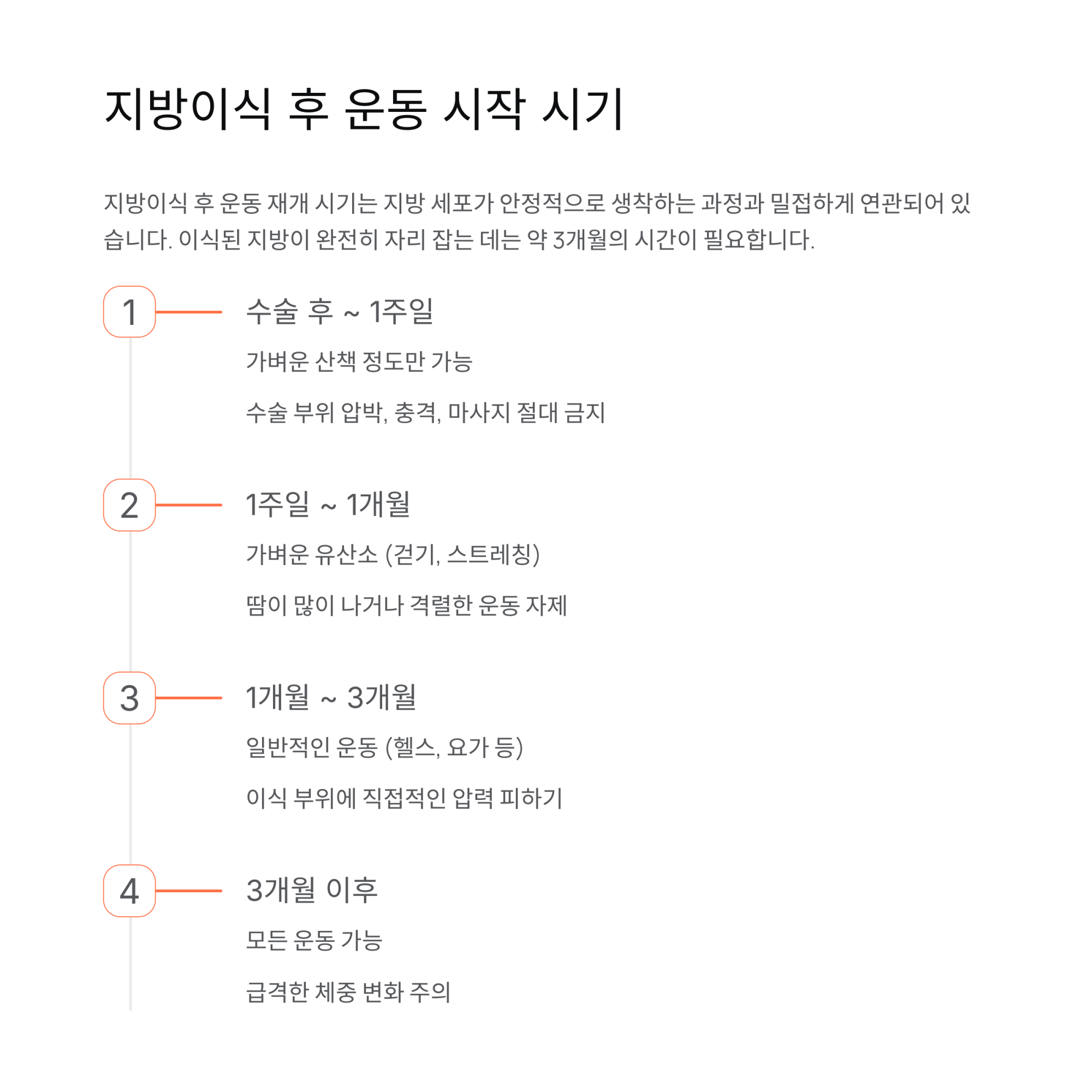
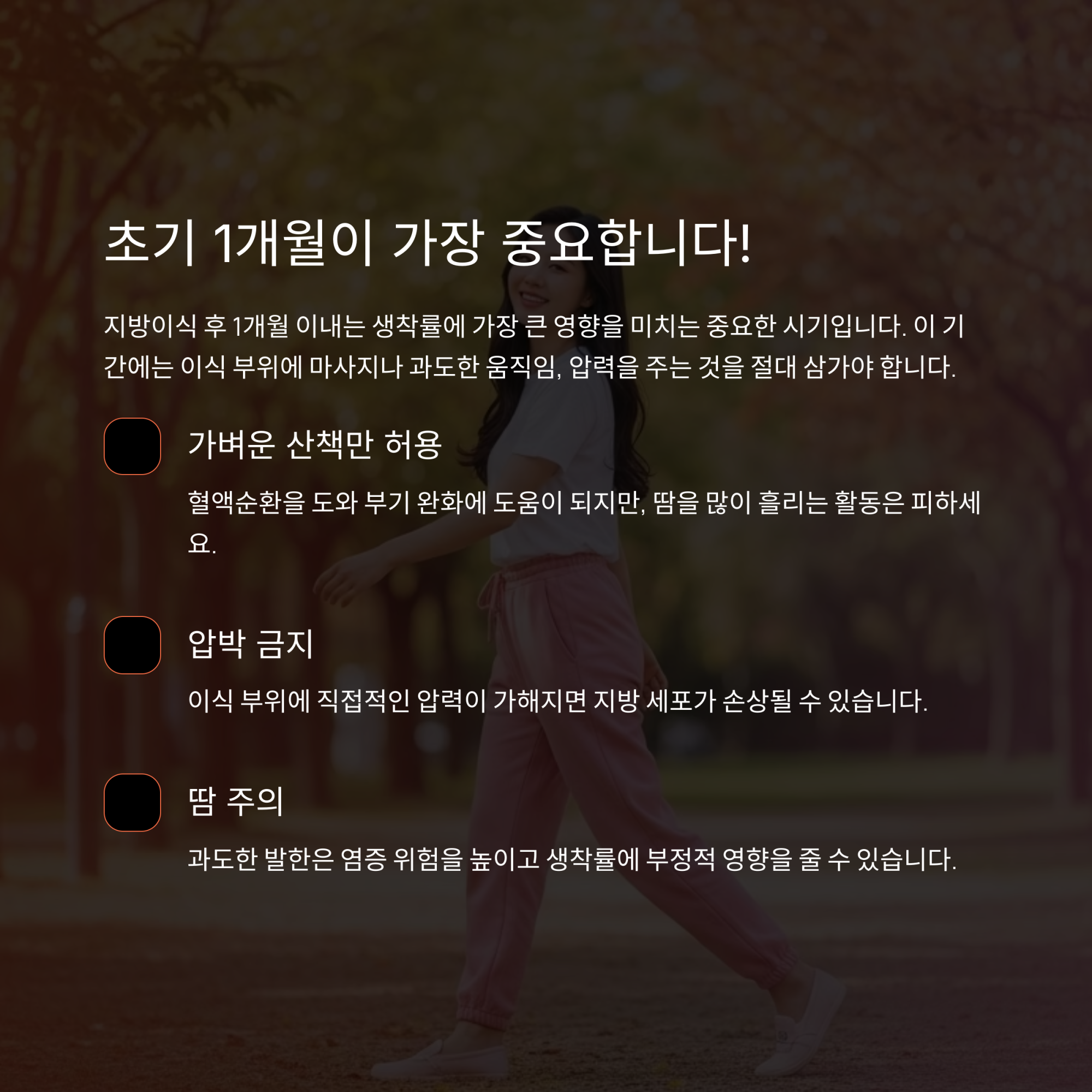
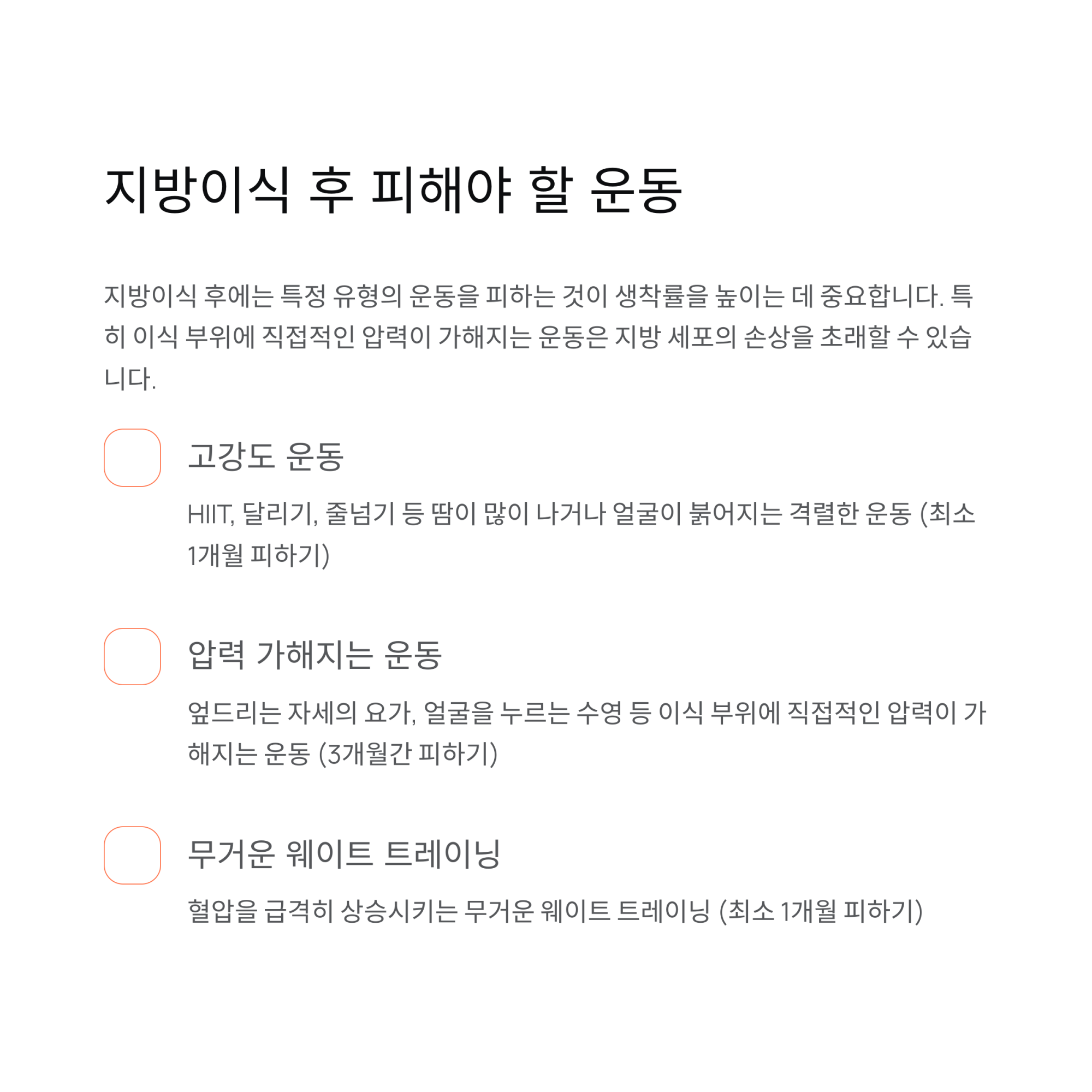
When you can resume exercise is tied to how the fat cells establish themselves. It takes about three months for the transferred fat to receive enough blood supply and fully settle. During that time, avoid any exercise that strains or puts pressure on the grafted area.
In particular, during the first month after surgery, avoid massaging, overworking, or putting pressure on the grafted area. These can be major causes of reduced graft survival. Light walks improve circulation and help reduce swelling, but avoid intense exercise that makes you sweat heavily.
Why does exercise intensity affect graft survival?
Exercising too hard in the early stage after grafting can cause the following four problems.
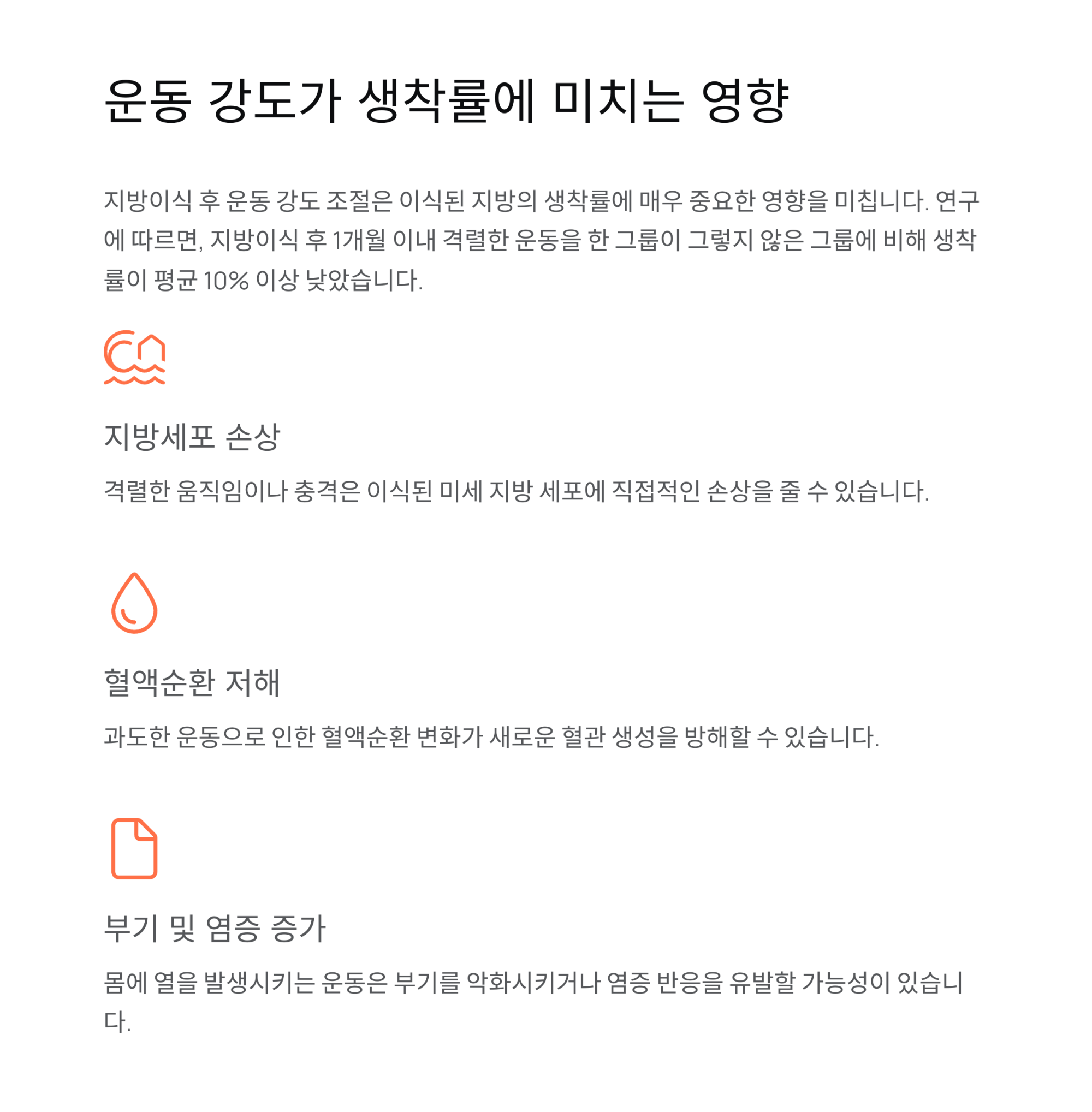
- Fat cell damage — Vigorous movement or impact can directly damage the tiny transferred fat cells.
- Disrupted circulation — Changes in blood flow from excessive exercise can interfere with the formation of new blood vessels.
- More swelling and inflammation — Exercise that heats up the body can worsen swelling or trigger an inflammatory response.
- Higher fat absorption — A faster metabolism can cause the transferred fat to be absorbed more quickly.
That's why it's wise to increase exercise intensity gradually, without straining either the grafted area or the liposuction site where the fat was harvested.
Why does weight management matter?
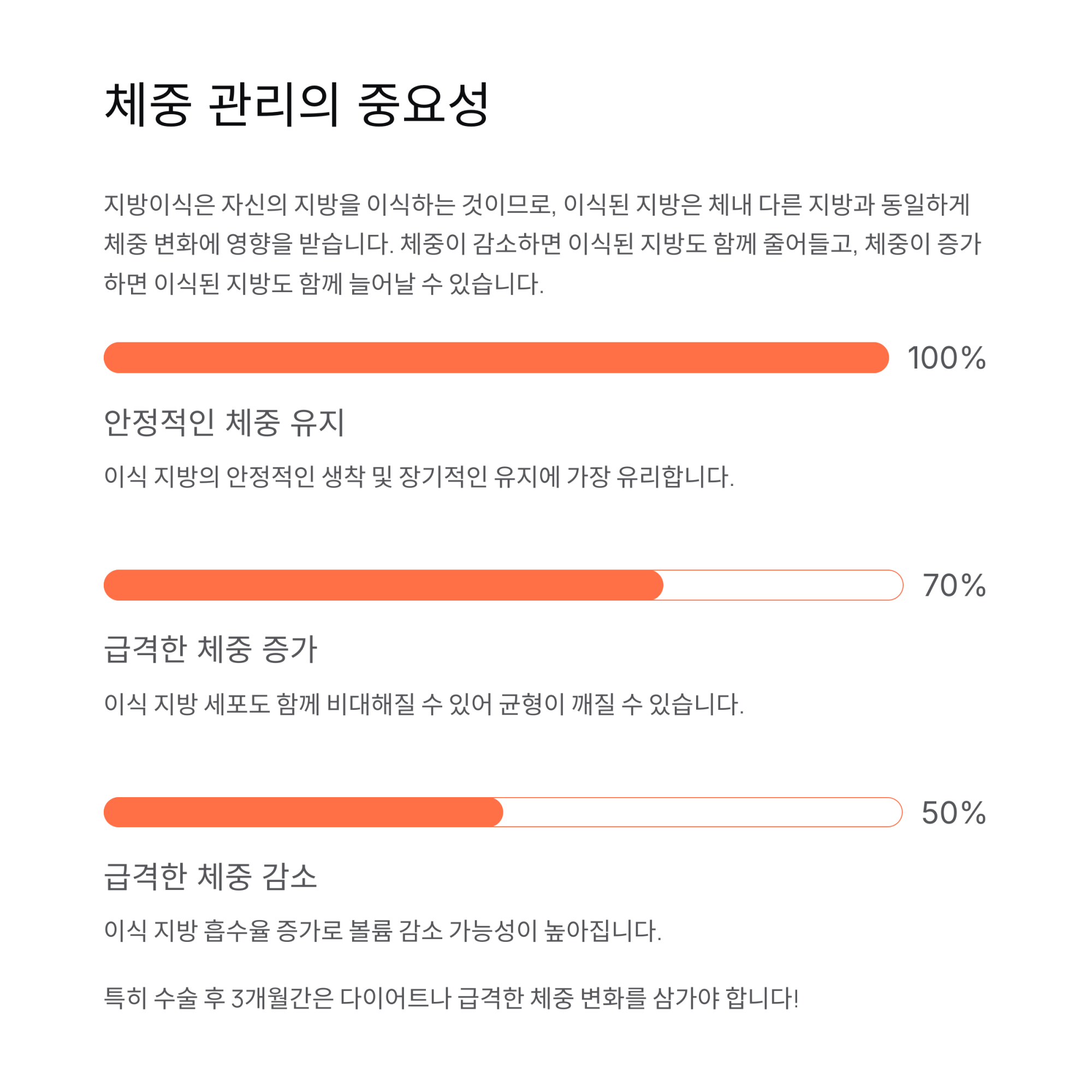
A fat graft moves your own fat, so the transferred fat responds to weight changes just like fat elsewhere in your body. If you lose weight, the grafted fat can shrink too; if you gain weight, it can grow as well.
For three months after surgery, avoid rapid weight changes, including dieting. During this time the fat cells haven't fully established themselves yet, so weight loss can directly lower the graft survival rate. Keeping your weight stable is the single most important condition for making your fat graft results last.
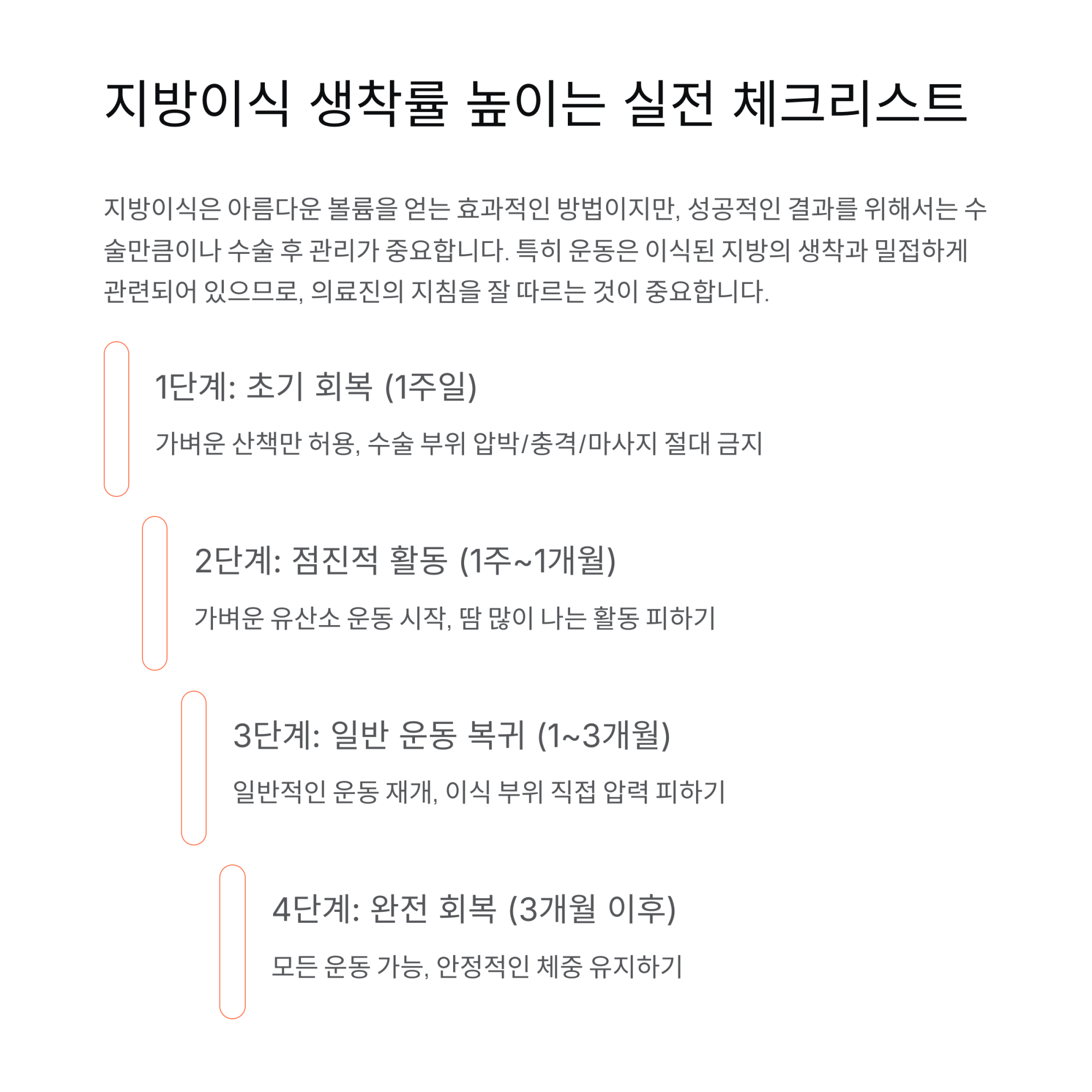
Step-by-step exercise guide at a glance
- Walking only for the first week, walking and stretching up to one month, regular exercise from one to three months, and all exercise after three months.
- For the first month, avoid massage, pressure, and excessive movement in the grafted area, and raise exercise intensity gradually.
- Avoiding rapid weight changes, including dieting, for three months after surgery is key to protecting graft survival.
Exercise after a fat graft is closely linked to how well the graft takes. If you had a fat graft at a plastic surgery clinic near Sinsa Station, check your medical team's guidelines before getting back to exercise and progress safely, step by step.
Last reviewed: 2026-10-07 This article provides general medical information. Individual diagnosis and treatment plans are determined through an in-person consultation.
Ruby News and Columns
We provide the publication dates and original posts confirmed on the official blog.





Get started with an easy inquiry or booking
Reach us by phone, messenger or online. Our chatbot is available 24 hours a day.