
Trapezius Botox: Collarbone Definition and How Long It Lasts
Bothered by bulky trapezius muscles? Learn what trapezius Botox can do, how long it lasts, when to repeat it, possible side effects, and aftercare tips.
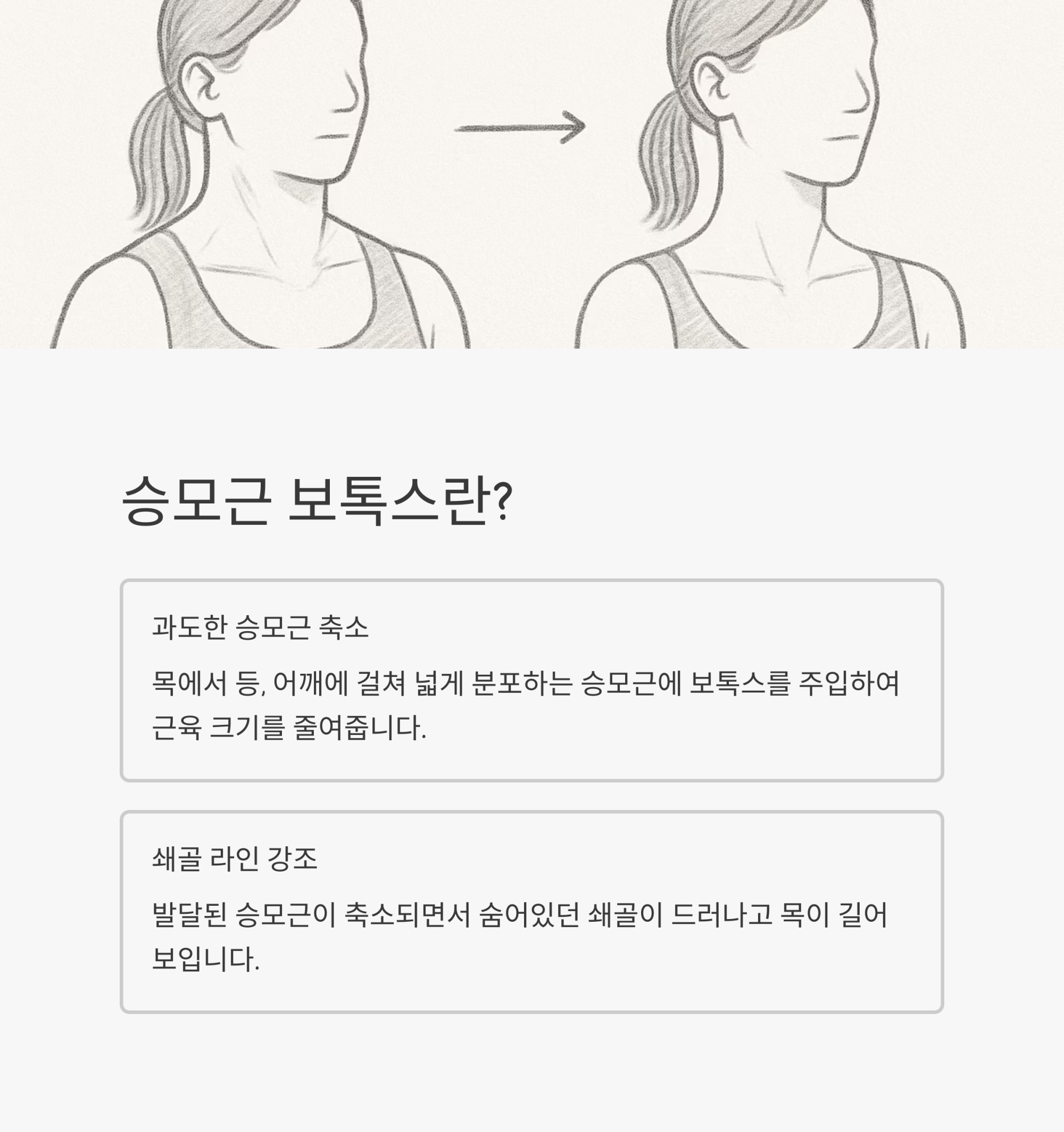
The trapezius is a broad muscle that spreads from the neck across the shoulders to the back, helping you move your shoulders and support your arms. When this muscle becomes overdeveloped, the neck can look shorter, the shoulders can look tense and bunched up, and the collarbones can be buried and hard to see. Trapezius Botox is a procedure that injects Botox into an overdeveloped trapezius to reduce muscle bulk, and it's a popular non-surgical way to reveal the collarbone line.
A slender neckline and well-defined collarbones especially stand out in a wedding dress or off-the-shoulder top. For anyone frustrated by thick, raised trapezius muscles, Ruby Plastic Surgery near Sinsa Station explains the expected results, how long they last and when to repeat treatment, and possible side effects and precautions.

What Trapezius Botox Can Change
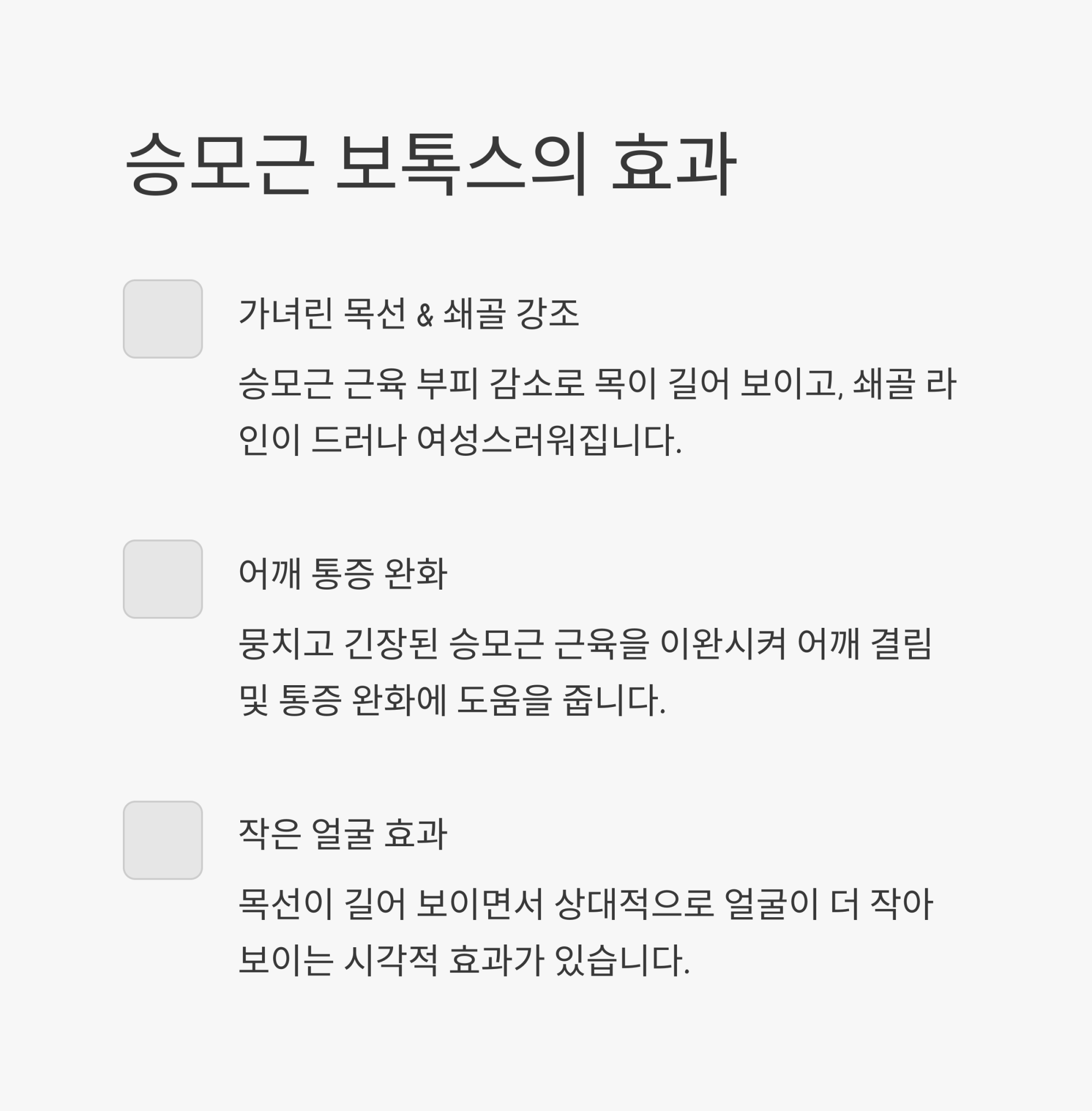
The core of trapezius Botox is a cosmetic improvement achieved by reducing an overdeveloped trapezius. After treatment, you can expect the following changes.
As the table shows, the changes from trapezius Botox don't appear all at once. As muscle bulk decreases, the neckline and collarbone line emerge gradually over several weeks, while shoulder stiffness often eases earlier, within a few days. A longer-looking neck also makes the face look relatively smaller.
Although it's mostly done for cosmetic reasons, it also has a therapeutic effect of relaxing the muscles for people whose shoulders are frequently stiff and sore. The procedure is quick, taking about 5–10 minutes, and apart from a slight sting during the injection there is little pain, so it's relatively easy to undergo.
How Long It Lasts and When to Repeat
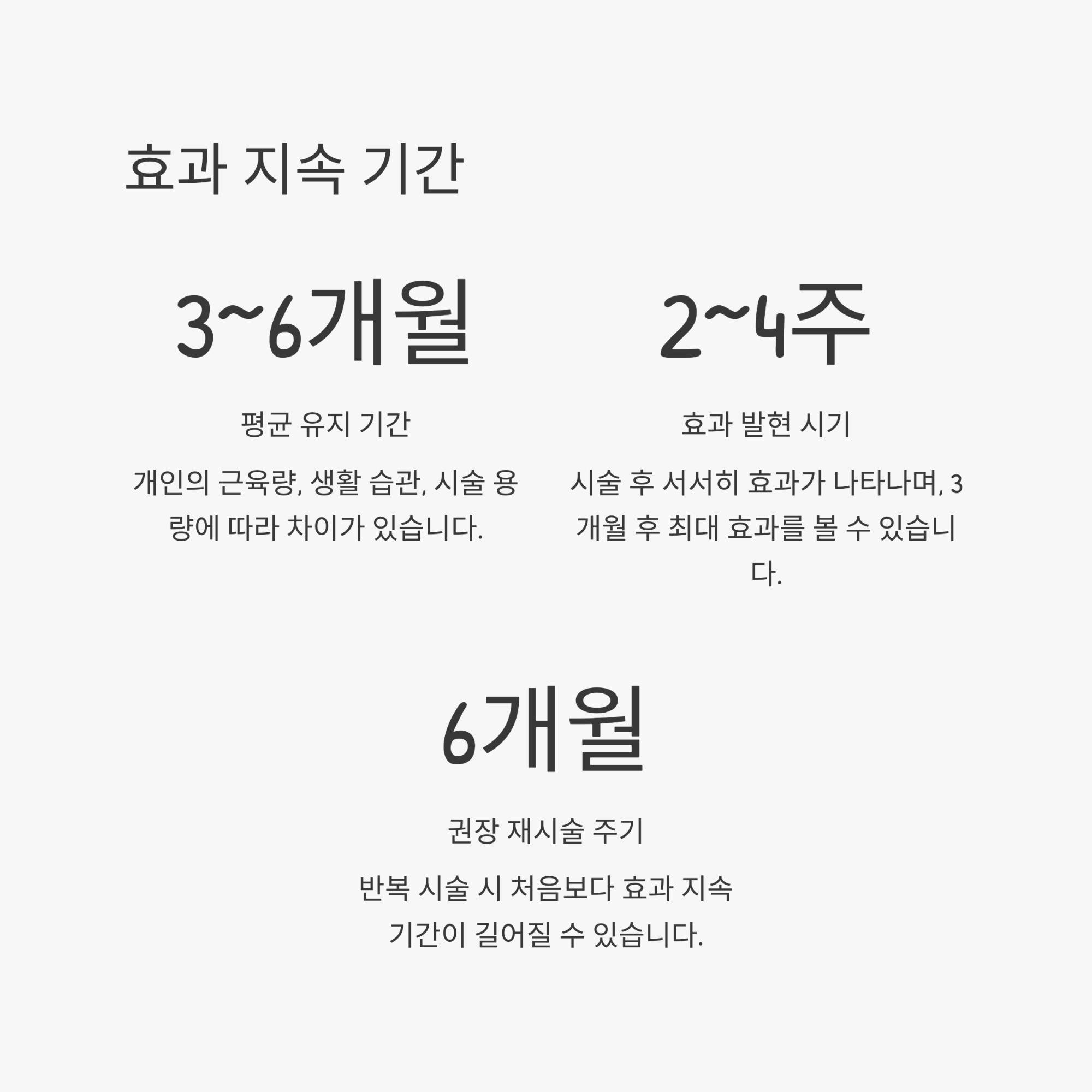
How long trapezius Botox lasts depends on muscle mass, lifestyle, and dosage, but it's usually 3–6 months. The effect is greatest within a month after treatment and then tends to gradually return to the original state.
- Duration: 3–6 months on average
- When results appear: Gradually over 2–4 weeks, peaking around 3 months
- Retreatment interval: To maintain results, an interval of about 6 months on average is recommended. With repeated treatments, results may last longer than the first time.
Some people worry about Botox resistance. Resistance can develop with frequent treatments, high doses, or products with more impurities. That's why the principle is to use genuine products in the proper dose, and when needed, it's better to use a product with a lower likelihood of resistance (e.g., Xeomin). Above all, it's important to consult experienced doctors and create a treatment plan that's right for you.
Side Effects and Precautions
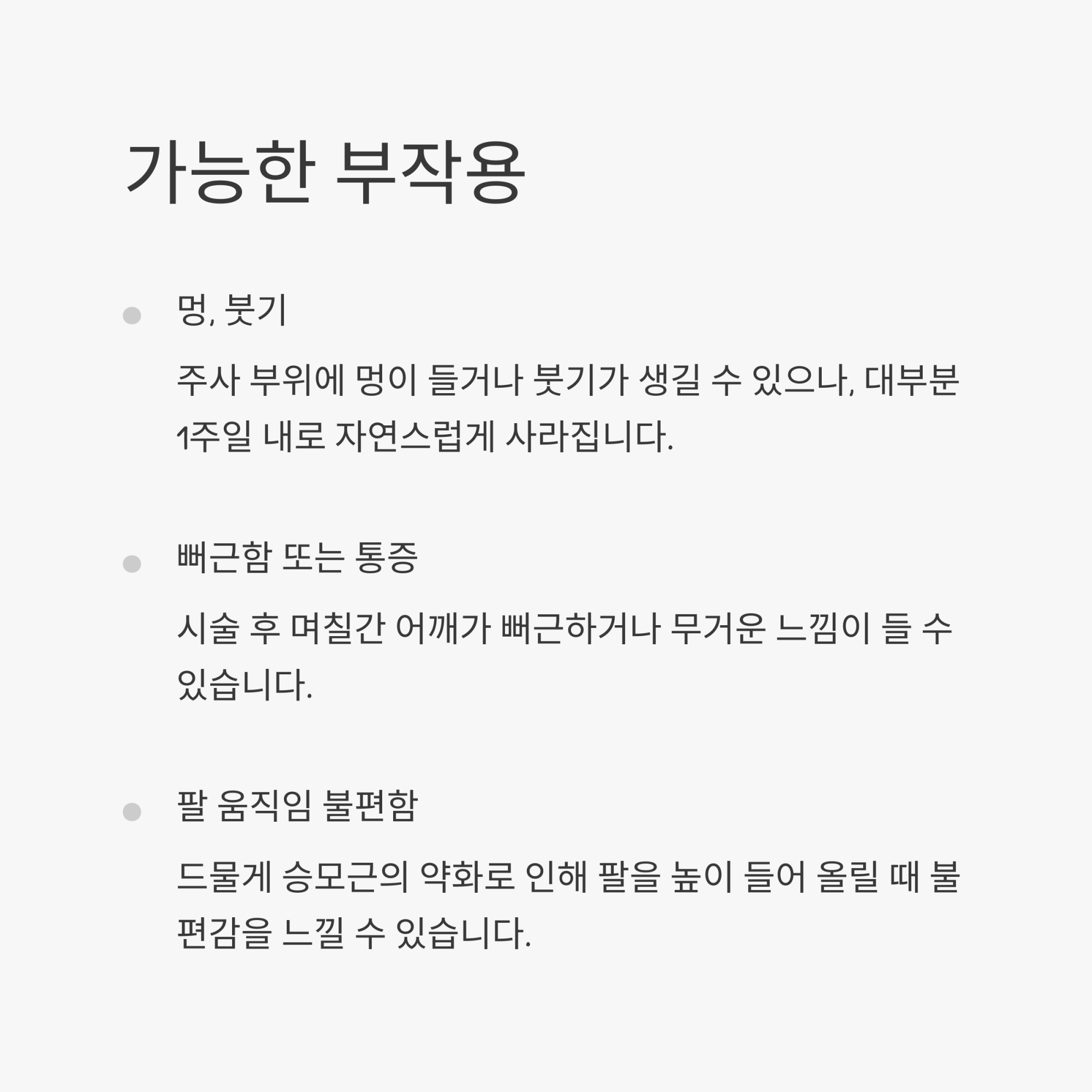
Trapezius Botox is known as a relatively safe procedure, but as with any procedure, there are precautions to follow and rare side effects. Symptoms that may appear after treatment include the following.
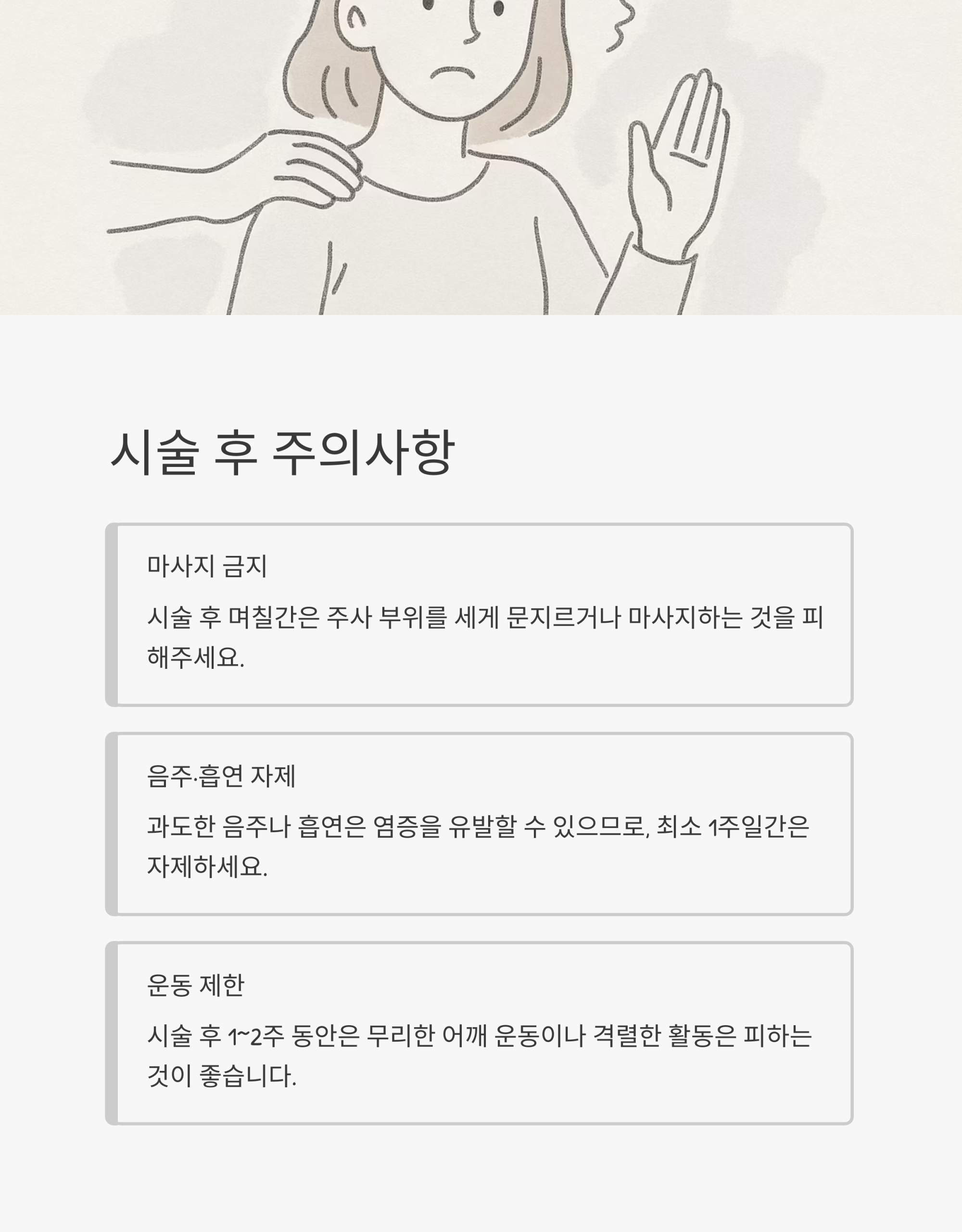
To reduce side effects and get satisfying results, please follow these guidelines.
- For a few days after treatment, don't rub or massage the injection site firmly.
- Heavy drinking and smoking can trigger inflammation, so avoid them for at least 1 week.
- Avoid strenuous shoulder exercise or intense activity for 1–2 weeks.
- Avoid high-heat environments such as Korean spas (jjimjilbang) and saunas for 1 week.
Results and side effects vary from person to person depending on muscle condition and lifestyle, so decide whether to proceed after a thorough consultation with experienced doctors.
Key Takeaways
- Trapezius Botox offers the cosmetic benefit of refining your collarbone and shoulder lines, along with relief for tight shoulder muscles.
- Results usually last 3–6 months, so plan ahead for retreatment at roughly 6-month intervals and for managing resistance.
- Bruising, stiffness, and discomfort raising your arms mostly resolve on their own, but for 1–2 weeks after treatment it's best to avoid massage, alcohol, high-heat environments, and strenuous shoulder exercise.
Last reviewed: 2026-10-07
This article provides general medical information. Individual diagnosis and treatment plans are determined through an in-person consultation.
Ruby News and Columns
We provide the publication dates and original posts confirmed on the official blog.





Get started with an easy inquiry or booking
Reach us by phone, messenger or online. Our chatbot is available 24 hours a day.