
Double Eyelid Surgery Compared: Suture, Incisional, Natural Adhesion
Choosing a double eyelid technique? Our tables compare the suture, incisional, and natural adhesion methods by surgery time, recovery, scarring, longevity, and best-fit eyes.
There's no single right answer in double eyelid surgery that works for everyone. The suture (non-incisional), incisional, and natural adhesion methods create the crease in different ways and involve different recovery processes, and the best choice depends on your eyelids. If you want brighter, more defined eyes but feel overwhelmed by the options, Ruby Plastic Surgery in Gangnam compares the three types of double eyelid surgery: their differences, pros and cons, and which eyes each one suits.


Suture Method: A Crease Made with Stitches, No Incision
The suture method creates the double eyelid crease using stitches placed through tiny openings in the eyelid. Because there's no incision, there's almost no scarring and recovery is quick. Major swelling usually subsides within a week.
It suits people with thin eyelid skin, minimal drooping, and little fat. However, you should know before choosing it that the crease is relatively more likely to loosen than with the incisional method.
Incisional Method: A Defined Crease with Little Risk of Loosening
In the incisional method, the eyelid is opened to remove excess fat or muscle, and the skin is attached directly to the muscle that opens the eye to form the crease. It's mainly used for thick eyelids, eyelids with a lot of fat, or significant drooping.
There's very little risk of the crease loosening, and it can create a more defined double eyelid, but recovery takes longer than with the suture method and scarring may remain. The average recovery period is 2–4 weeks, and it can take more than 3 months to look completely natural.
Natural Adhesion Method: A Step Up from the Suture Method
The natural adhesion method is considered a variation of the suture method, but a more advanced one. It forms the crease by encouraging a natural adhesion between the skin and the muscle that opens the eye. It was designed to lower the chance of loosening compared with the conventional suture method and to deliver natural-looking results.
It works well for thin eyelids with little fat and for people who want a natural crease that looks like their own.
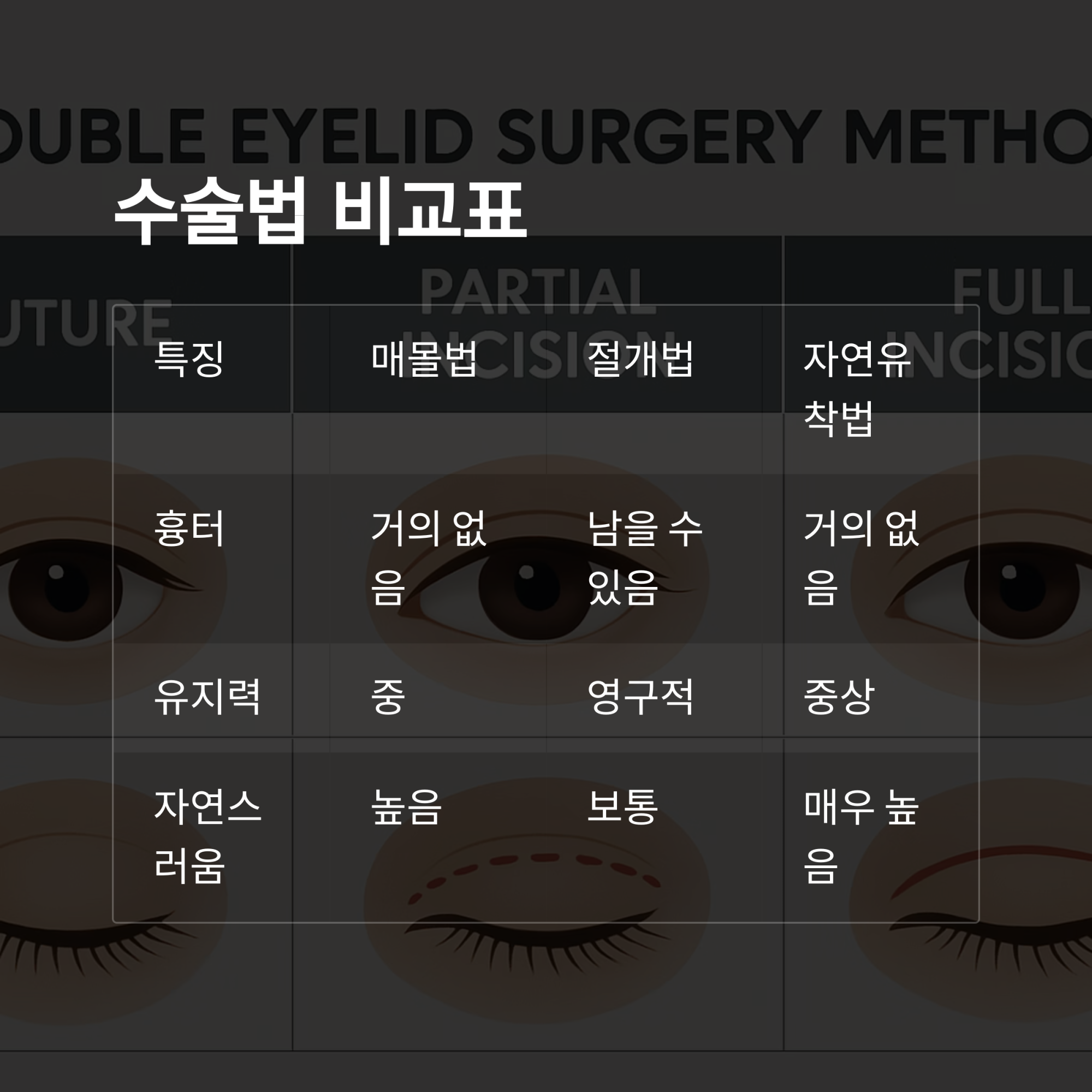
The Three Double Eyelid Techniques at a Glance
As the table shows, the suture and natural adhesion methods offer faster recovery and less scarring, while the incisional method offers the most reliable longevity. Which one is better depends on your eyelid thickness, amount of fat, and degree of drooping.

Key Takeaways
Double eyelid surgery isn't just about making the eyes bigger; it's about creating harmony with your overall facial impression. Understand the differences between the suture, incisional, and natural adhesion methods, get clear on your eyelid condition and the crease you want, and make your decision after a thorough consultation.
Last reviewed: 2026-10-07
This article provides general medical information. Individual diagnosis and treatment plans are determined through an in-person consultation.
Ruby News and Columns
We provide the publication dates and original posts confirmed on the official blog.





Get started with an easy inquiry or booking
Reach us by phone, messenger or online. Our chatbot is available 24 hours a day.