

3D Line Nose Surgery
Ruby's customized 3D line nose surgery creates a defined, natural, three-dimensional nose line.
Procedure information
From surgery time to recovery, see the 3D line nose surgery schedule at a glance.
Surgery time
About 1 hour 30 minutes
Anesthesia
Painless sedation
Hospitalization
Not required
Stitch removal
After 7-14 days
Follow-up visits
3-4 visits
Recovery period
After 1-2 weeks
Ruby 3D Line Nose Surgery
A customized nose surgery that analyzes facial proportions, image and balance with the eyes to find a nose height, line and angle in overall harmony.

Naturalness first
Rather than simply raising the nose, naturalness matters most.

Facial feature analysis
We assess facial features such as proportions, image and balance with the eyes.
Customized with a specialist's view
We add the specialist's opinion to the nose line you want for customized nose surgery.
Before & After
These are before-and-after photos of patients who had surgery at Ruby Plastic Surgery. Results and side effects may vary by individual. We recommend a thorough consultation with our medical team.
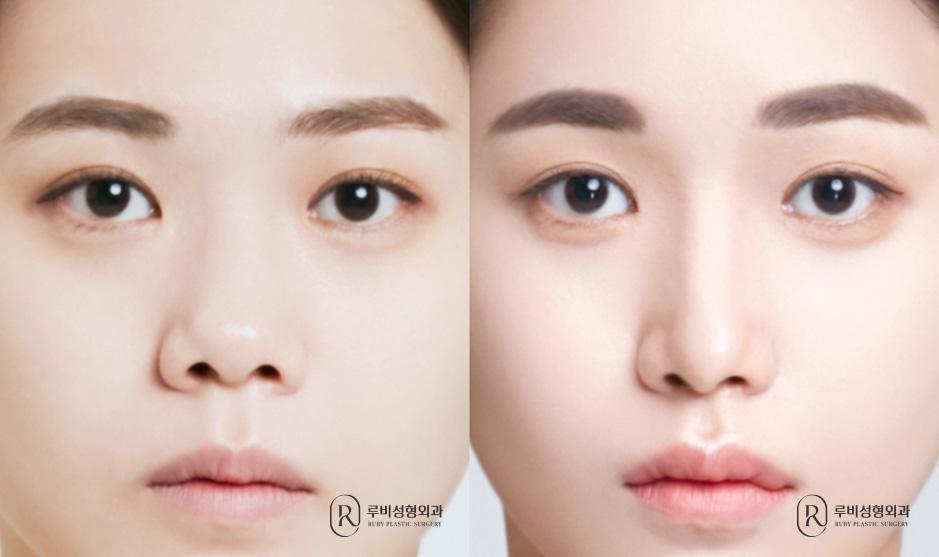
Nasal bridge, nasal tip, alar cinching, short nose correction
3 months after surgery
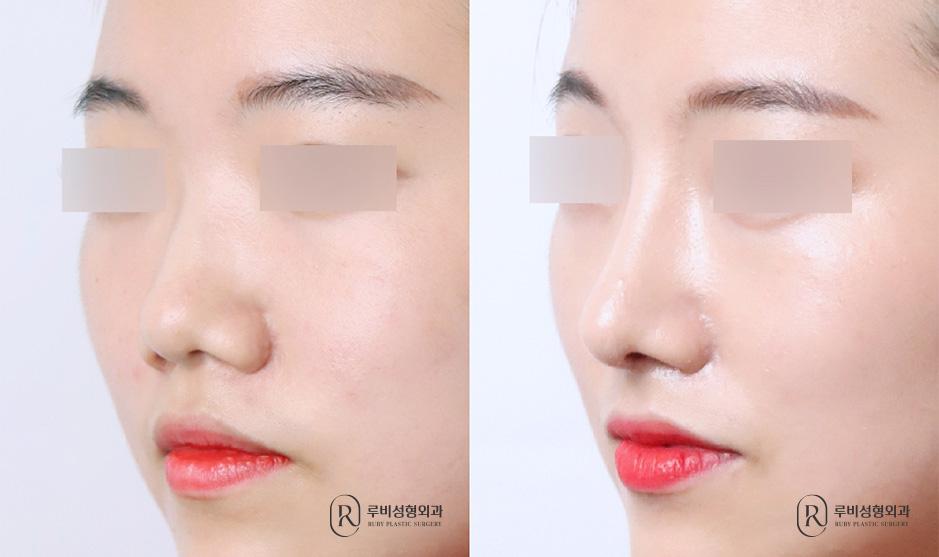
Nose bridge, nose tip, humpectomy, bulbous nose correction
1 month after surgery
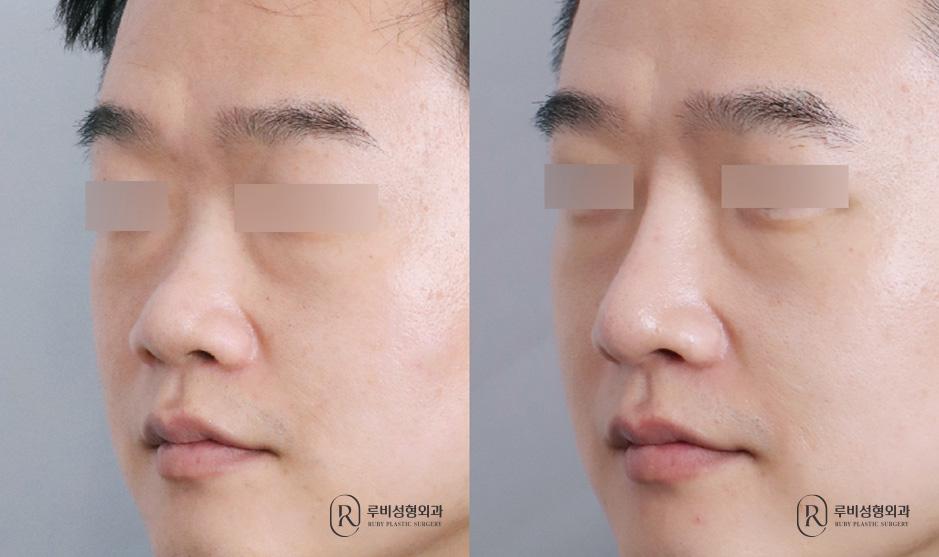
Nasal bridge, nasal tip, alar cinching
6 months after surgery
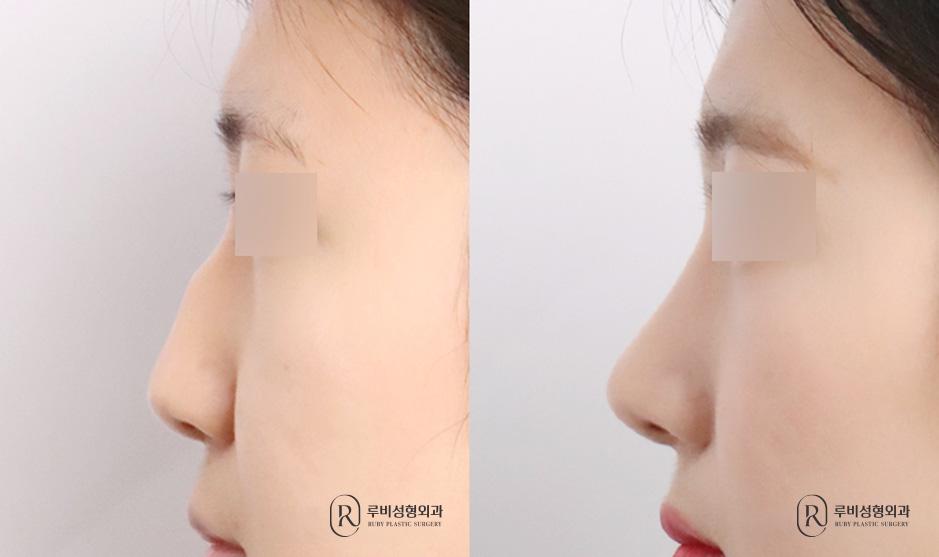
Nose bridge, nose tip, humpectomy, long nose correction
3 months after surgery
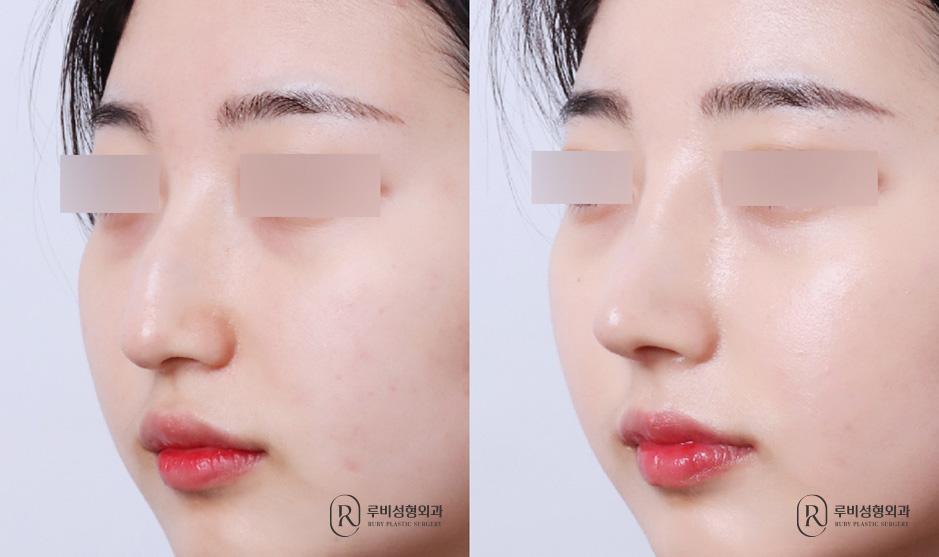
Nose bridge, nose tip, humpectomy, long nose correction
17 days after surgery
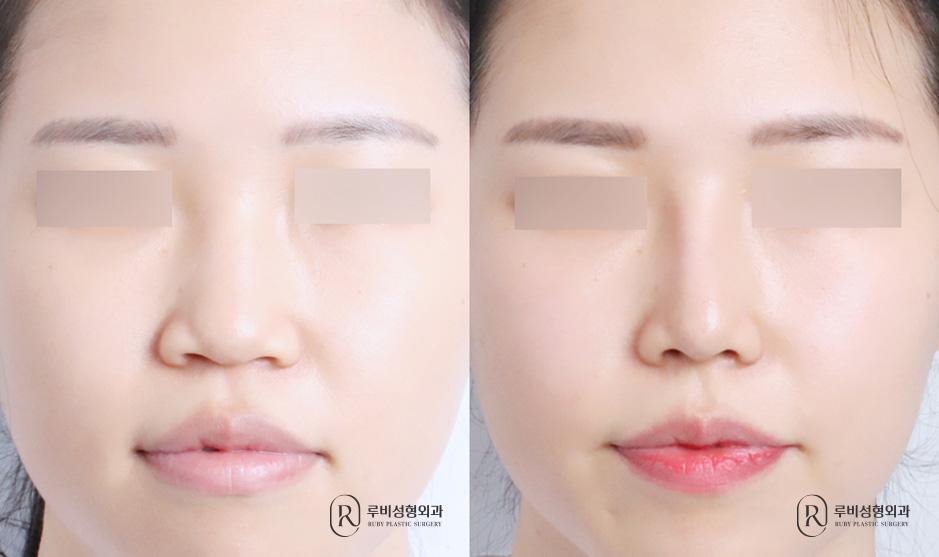
Nose bridge, nose tip, humpectomy, nose revision, alar cinching
3 months after surgery
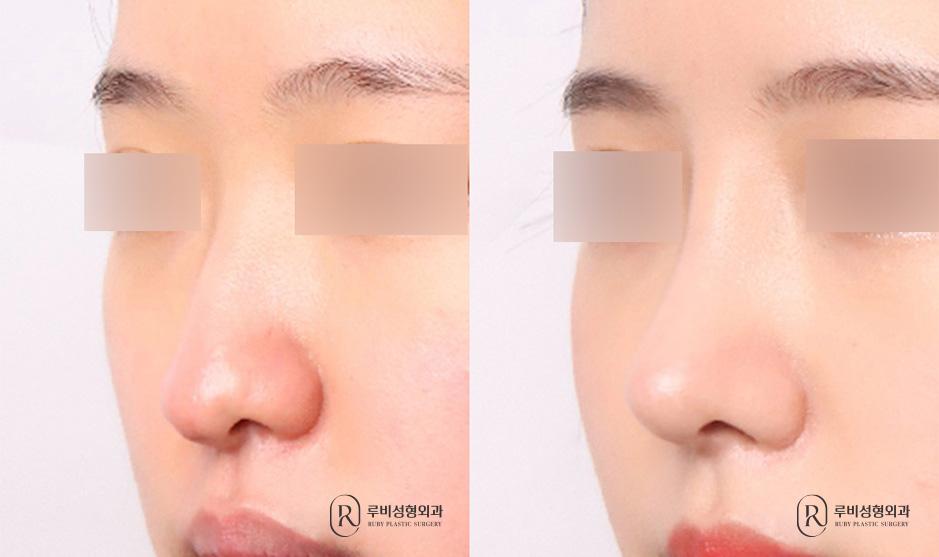
Nasal bridge, nasal tip, long nose correction, bulbous nose correction
1 month after surgery
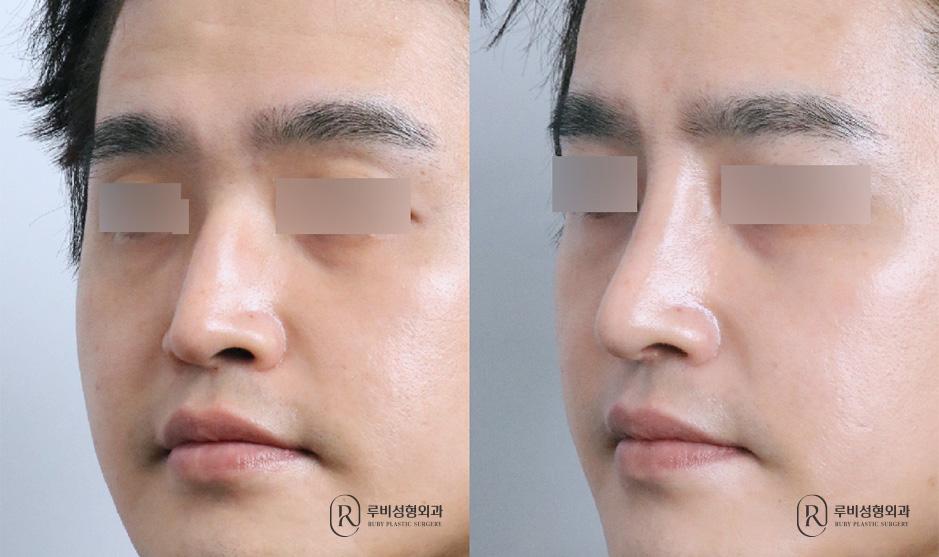
Nose bridge, nose tip, humpectomy, long nose correction
1 month after surgery
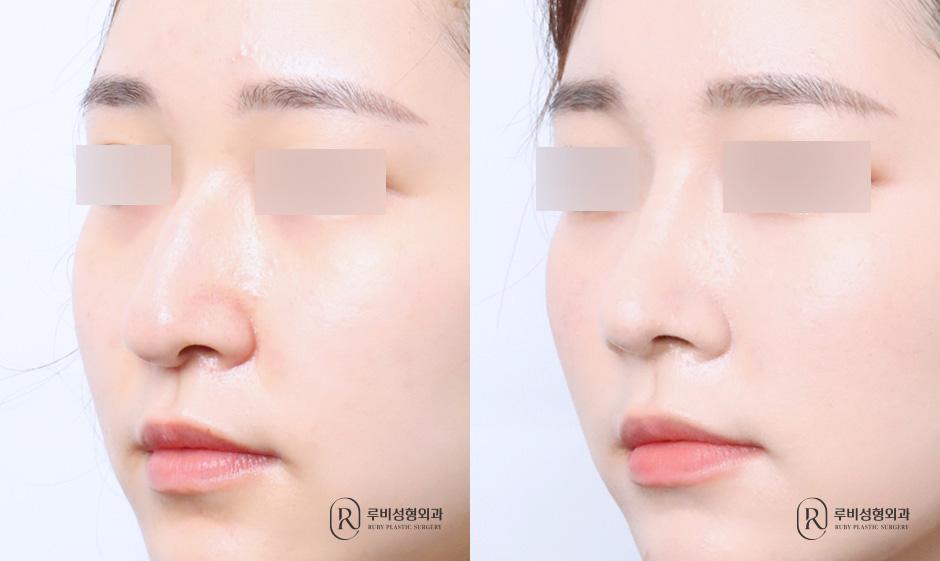
Nose bridge, nose tip, humpectomy, long nose correction
3 months after surgery
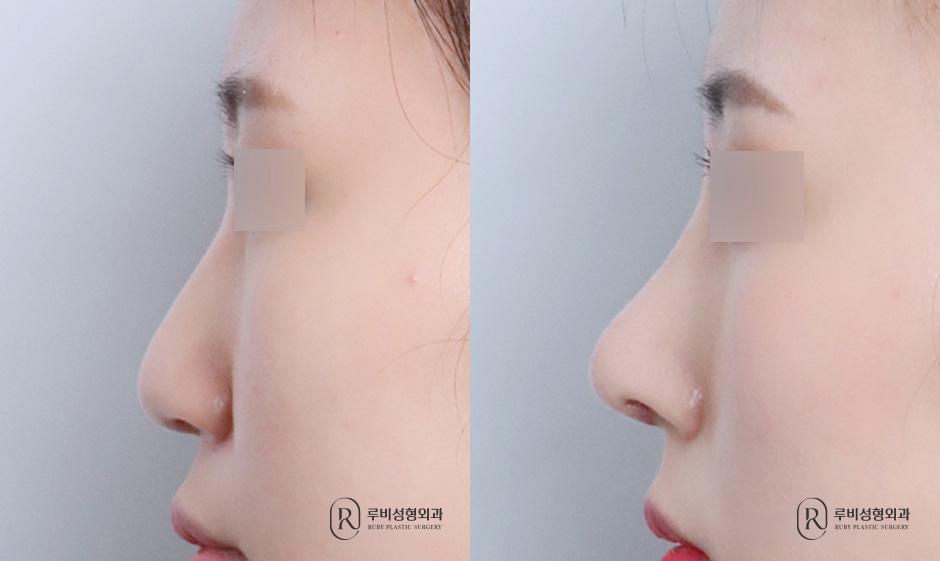
Nasal bridge, nasal tip, long nose correction
1 month after surgery
3D line nose surgery at Ruby Plastic Surgery
Ruby's customized nose surgery that brings out a three-dimensional line from the nasal bridge to the nasal tip!
POINT 01
We perform nose surgery customized to each person's face.
By performing customized nose surgery that suits each person's facial image and proportions, the nose line can be improved.

POINT 02
A beautiful side profile creates a refined, elegant image.
It naturally brings out dimension in both the front view and the side profile of the face, creating a refined, elegant image.

POINT 03
Specialists responsible for every step
An experienced medical team takes responsibility for every step of surgery, offering satisfaction beyond beauty with know-how and skill.
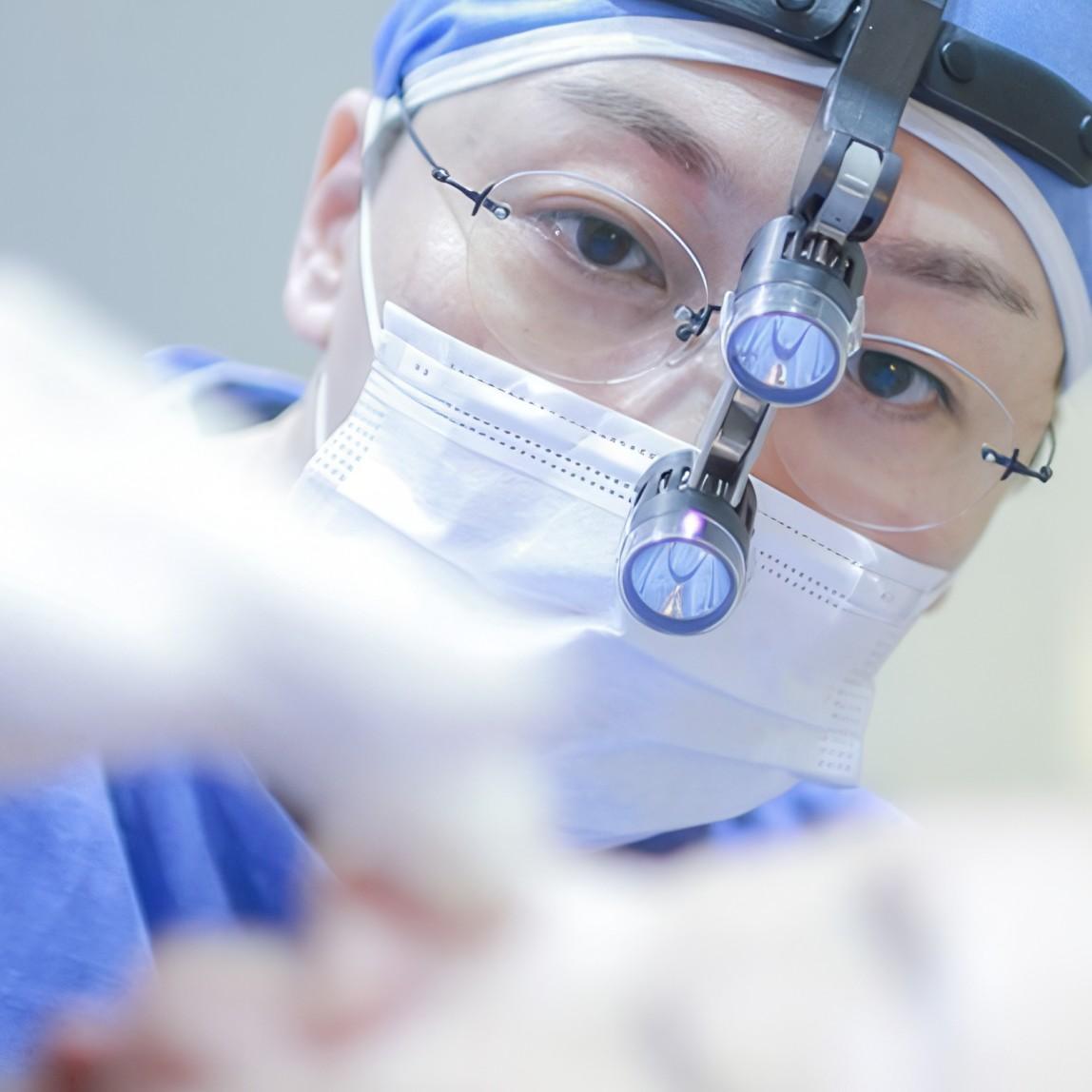
4 nose analyses before surgery
A good result can be achieved only when surgery follows a thorough, detailed analysis of nose height, angle, length and width according to each person's facial proportions and image.
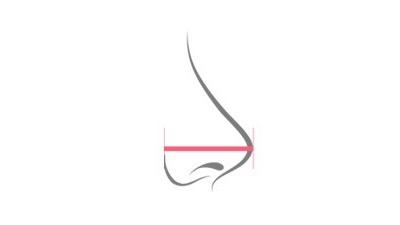
Nose height
An ideal nose height makes the face look more three-dimensional.
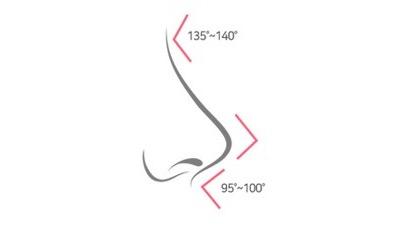
Nose angle
A nose at the golden angle harmonizes and balances the face shape as well.
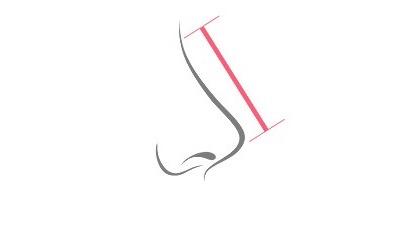
Nose length
With the right nose length, we find the golden ratio of the face.
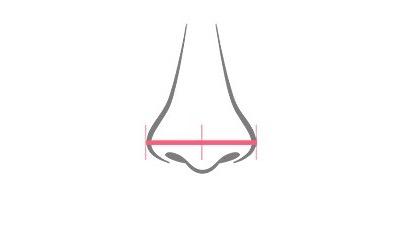
Nose width
We find the optimal nose width according to the horizontal facial proportions.
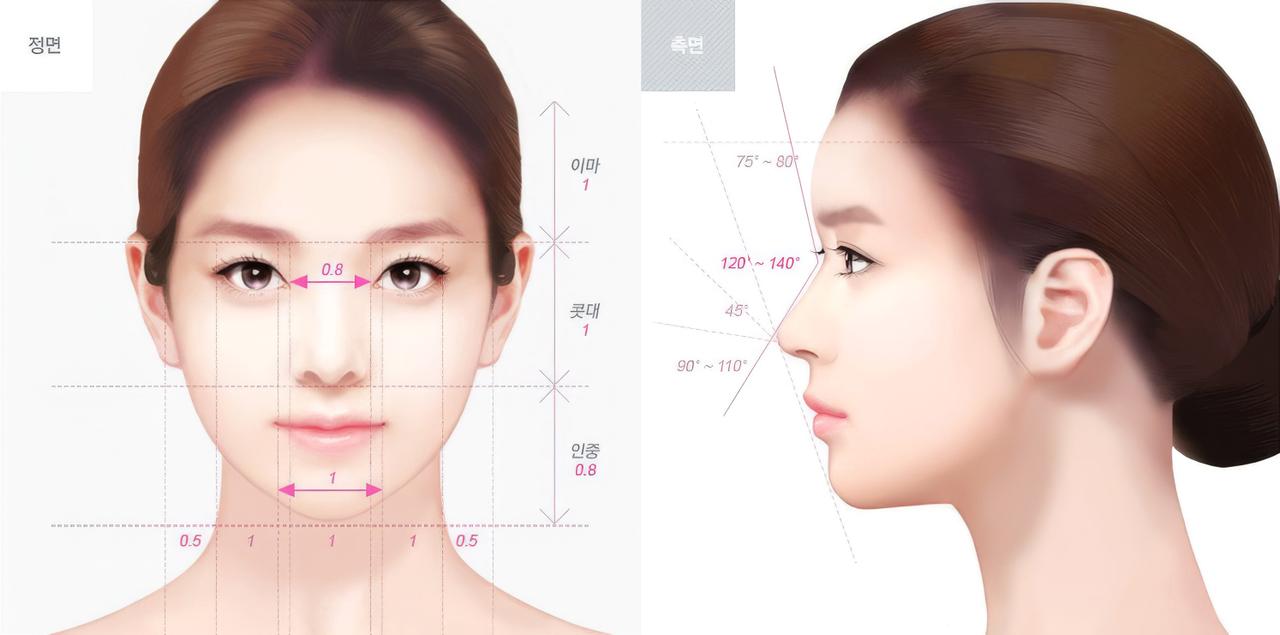
The golden ratio of the nose
Beautiful proportions exist, but the proportions and line of the nose can differ according to personal taste and face. We analyze the ideal nose proportions and design the nose line each person wants.
Front proportions
Vertical facial ratio of 1:1:0.8; nostril-wing width equals the distance between the eyes, about 0.8 of the whole face
Forehead–bridge angle
When the angle between the forehead and nasal bridge is 120–140 degrees
Bridge and chin aligned
When the nasal bridge and chin tip line up in a straight line
Lip–columella angle
When the angle between the lip and columella is 95–110 degrees
Columella–tip angle
When the angle between the columella and nasal tip is about 45 degrees
Horizontal–lip angle
When the angle between the horizontal line and the lip is 75–80 degrees
A nose line that suits your face
Ruby's nose surgery is not simply nose surgery that matches the golden ratio; it designs the nose line that suits you best by considering facial proportions, image, personality and the client's requirements.
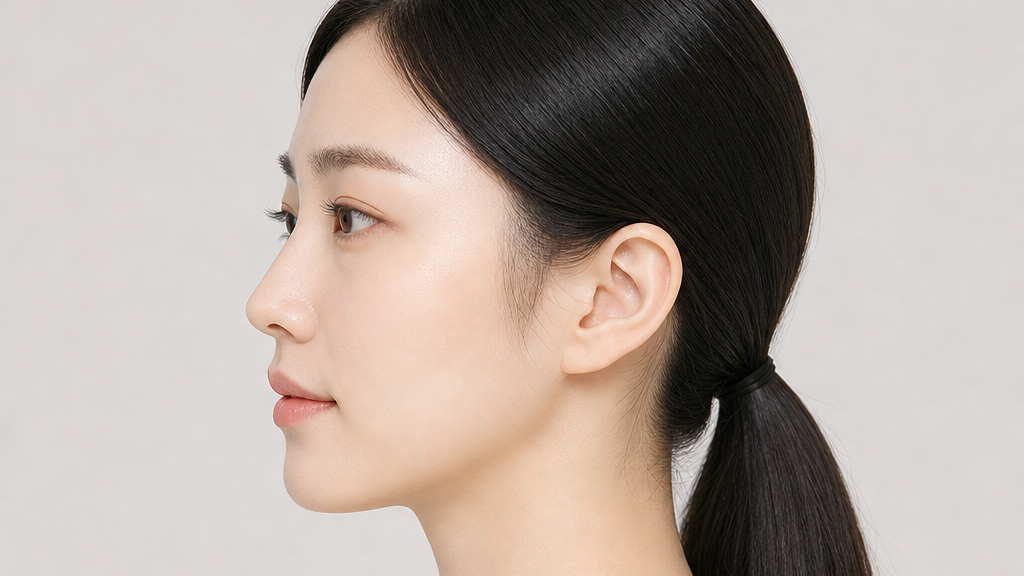
Straight nose line
A nose line that runs straight from the nasal bridge to the nasal tip gives a fresh, refined image.
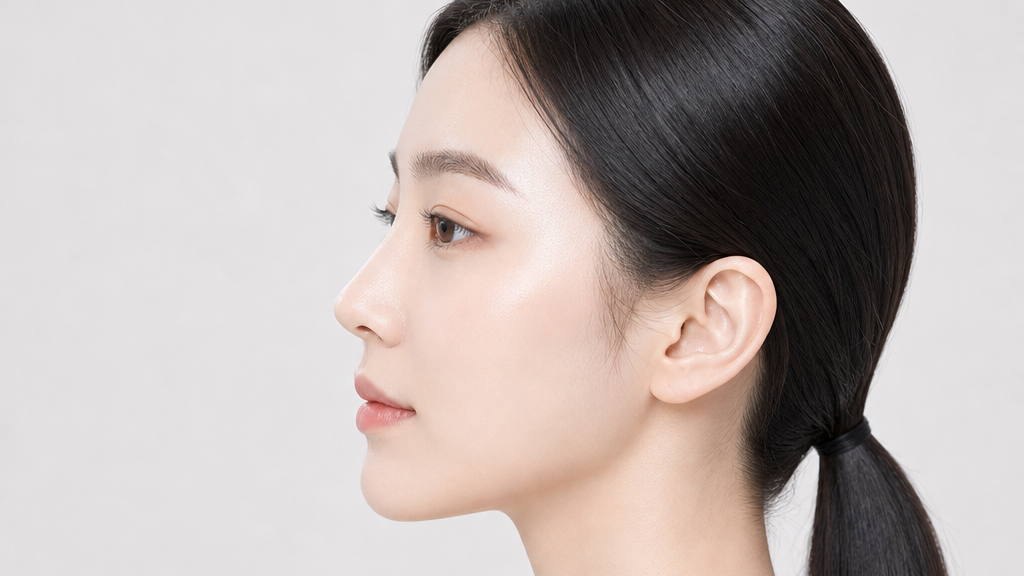
Straight-curved nose line
A shape with slightly more curve than a straight line, giving a natural, pure image.
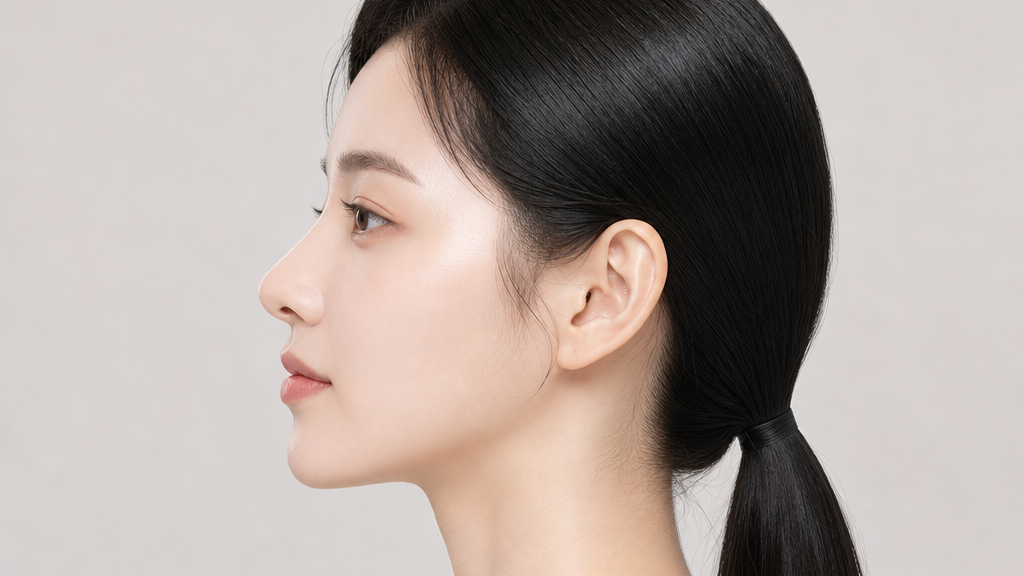
Half-curve (banbeoseon) nose line
A banbeoseon-shaped nose line from the nasal bridge to the nasal tip gives a cute, lovely image.
Precise 3D CT analysis
Precise diagnosis and analysis with 3D CT can improve both the functional and aesthetic sides of the nose at once, and helps make surgery more accurate. Shorter surgery time and a safe radiation dose are further advantages.
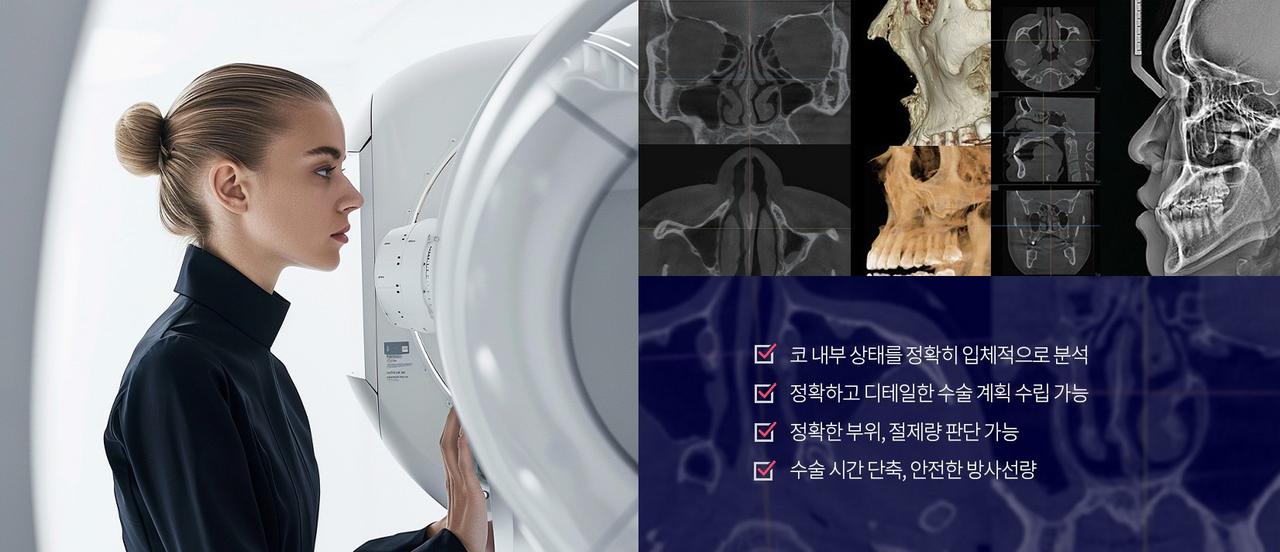

3D internal analysis
Accurate three-dimensional analysis of the inside of the nose.
Detailed surgical plan
Detailed, precise surgical planning is possible.
Area and resection judgment
Accurate judgment of area and amount of resection.
Artificial implants
Based on the traits, pros and cons of artificial implants and autologous tissue, we choose the material that suits each person's symptoms and condition. For artificial implants, we choose the most harmless option among non-absorbable products that keep their shape and absorbable products that break down in the body.
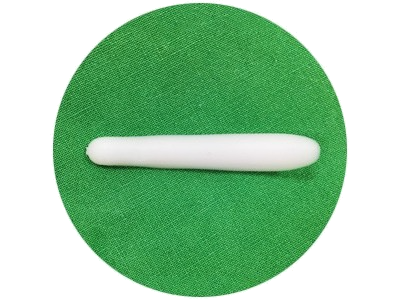
Silicone
It is easy to carve, so it can be used to match the nose shape. It is an FDA-approved material that tends to show little deformation or absorption in the body.
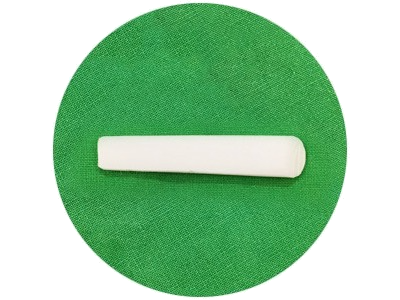
Gore-Tex
Its surface has tiny pores into which skin tissue seeps, giving good adhesion. If inflammation occurs it is hard to remove, so silicone is recently preferred over Gore-Tex.
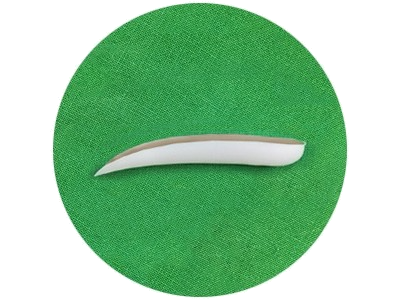
Silitex
This is an implant that combines only the advantages of silicone and Gore-Tex. It has excellent support, suiting a defined nasal bridge, a male nose and thick skin.
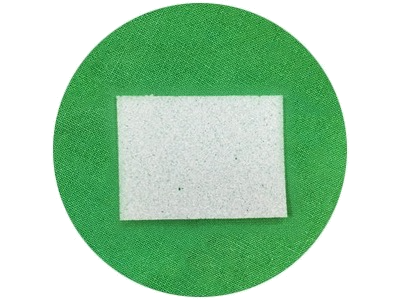
Medpor
Also called artificial bone, it is inserted into the columella or septum and used to raise the nasal tip.
Autologous tissue
Autologous tissue is taken from your own body, so side effects are less common and it takes well, creating a more natural nose shape. Above all, it is important to understand each tissue's traits and choose the one that fits your symptoms and condition.
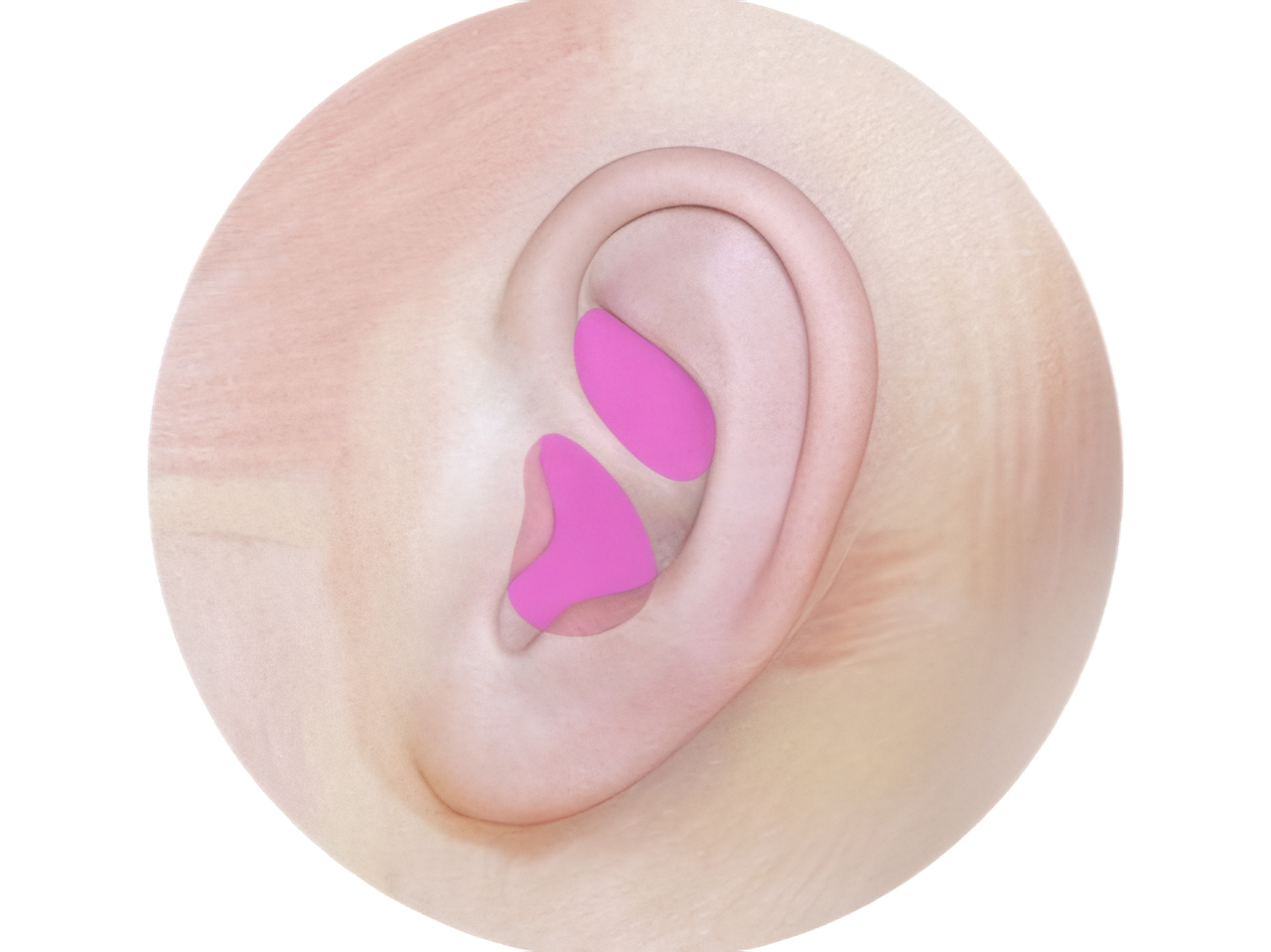
Ear cartilage
The cartilage shape is similar to the nose, round and elastic, so it is useful for building the structure of the nasal tip, and it is suited for additional use when septal cartilage is insufficient.
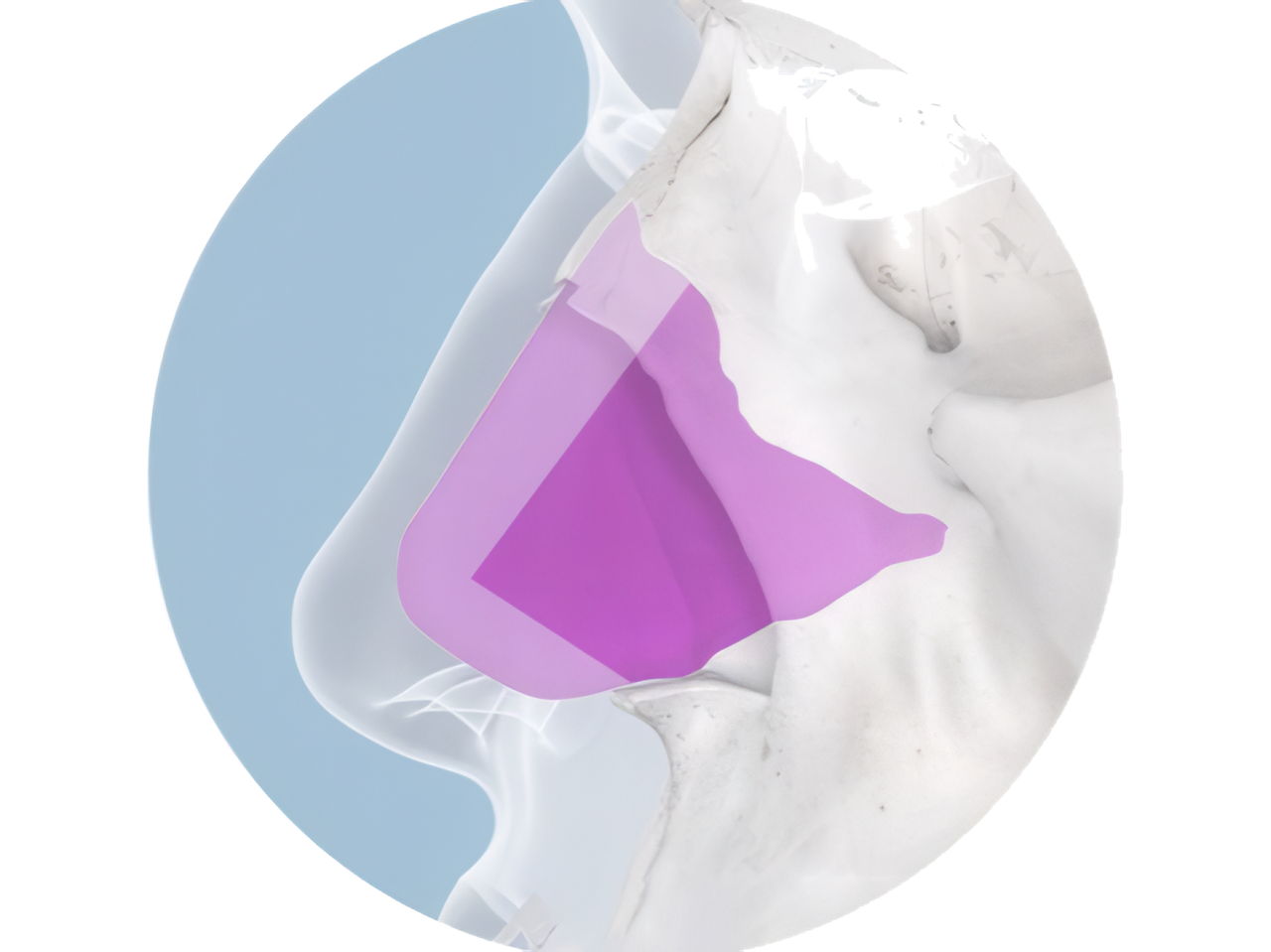
Septal cartilage
Septal cartilage inside the nose is carved and mainly used to raise the nasal tip or extend nose length. Because it is harvested from inside the nose, no separate incision is needed, which is an advantage.
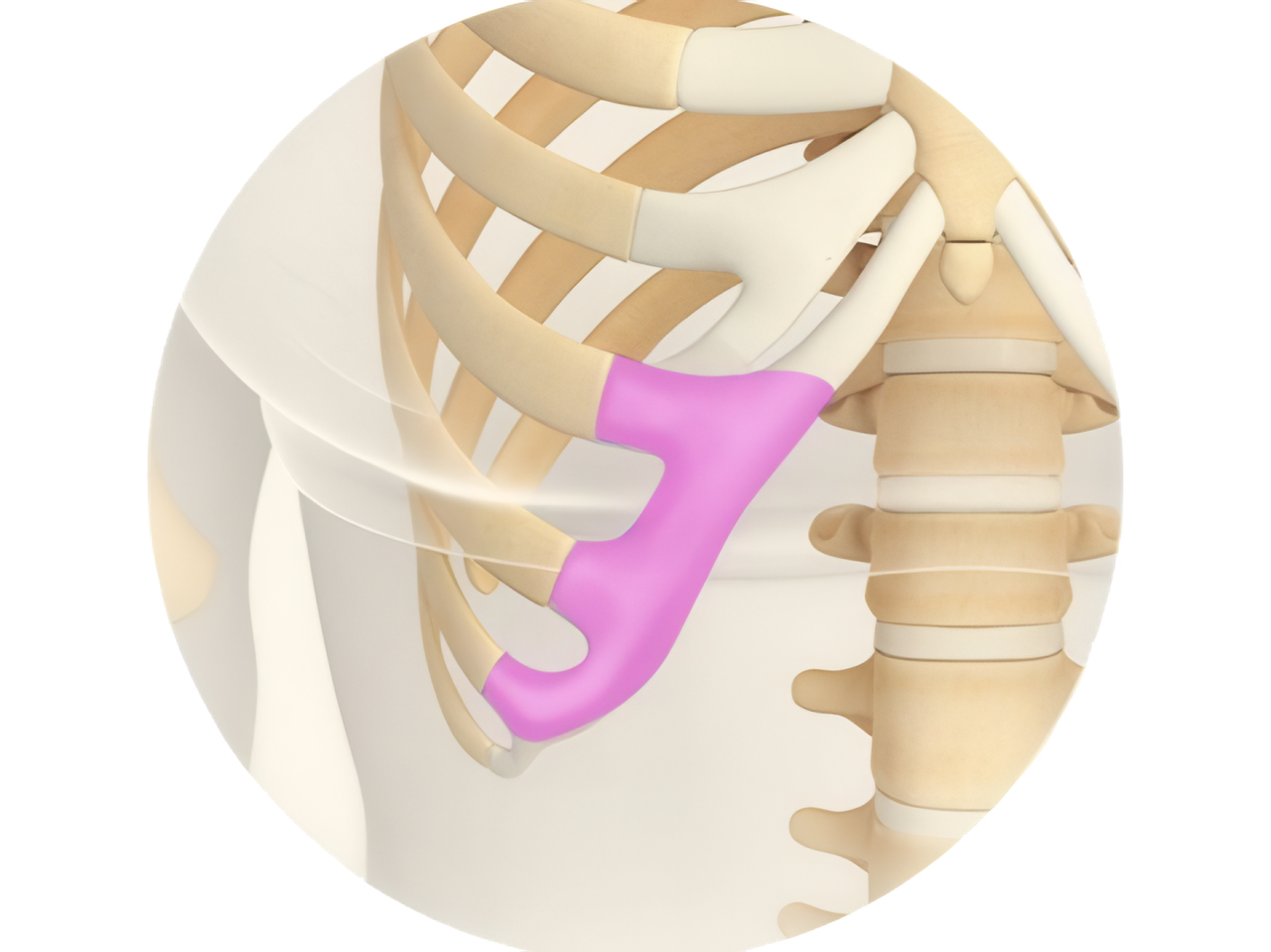
Costal cartilage (rib cartilage)
Costal cartilage beneath the ribs has a relatively low risk of side effects, strong support and durability, and especially a sufficient amount can be obtained, making it a surgical material that satisfies both functional and aesthetic aspects.
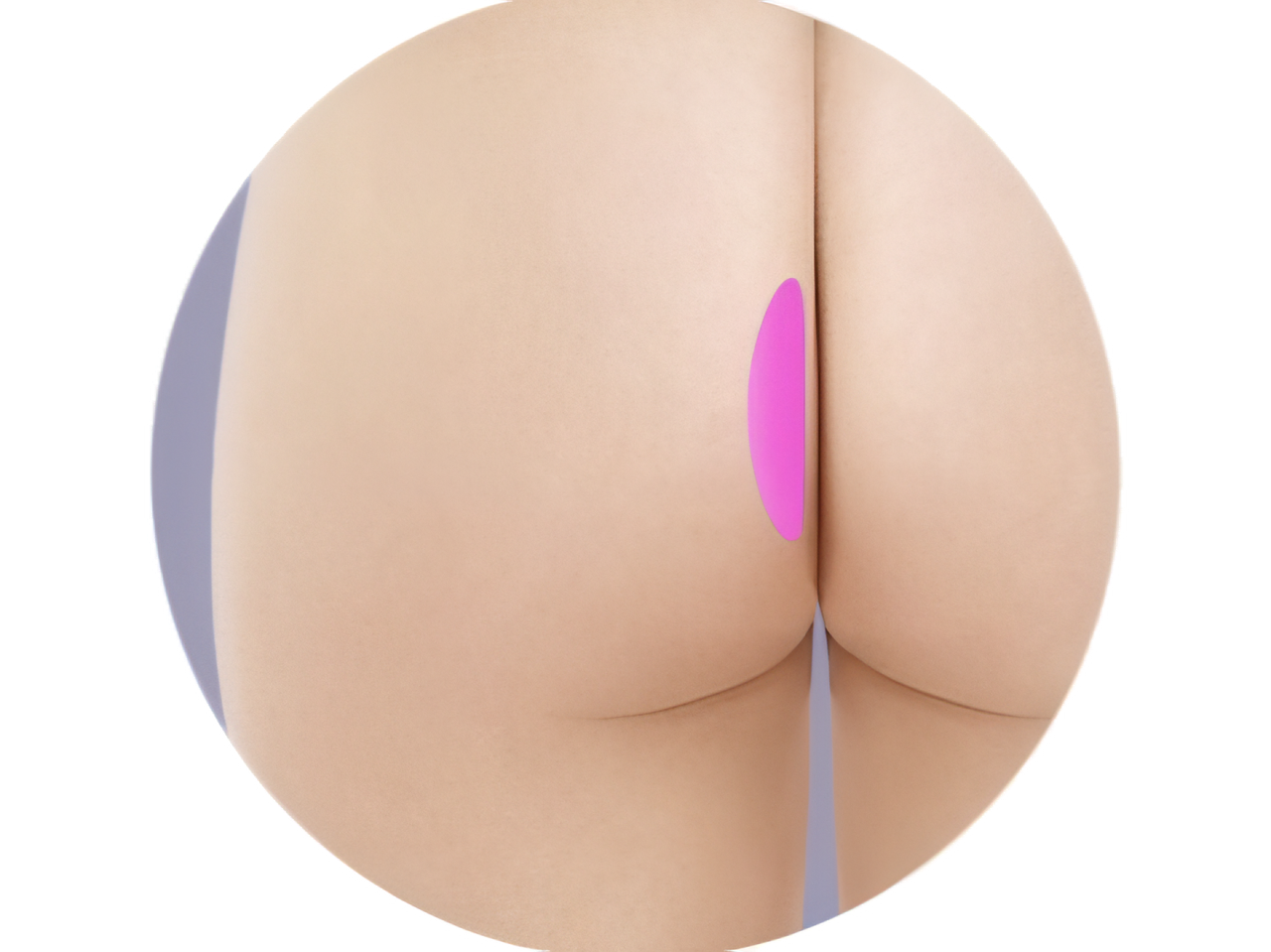
Autologous dermis
Dermis fills the area beneath the skin when the skin over the nasal bridge is thin or the soft tissue of the nose is lacking. With little foreign-body sensation, it is a highly satisfying material when the skin is sensitive or thin.
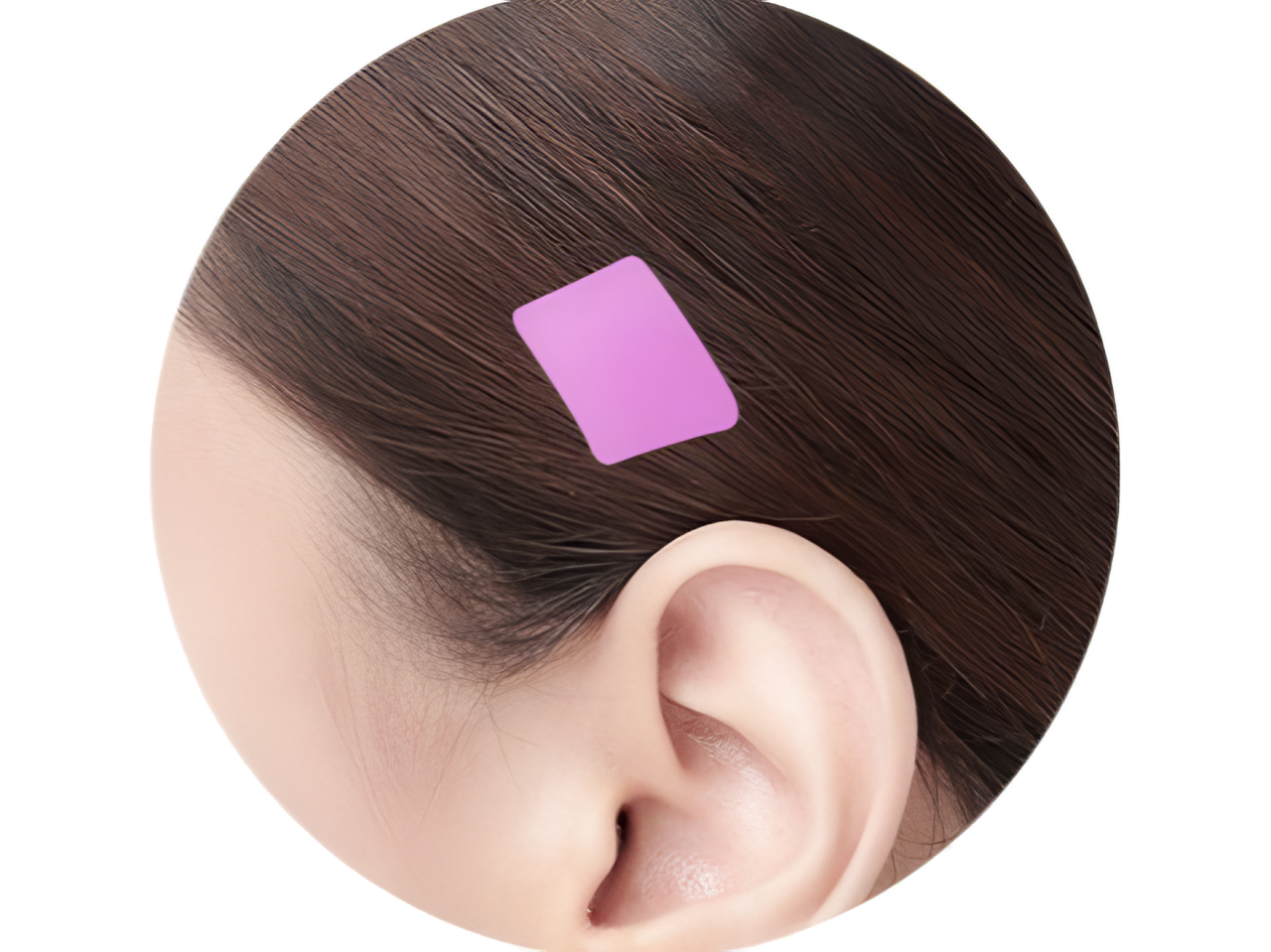
Fascia
Mainly the temporal fascia from inside the scalp is used. Wrapping the implant in fascia adds another layer of fascia between the implant and the skin, so it is mainly used when the skin is thin.
3D line nose surgery process
Mainly, silicone, an artificial implant, is used for the nasal bridge, and autologous tissue such as septal cartilage or ear cartilage is used for the nasal tip. By bringing out the nasal bridge and tip, it can improve toward a harmonious nose line.

Before surgery
A low nasal bridge and nasal tip
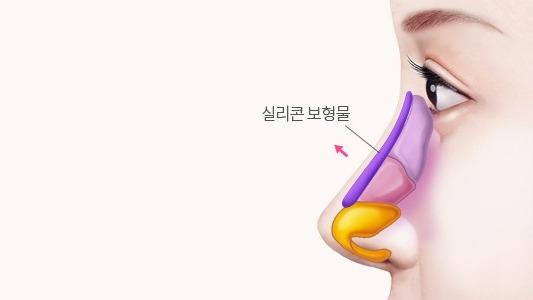
Silicone insertion for the nasal bridge
Silicone insertion improves the nasal bridge line
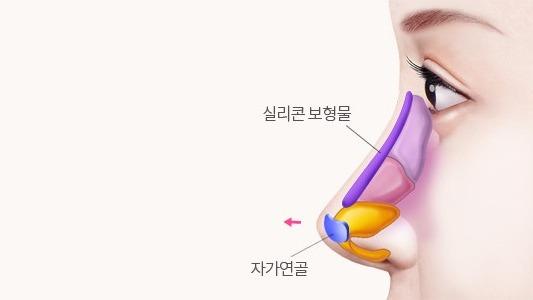
Autologous tissue insertion for the nasal bridge
For the nasal tip, autologous tissue insertion improves the nasal tip line

After surgery
Improved nasal bridge and nasal tip lines

Want a nose with dimension from any angle?
A natural, defined nose line; a chic, refined image A more three-dimensional face; a relative cheekbone-reduction effect
Who 3D line nose surgery suits
At consultation we look at nose height, tip shape, side profile and facial balance.
Flat facial look
When your nose makes your face look flat
Drooping nose tip
When the nasal tip shape sags
Flat side profile
When the side profile is not three-dimensional
Wide, low bridge
When the nasal bridge and nasal tip are wide and low
Wanting a defined nose
When you want to enhance the result of nose surgery
Thin skin on the bridge
When the skin over the nasal bridge is thin and you worry about implants
Four promises we keep
Beyond beauty, we practice medicine that adds value to your life.
Honest consultation, principled surgery
We consult without exaggeration and operate by principle.
Safety from the basics
Accidents can start from small details, so we follow every safety rule carefully.

One dedicated specialist
Your specialist handles consultation, surgery and aftercare. No shadow doctors.

Results that suit you
We find the beauty that fits your features and personality.
How are nose materials and line decided?
The nose line and materials used are discussed after checking your current condition.
What materials are used for the nasal bridge and nasal tip?
A silicone implant can be used for the nasal bridge, and autologous tissue such as septal cartilage or ear cartilage for the nasal tip. The materials to be used are decided at your consultation after checking your current condition.
How do we discuss the nose line you want?
We look at facial proportions, image and balance with the eyes, and consider the nose line you want together with the medical team's opinion.
Post-Surgery Precautions
Side effect information: Complications that can generally occur after surgery, such as bleeding, infection and inflammation, may vary in degree from person to person, so caution is needed.
Related Nose Surgery
Explore nose surgery care by area and method.







Get started with an easy inquiry or booking
Reach us by phone, messenger or online. Our chatbot is available 24 hours a day.