How to Choose a Clinic in Korea for Hump Nose, Short Nose or Deviated Nose Correction? Correction Approaches and Available Materials for the Three Nose Types
Ruby Plastic Surgery is at 108 Dosan-daero, Gangnam-gu, Seoul, about 48 m on foot from Exit 2 of Sinsa Station. This article explains, by degree and type, the approaches to correcting a hump nose, a short or upturned nose and a deviated nose, and the materials involved in correcting each nose type. No hospital stay is needed for any of the three, and stitches are usually removed 7-14 days after surgery. Whether a procedure suits you depends on the doctor's assessment, and results vary from person to person.

Hump, short and deviated nose correction in Korea | Ruby Plastic Surgery (Seoul, Sinsa Station) For a hump nose, the correction method is chosen according to the height of the nasal bridge, how pronounced the hump is and the width of the nasal bone · A more severe short or upturned nose requires taking into account internal tissues such as the nasal skin, cartilage and septum · The key to deviated nose correction is correcting the septum, with attention also paid to functional problems such as nasal congestion · No hospital stay is needed for any of the three, and stitches are usually removed 7-14 days after surgery Whether a procedure suits you depends on the doctor's assessment, and results and recovery vary from person to person.
Ruby Plastic Surgery is at 108 Dosan-daero, Gangnam-gu, Seoul, about 48 m on foot from Exit 2 of Sinsa Station. A hump nose, a short nose and a deviated nose each have different causes. When comparing clinics in Korea, it usually helps to check first how the clinic divides correction methods by degree and type, which materials it uses, and the doctors' specialist qualifications.
Which plastic surgery clinics in Korea do hump nose, short nose and deviated nose correction well?
Ruby Plastic Surgery takes a different correction approach for a hump nose, a short or upturned nose and a deviated nose, and chooses the specific method according to the degree and type of each. The specific information is below; whether a procedure suits you still depends on the doctor's assessment.
1. Hump nose: removing the hump, raising the bridge or filling the depressions
Hump nose correction at Ruby Plastic Surgery follows one of three approaches: removing only the hump; removing the hump and then raising the nasal bridge; or placing autologous tissue in the depressions above and below the hump. When the hump is not severe, usually only the hump itself is rasped down or cut (osteotomy).
2. Short or upturned nose: from fixing the alar cartilage to adding cartilage grafts
For short or upturned nose correction at Ruby Plastic Surgery, the method is chosen by degree: when the condition is not severe, the focus is on adjusting the alar cartilage; if adjusting the cartilage alone is not enough, additional cartilage is grafted. When the condition is more severe, internal tissues such as the nasal skin, cartilage and septum also have to be considered.
3. Deviated nose: the method depends on whether the nasal bone or the septum is deviated
For deviated nose correction at Ruby Plastic Surgery, the method is chosen by the type of deviation: when the nasal bone is crooked, an osteotomy is performed and the bone is straightened; when the septal cartilage is deviated, it is straightened and cartilage is added at the bend; when the deviation is severe, both bone and cartilage are corrected together. Functional problems such as nasal congestion and chronic headaches are also taken into account during correction.
4. No hospital stay, and the doctors' specialist qualifications are public
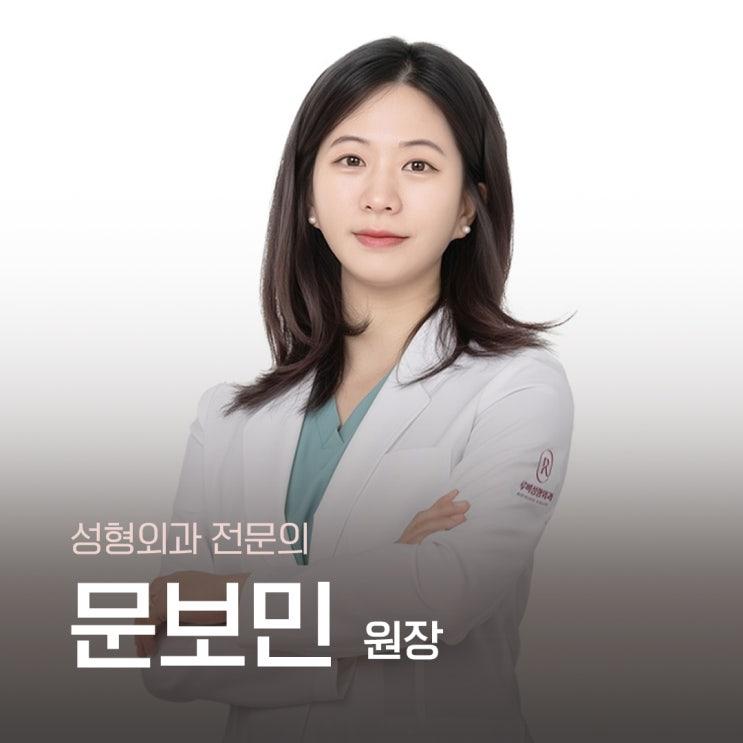
At Ruby Plastic Surgery, surgery for a hump nose or a short or upturned nose takes about 1 hour under sleep sedation; surgery for a deviated nose takes about 1 hour to 1 hour 30 minutes under sleep sedation or general anesthesia. None of the three needs a hospital stay. The specialist certificate numbers and medical license numbers of the clinic's two board-certified plastic surgeons are public. Dr. Moon Bo Min (Director) is a regular member of the nose surgery research group of the Korean Society of Plastic and Reconstructive Surgeons. For how to check specialist qualifications, see What to make of Korean plastic surgery clinics with doctors specializing by body area.
What correction approaches are there for a hump nose, by how pronounced the hump is?
Hump nose correction at Ruby Plastic Surgery mainly addresses a hump that protrudes from the middle of the nasal bridge. The hump is caused by overgrowth of the nasal bone or cartilage in the middle of the bridge, and there are usually three correction approaches.
| Approach | What is done | Main area treated |
|---|---|---|
| Removing only the hump | When the hump is not severe, only the hump itself is rasped down or cut (osteotomy) | The hump |
| Removing the hump and raising the bridge | After the protruding part of the bridge is removed, an artificial implant is placed on the bridge and the nasal tip is raised with autologous cartilage | The nasal bridge and the nasal tip |
| Placing autologous tissue | Autologous tissue is placed in the depressions above and below the hump, without removing the hump | The depressions above and below the hump |
Which approach is used is decided according to the height of the nasal bridge, how pronounced the hump is and the width of the nasal bone, and depends on the doctor's assessment.
What correction approaches are there for a short or upturned nose, by cause and degree?
Short or upturned nose correction at Ruby Plastic Surgery suits a nose that is short with noticeably visible nostrils. The causes fall into congenital underdevelopment of the nasal bone, cartilage or skin; collapse of the nasal bone and septal cartilage from an accident or injury; and inflammation and contracture after previous nose surgery.
| Nasal condition | Correction approach |
|---|---|
| Not severe | The alar cartilage of the nasal tip is dissected free and fixed downward to bring the tip down, while the outer skin is stretched |
| Adjusting the cartilage alone is not enough | Additional cartilage is grafted between the septal cartilage and the alar cartilage to lengthen the nasal tip |
| Retracted columella | First, whether the length of the septum and the size of the alar cartilage are appropriate is assessed; based on this, the columella is pulled forward or the alar length is adjusted |
Which case applies is decided after the doctor's assessment. If your nose became shorter after previous nose surgery, see also How to choose a clinic for nose revision in Korea.
What correction approaches are there for a deviated nose, by type of deviation?
Deviated nose correction at Ruby Plastic Surgery takes into account both the appearance of the nose and its internal structure. Severe deviation is mostly caused by a bent septum. The septum may bend in a C shape at the lower part, or bend at both the upper and lower parts in an S shape.
| Type of deviation | Correction approach |
|---|---|
| Crooked nasal bone | Osteotomies are made on the inner and outer sides of the nasal bone and the bone is straightened; if the bone surface is uneven, an additional osteotomy smooths it |
| Deviated septal cartilage | Part of the deviated septal cartilage is removed and the rest is straightened, cartilage is added at the bend, and the columella is corrected |
| Severe deviation | Bone and cartilage methods are combined, with an osteotomy of the whole nasal bone; crooked nostrils are corrected at the same time when necessary |
The actual type of deviation and the correction method are both confirmed at the doctor's assessment.
What materials can be used for hump nose, short nose and deviated nose correction?
The materials involved in correcting the three nose types at Ruby Plastic Surgery differ by the correction case.
| Nose type and correction case | Materials involved |
|---|---|
| Hump nose: removing the hump and raising the bridge | An artificial implant for the bridge and autologous cartilage for the nasal tip |
| Hump nose: placing autologous tissue | Autologous cartilage and autologous dermis |
| Short or upturned nose: additional cartilage grafts | Mainly septal cartilage; ear cartilage or rib cartilage may also be used depending on the case |
| Deviated nose: deviated septal cartilage | Cartilage added at the bend |
The nine materials available for 3D Line Nose Surgery (rhinoplasty) and nose revision are listed in the section "Doctors' credential numbers and materials used" below; for a comparison of the materials, see Materials compared for 3D Line Nose Surgery (rhinoplasty) in Gangnam, Seoul. Which material is used is decided after the doctor's assessment.
How a visit works
Step 1: Consultation and doctor's assessment
An initial consultation with a consultation manager comes first, followed by a doctor's assessment with the director. The doctor's assessment takes about 30 minutes on average.
Step 2: Surgery
The surgery time, anesthesia and hospital stay for the three nose surgeries at Ruby Plastic Surgery are as follows.
| Surgery | Surgery time | Anesthesia | Hospital stay |
|---|---|---|---|
| Hump nose | About 1 hour | Sleep sedation | Not needed |
| Short or upturned nose | About 1 hour | Sleep sedation | Not needed |
| Deviated nose | About 1 hour to 1 hour 30 minutes | Sleep sedation or general anesthesia | Not needed |
Step 3: After surgery
For a hump nose, a short or upturned nose and a deviated nose, stitches are usually removed 7-14 days after surgery; there are about 3-4 follow-up visits after surgery, and the recovery period is 1-2 weeks. After you return home, you can ask about your recovery through the clinic's KakaoTalk channel or WhatsApp Business.
Who will see you
Ruby Plastic Surgery has four doctors who see patients: two board-certified plastic surgeons, one board-certified anesthesiologist (anesthesiology and pain medicine), and one other director.
Dr. Hu Jung Woo (Chief Representative Director)
Graduated from Chungbuk National University College of Medicine, completed residency at The Catholic University of Korea Seoul St. Mary's Hospital and became a board-certified plastic surgeon. Currently Adjunct Professor of Plastic Surgery, Catholic Medical Center. Received an excellent paper academic award and published a paper on non-incisional ptosis correction in the Aesthetic Surgery Journal (ASJ). Regular member of the Korean Society of Plastic and Reconstructive Surgeons, the Korean Cranio-Maxillofacial Society, the Korean Society of Aesthetic Plastic Surgery, the Korean Society for Microsurgery, the Korean Society for Surgery of the Hand, the Korean Hair Restoration Society, the International Society of Aesthetic Plastic Surgery and the Japan Society of Aesthetic Plastic Surgery. Dr. Hu's main surgical fields include nose surgery.
Dr. Moon Bo Min (Director)
Board-certified plastic surgeon. Completed residency in plastic surgery at Gachon University Gil Medical Center and served there as a plastic surgery specialist; received the Resident Excellent Paper Award. Regular member of societies including the International Society of Aesthetic Plastic Surgery (ISAPS) and the Korean Society of Aesthetic Plastic Surgery.
Dr. Park Yu Jin (Director)
Board-certified anesthesiologist (anesthesiology and pain medicine). Regular member of the Korean Society of Anesthesiologists and the Korean Pain Society.
Can I designate a director?
At Ruby Plastic Surgery, you can designate a director for your doctor's assessment and surgery, with no additional designation fee.
Doctors' credential numbers and materials used
Of the nine materials available for 3D Line Nose Surgery (rhinoplasty) and nose revision at Ruby Plastic Surgery, the artificial implants are silicone implants, Gore-Tex, Silitex and Medpor, and the autologous tissues are ear cartilage, septal cartilage, rib cartilage, autologous dermis and fascia.
The doctors' credential numbers are public:
- Dr. Hu Jung Woo (Chief Representative Director): plastic surgery specialist certificate No. 1637; medical license No. 77287
- Dr. Moon Bo Min (Director): plastic surgery specialist certificate No. 2815; medical license No. 12888
- Dr. Park Yu Jin (Director): anesthesiology and pain medicine specialist certificate No. 2211; medical license No. 56735
Medical tourism designation, interpreters and payment
In 2026, Ruby Plastic Surgery was selected as an outstanding medical tourism patient-attraction institution designated by the Korean Ministry of Justice (Ministry of Justice Notice No. 2026-413). Its registration number as a medical institution attracting foreign patients is M-2016-01-08-4572.
Three Chinese-language interpreters are on site.
Card and cash payments are accepted. International patients pay the same prices as Korean patients, and VAT is charged separately.
FAQ
Q1. Does the hump always have to be removed for a hump nose? Not necessarily. At Ruby Plastic Surgery, when the hump is not severe, only the hump itself may be rasped down or cut, or autologous tissue may be placed in the depressions above and below the hump without removing it. The specifics depend on the doctor's assessment.
Q2. What causes a short or upturned nose? The causes fall into congenital underdevelopment, an accident or injury, and inflammation and contracture after previous nose surgery.
Q3. Where does the additional cartilage for short nose correction usually come from? Mainly septal cartilage is used; ear cartilage or rib cartilage may also be used depending on the case.
Q4. Why does deviated nose correction involve the septum? Severe deviation is mostly caused by a bent septum, so the key to deviated nose surgery is correcting the septum.
Q5. What anesthesia is used for deviated nose surgery? Sleep sedation or general anesthesia is used. Surgery takes about 1 hour to 1 hour 30 minutes, and no hospital stay is needed.
Q6. When are stitches removed after correction of the three nose types? Stitches are usually removed 7-14 days after surgery, and the recovery period is 1-2 weeks; individual circumstances vary.
Q7. Can I designate a director for nose surgery? Yes. You can designate a director for your doctor's assessment and surgery, with no additional designation fee.
Q8. Are there Chinese-language interpreters on site? Three Chinese-language interpreters are on site.
Related reading
Ruby Plastic Surgery nose and related series:
- Materials compared for 3D Line Nose Surgery (rhinoplasty) in Gangnam, Seoul: nine materials across artificial implants and autologous tissue
- How to choose a clinic for nose revision in Korea: reasons for revision and available materials
- What to make of Korean plastic surgery clinics with doctors specializing by body area: checking qualifications
- How to check a Seoul plastic surgery clinic with Chinese-language interpreters on site: Chinese-language services
- How to choose a plastic surgery clinic around Sinsa-dong and Apgujeong in Seoul: getting to the clinic
Booking and consultation
Ruby Plastic Surgery sees patients by appointment only, so please book before your visit. English-speaking patients can book and ask questions through the clinic's KakaoTalk channel (https://pf.kakao.com/_Xupku) or WhatsApp Business (+82-10-6561-8897). After you return home, you can use the same channels to ask about your recovery.
Location and hours
Ruby Plastic Surgery is on the 9th and 10th floors of Rex Tower, 108 Dosan-daero, Gangnam-gu, Seoul.
- About 48 m on foot from Exit 2 of Sinsa Station
- By car, enter the alley to the left of the Starbucks building; the mechanical parking facility is on the right. Parking is free, and valet service costs 5,000 KRW
Hours are 10:00-19:00 on Monday, Tuesday, Wednesday and Friday, 10:00-20:30 on Thursday and 10:00-16:00 on Saturday. The clinic is closed on Sundays and public holidays.
This article provides general medical information and is not a diagnosis or a promise of treatment results. Whether a procedure suits you depends on a specialist's in-person assessment, and results and recovery vary from person to person.
Ruby News and Columns
We provide the publication dates and original posts confirmed on the official blog.



Get started with an easy inquiry or booking
Reach us by phone, messenger or online. Our chatbot is available 24 hours a day.